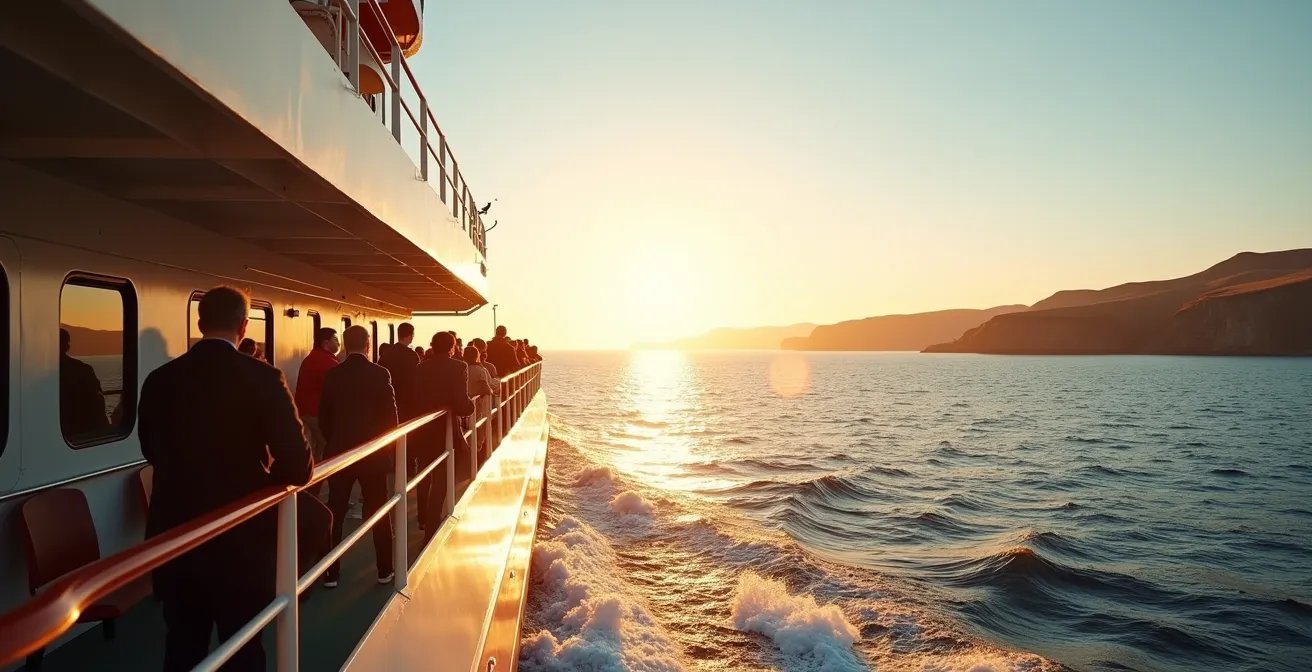
Securing a high-season trip to the Magdalen Islands is less about luck and more about a precise, time-sensitive strategy that starts months before summer.
- Ferry spots for July and August often sell out within hours of reservations opening in February.
- Bringing your own vehicle is significantly cheaper and more reliable than renting on the islands, where fleets are small and book up fast.
Recommendation: Your planning must start in the fall by monitoring the CTMA website for the official reservation opening date.
The images are captivating: endless beaches, red cliffs, and charming fishing villages. The Magdalen Islands, or “Les Îles” as they are affectionately known in Quebec, promise an unforgettable summer escape. Many travel guides will tell you to simply “book in advance” for the popular July and August season. They’ll mention the scenic five-hour ferry crossing from Souris, Prince Edward Island, and the stunning landscapes awaiting you. But this generic advice dangerously underestimates the reality of visiting this coveted destination during its peak.
The hard truth is that a successful high-season trip isn’t just planned; it’s a logistical operation. The system is built around a profound scarcity of ferry spots and accommodations, a reality well-known to locals but often a brutal surprise for first-time visitors. The key isn’t just booking early; it’s understanding the unwritten rules of a booking window that closes almost as soon as it opens. Missing it doesn’t just mean paying more; it often means not going at all.
This guide will equip you with the strategic knowledge of a seasoned Maritimes travel specialist. We’ll break down the critical timelines you can’t afford to miss, analyze the real costs of getting there, prepare you for the infamous “wind factor,” and reveal the secrets to finding a place to stay when everything seems hopelessly full. Consider this your playbook for turning a dream trip into a well-executed reality.
To help you navigate these crucial steps, this article breaks down the essential strategies you need to master. From securing your passage to planning your daily adventures, here is the insider’s approach to a successful trip to the Islands.
Summary: Your Strategic Guide to a Magdalen Islands High-Season Trip
- Why Waiting Until May Will Cost You Your Trip to the Islands?
- Bringing Your Car vs. Renting on the Island: Which Is Cheaper?
- The Wind Factor: What Happens When the Ferry Is Cancelled?
- Camping or Cottage: What Is Left When Hotels Are Full?
- Buying Groceries on the Mainland vs. on the Islands: Is the Price Difference Real?
- What Rig to Use to Catch 5 Mackerel at Once?
- Clockwise or Counter-Clockwise: Which Way Offers the Best Views of the Sea?
- How to Fish for Mackerel on Quebec Wharves Without a Permit?
Why Waiting Until May Will Cost You Your Trip to the Islands?
If you have one takeaway from this guide, let it be this: booking a high-season ferry to the Magdalen Islands is not a springtime task. It’s a winter one. Many hopeful travelers assume they can organize their July or August trip in April or May, only to find that every single vehicle spot on the ferry is sold out. The demand for this route is immense, with the ferry transporting over 100,000 passengers and 41,000 vehicles annually, concentrated heavily in just two months.
The booking system operates on a tight, unforgiving schedule. The ferry company, CTMA, typically announces the reservation opening date in the fall. When that day arrives—usually in February—the most desirable dates, especially around Quebec’s construction holiday period, are gone within hours. This isn’t an exaggeration; it’s the annual reality. Waiting until the snow melts to book your summer vacation is, for this specific destination, a recipe for failure. Your planning must start in autumn by setting alerts and being ready to book the moment reservations go live.
To succeed, you must adopt a proactive mindset. Here is the timeline you need to follow:
- October-November: Start monitoring the CTMA website and social media for the announcement of the booking opening day.
- Before Booking Day: Create your account on the CTMA website and pre-fill your personal and payment information to ensure a fast checkout.
- Booking Day (February): Be online and ready to book the second reservations open. Have several backup dates in mind, as your first choice may vanish while you’re clicking.
- Post-Booking: If you miss out, don’t give up entirely. Consider shoulder season dates in June or September, which offer a more relaxed experience and better availability.
Bringing Your Car vs. Renting on the Island: Which Is Cheaper?
Once you’ve secured your passenger spots on the ferry, the next major decision is your vehicle. The islands are surprisingly spread out, and having a car is non-negotiable for proper exploration. The choice is between paying the ferry surcharge to bring your own car or traveling as a foot passenger and renting one upon arrival. From a purely financial standpoint, the decision is clear: bringing your own car is almost always significantly cheaper.
This photograph shows vehicles boarding the CTMA ferry, a familiar sight for the thousands of families who make the crossing each summer with their own car packed for the adventure.

But the numbers tell the most compelling story. A cost comparison quickly reveals the financial advantage of bringing your own vehicle versus relying on a local rental, as shown by a recent analysis of 2024 rates.
| Cost Category | Ferry with Vehicle (21ft) | Ferry Only + Island Rental |
|---|---|---|
| Ferry – 2 Adults Round Trip | $423.36 | $180.00 |
| Vehicle Ferry Surcharge | Included above | $0 |
| 7-Day Car Rental (Local Agency) | $0 | $450-600 |
| Gas Premium on Islands | +15% mainland price | +15% mainland price |
| Total Estimated Cost | $423.36 + gas | $630-780 + gas |
Case Study: The Island Rental Scarcity
Cost is not the only factor; availability is an even bigger hurdle. Agence de Location des Îles, the largest rental company on the islands, operates a fleet of around 130 vehicles. While this sounds substantial, they are often completely sold out for the entire July construction holiday period months in advance. Late bookers are forced onto waitlists with no guarantee, often having to piece together transportation using a combination of e-bikes, taxis, and limited shuttle services, which severely restricts their ability to explore freely.
The Wind Factor: What Happens When the Ferry Is Cancelled?
The Gulf of St. Lawrence is notorious for its strong winds and unpredictable weather. For travelers to the Magdalen Islands, this isn’t just a weather forecast; it’s a major logistical risk. Ferry cancellations are not a rare occurrence, and when they happen, they create a significant ripple effect that can throw your entire trip into disarray. A one-day delay doesn’t just mean you arrive a day late; it creates a backlog of hundreds of passengers and vehicles.
When a sailing is cancelled, CTMA prioritizes passengers based on their original booking date for the next available crossing. They may add departures to clear the backlog, but you could still face a delay of 24 to 48 hours. This leaves you stranded in Souris, PEI, competing with everyone else from your cancelled ferry for the limited number of hotel rooms. Having a backup plan is not optional; it’s essential.
If you find yourself stranded in Souris due to a cancellation, act quickly:
- Book a Room Immediately: Don’t wait at the terminal. Get on your phone and book a room at one of the nearby establishments like Rodd Crowbush Golf & Beach Resort or Matthew’s Motel.
- Consider Camping: If hotels are full, Souris Beach Provincial Park can be an emergency option for those equipped for camping.
- Stay Informed: Join the “CTMA Ferry Updates” Facebook group, where passengers share real-time information and coordinate. Keep the CTMA customer service number (1-888-986-3278) saved for rebooking assistance.
- Check Your Insurance: Before you leave, ensure your travel insurance has a “Trip Interruption” or “Travel Delay” clause. Quebec-based insurance brokers are very familiar with this specific risk and can advise on the best coverage.
Camping or Cottage: What Is Left When Hotels Are Full?
The scarcity principle applies just as strongly to accommodation as it does to the ferry. The islands have a limited number of hotels, motels, and cottages, and they are typically booked solid for July and August by early spring. If you’ve waited too long, finding a place to stay through official channels like Booking.com or the Tourisme Îles de la Madeleine website can feel impossible. However, this is where insider knowledge provides a significant advantage.
Your booking strategy for accommodations should follow a similar timeline to the ferry:
- January: This is when reservations open for the highly sought-after SEPAQ-run campgrounds like Parc de Gros-Cap. Spots are gone in a flash.
- February-March: Book private campgrounds such as Camping des Sillons and start inquiring about cottage rentals.
- April-May: If you’re still looking, begin calling hotels and rental agencies weekly. This is when you might catch a cancellation.
When the official channels run dry, you need to tap into the islands’ “parallel market” for accommodations. This is where the most creative and often successful last-minute bookings happen.
Case Study: The Hidden Market of Facebook Groups
Local Facebook groups like ‘Hébergement Îles de la Madeleine’ are an essential resource that most tourists don’t know about. With thousands of members, these private groups are where Madelinots directly post last-minute availability for cottages, spare rooms, and even RVs that never appear on major booking platforms. These opportunities often arise just 2-3 weeks before a travel date, when a local host learns of a cancellation from a friend or family member. Being an active member of these groups is one of the most effective strategies for finding a place to stay when all hope seems lost.
Buying Groceries on the Mainland vs. on the Islands: Is the Price Difference Real?
A common question for anyone planning a cottage or camping trip is whether to stock up on groceries on the mainland before boarding the ferry. The short answer is yes, the price difference is very real, and a smart shopping strategy can save you a significant amount of money. Everything that isn’t produced on the islands must be shipped in, and that transportation cost is passed directly to the consumer. For most pantry items, you can expect to pay 20-30% more than you would in a mainland grocery store.
However, this rule has one glorious exception: local seafood. Products harvested from the surrounding waters are not only fresher but also substantially cheaper than what you’d find in mainland cities. This is particularly true for lobster, which can be purchased directly from fishermen at the wharf for a fraction of the city price.
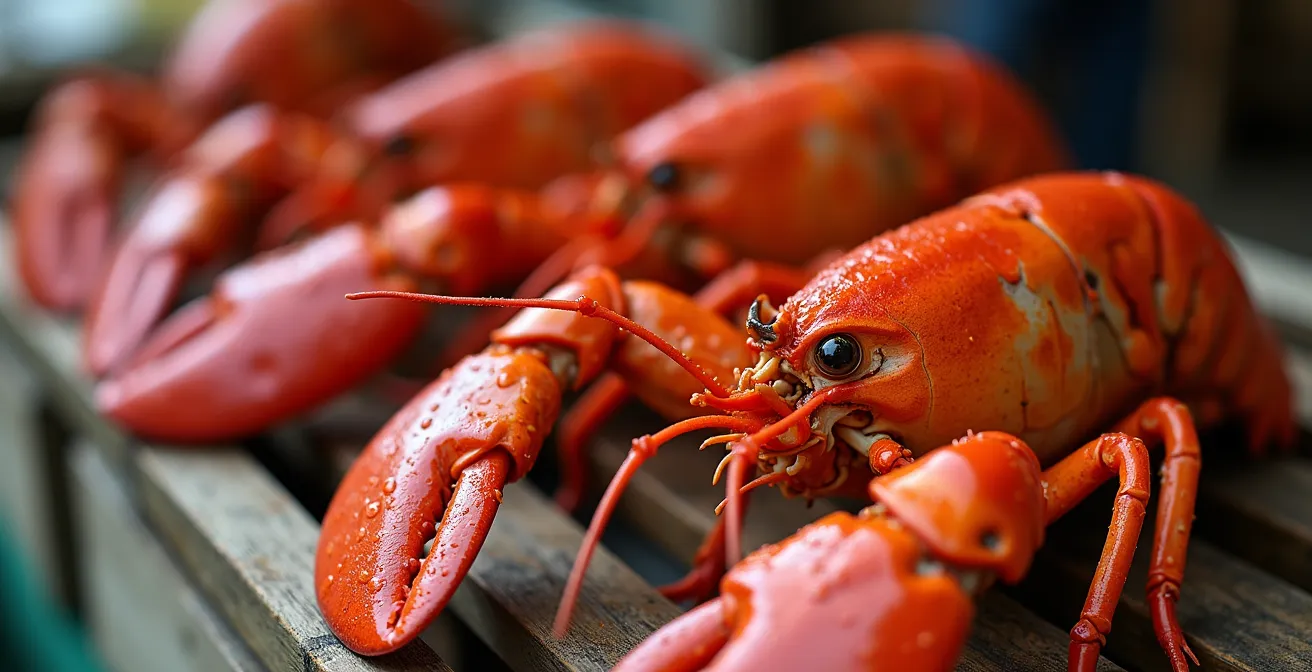
The strategy, therefore, is not to bring everything, but to be selective. A quick price check confirms this “bring this, buy that” approach, as detailed in an analysis by Quebec Maritime.
| Item | Mainland Price | Islands Price | % Difference |
|---|---|---|---|
| Milk 2L | $3.99 | $5.49 | +38% |
| Bread loaf | $2.99 | $3.99 | +33% |
| 12-pack local beer | $19.99 | $24.99 | +25% |
| Ground beef 1kg | $12.99 | $16.99 | +31% |
| Fresh lobster/kg | $25.00 | $18.00 | -28% |
| Average increase | +20-30% |
Your shopping list should be split:
- BRING from the mainland: Coffee, alcohol (from the SAQ), specialty snacks, cereal, pasta, and other non-perishable pantry staples.
- BUY on the islands: Fresh seafood (lobster, scallops, mackerel) directly from the wharves in Cap-aux-Meules or Grande-Entrée. Also, indulge in incredible local products like Pied-de-Vent cheese and smoked herring from Fumoir d’Antan.
What Rig to Use to Catch 5 Mackerel at Once?
After all the strategic planning, it’s time to enjoy one of the most authentic and rewarding activities the islands have to offer: fishing for mackerel off a local wharf. During the summer, schools of Atlantic mackerel swarm the coastal waters, and it’s possible for even a complete novice to catch a bucketful in under an hour. The secret lies in using the right equipment, known locally as a “train de plumes.”
This isn’t a single lure but a rig with multiple hooks, typically a 5-hook sabiki rig adorned with small, colourful feathers or shiny tinsel. When jigged correctly, it mimics a small school of baitfish, and it’s common to reel in two, three, or even five mackerel at a time. You don’t need fancy gear; a basic rod and reel will do. The key is the rig itself.
For the best chance of success, follow the local method:
- Go to a hardware store (like the BMR in Cap-aux-Meules) and ask for “un train de plumes pour le maquereau.” They’ll know exactly what you need.
- Fish during a rising or falling tide, as the moving water brings the fish closer to the wharves.
- Look for signs of fish: diving seagulls or a patch of water that looks like it’s “boiling” with activity.
- Cast your line and let it sink. Then, jig it with quick, sharp upward motions every few seconds to attract the mackerel.
Locals report that the main wharf in Cap-aux-Meules is especially active two hours before high tide, particularly in the early morning or evening. It’s a fantastic, social spot where experienced fishermen are often happy to share tips with visitors.
Clockwise or Counter-Clockwise: Which Way Offers the Best Views of the Sea?
Driving the main road, Route 199, is the best way to see the archipelago. But a strategic question arises: which direction should you go? The local consensus, backed by photographers and seasoned visitors, is that a counter-clockwise route offers a superior experience, primarily due to the position of the sun and the flow of traffic.
By starting your day heading east and then north, you keep the sun at your back. This provides perfect morning light for photographing the iconic red cliffs on the eastern and northern coasts. A clockwise route, by contrast, would put these same cliffs in shadow during the morning hours. This directional choice also impacts your experience at key locations like the historic La Grave site, as outlined by a directional analysis from CAA-Quebec.
| Factor | Clockwise Route | Counter-Clockwise Route |
|---|---|---|
| Morning Light | East-facing red cliffs in shade | Perfect lighting on eastern cliffs |
| Crowd Avoidance | Hit La Grave at peak afternoon | Arrive La Grave early morning (quieter) |
| Sunset Position | Ends at east side (poor sunset) | Ends at Borgot lighthouse (ideal sunset) |
| Wind Protection | Morning on exposed north coast | Morning on sheltered south beaches |
While counter-clockwise is the generally recommended route, your daily plan should always be adapted to the weather. The wind is a constant presence on the islands, and using it to your advantage can make for a much more pleasant day.
- Check the wind: Use a service like Windy.com or the Environment Canada marine forecast each morning.
- Strong west winds? Consider a clockwise route to enjoy the sheltered eastern beaches in the morning.
- Strong east winds? Stick with the counter-clockwise plan to stay on the protected western shores first.
- On a clear, calm day, the counter-clockwise route is unbeatable for photography and ending your day with a perfect sunset on the west coast.
Key Takeaways
- Ferry reservations for July and August are a competitive event that happens in February, not a casual booking you can make in the spring.
- Bringing your own vehicle across on the ferry is almost always the cheaper and more reliable transportation option for your trip.
- When official listings are full, alternative accommodation markets on local Facebook groups are a vital and effective backup plan.
How to Fish for Mackerel on Quebec Wharves Without a Permit?
One of the most accessible and enjoyable pastimes on the Magdalen Islands is dropping a line for mackerel off a public wharf. A common question from visitors is whether a special fishing permit is required. The answer, for this specific type of fishing, is a refreshing and simple no. You can fish for mackerel in tidal waters without needing to purchase a provincial sport fishing permit.
This isn’t just local custom; it’s official regulation. As the provincial ministry responsible for wildlife confirms, a permit is not necessary for certain species in tidal waters.
Recreational fishing for mackerel and 9 other species in tidal waters requires no permit in Quebec.
– Quebec Ministry of Forests, Wildlife and Parks, Official MFFP Fishing Regulations
While you don’t need a permit, you do need to follow the unwritten rules of wharf etiquette. These spaces are active commercial hubs, and showing respect to the professional fishermen is paramount. It ensures a positive experience for everyone and maintains the welcoming atmosphere the islands are known for.
Your Wharf Fishing Etiquette Checklist
- Priority to Pros: Always give way to commercial fishing boats. Be prepared to move your lines immediately and without complaint when a boat needs to dock.
- Mind Your Lines: Never cast over another person’s line. Look for a clear space and maintain awareness of those around you before you cast.
- Clean Up Properly: Use the designated fish cleaning stations. Do not clean your catch on the main walkways where people are walking.
- The Madelinot Nod: It’s customary to give a simple nod or a quiet “Bonjour” to the other fishermen when you arrive. It’s a small gesture of respect.
- Share the Bounty: If you have a great catch and locals are watching, it’s a common and appreciated courtesy to offer them some of your fish.
By adopting this strategic mindset—booking with urgency, planning for contingencies, and embracing local customs—you transform yourself from a hopeful tourist into a savvy traveler, ready to experience the true magic of the Magdalen Islands.
Frequently Asked Questions about the Magdalen Islands Ferry
How does CTMA manage passenger backlogs after weather cancellations?
CTMA prioritizes passengers based on original booking date, not first-come-first-served for the next sailing. They may add extra departures or combine sailings when weather permits.
Will travel insurance cover ferry cancellation delays?
Look specifically for ‘Trip Interruption’ and ‘Travel Delay’ clauses in Quebec travel insurance policies. Most Quebec brokers are familiar with this specific Gulf of St. Lawrence weather risk.
What if I’m stranded on the Islands for my return trip?
Local Madelinot solidarity often helps stranded tourists. Contact your accommodation first – many will extend stays at reduced rates during weather events.