Conquering Old Quebec’s charming but challenging terrain is not about endurance, but about strategy.
- Leverage specific, local accessibility rules—like free 3-hour street parking with a permit—to gain a “downhill advantage.”
- Use a mix of the seasonal funicular and high-frequency city buses to eliminate the exhausting climb between Upper and Lower Town.
Recommendation: Plan your day by “zoning” your activities within either Upper or Lower Town to minimize elevation changes, and use our strategic tips to make the transition between them seamless and stress-free.
The allure of Old Quebec is inseparable from its magnificent stone fortifications. Walking these historic walls, a UNESCO World Heritage treasure, feels like a journey back in time. Yet for seniors, families with strollers, or anyone with limited mobility, a glance at the city’s geography can be daunting. The formidable slope of Cap Diamant, the cobblestone streets, and the endless staircases seem to present insurmountable barriers. Many guides simply state the obvious—that it’s hilly—and suggest the Funicular as a one-size-fits-all solution.
But what if the key to unlocking this historic district wasn’t about physical endurance, but about local knowledge and a smarter strategy? What if, instead of fighting the geography, you could use it to your advantage? This is the perspective of a local guide. It’s about knowing the unpublished tricks: where to park to start your day on high ground, how to use the city’s transit system as your personal elevator, and which experiences offer the most historical impact for the least physical effort. It’s about transforming the visit from an exhausting climb into a delightful and manageable exploration.
This guide provides that strategic system. We will move beyond the basic tips to give you a concrete plan for navigating the elevation changes, finding the most advantageous parking, choosing the right tours, and timing your visit to avoid both crowds and hazards. You will learn to see Old Quebec’s challenges not as obstacles, but as a logistical puzzle you are fully equipped to solve.
To help you craft the perfect accessible journey, this article breaks down the essential strategies for a comfortable and memorable visit. Explore the sections below to master each aspect of your trip.
Summary: A Strategic Guide to Exploring the Walled City
- Why the Upper Town and Lower Town Geography Exhausts Unprepared Walkers?
- Where to Park in Old Quebec Without Paying $25 for 3 Hours?
- The Citadel or the Ramparts: Which Tour Is Better for History Buffs?
- The Danger of Walking on the Walls During Icy Conditions
- When to Walk the Fortifications to Have the View to Yourself?
- When to Hear the Great Organs of Quebec City for Free?
- Staying Inside the Walls vs. Outside: Which Is Better for Carnival?
- How to Experience Quebec’s Religious Heritage Respectfully and Deeply?
Why the Upper Town and Lower Town Geography Exhausts Unprepared Walkers?
Old Quebec is fundamentally a city of two levels: the Upper Town (Haute-Ville), sitting atop the cliff of Cap Diamant, and the Lower Town (Basse-Ville), nestled along the St. Lawrence River. The steep incline connecting them is the primary source of fatigue for unprepared visitors. Simply trying to “wing it” often results in an exhausting uphill battle against gravity on streets like Côte de la Montagne, turning a charming stroll into a strenuous workout. The geography itself demands a strategic approach.
The solution is not to avoid one of the towns, but to manage the transition between them intelligently. The most famous link is the Old Quebec Funicular, which connects the Dufferin Terrace in the Upper Town to the Petit-Champlain district in the Lower Town. It’s fully wheelchair accessible, but with a crucial caveat: this accessibility is only guaranteed for wheelchair users from May 1st to October 31st due to weather constraints. Outside these months, you need an alternative plan.
That plan often involves the city’s excellent public transit. High-frequency RTC bus routes like the 800 and 801 are equipped with access ramps and function as a public elevator, whisking you around the steepest parts of the city. By planning your day in zones—exploring everything you want to see in the Lower Town before taking a single, planned trip up to the Upper Town (or vice-versa)—you eliminate the constant, energy-draining vertical climbs. This “zoning” strategy is the foundation of an enjoyable, low-exertion visit.
Your Action Plan for an Accessible Old Quebec
- Map your Zones: Identify your must-see spots in the Upper Town and Lower Town. Group them to tackle one zone at a time, minimizing tiring transitions.
- Audit Your Parking: Confirm your disabled parking permit is valid in Quebec. Use it to pinpoint free 3-hour meter zones near your Upper Town starting point for a “downhill” advantage.
- Verify Transit Links: Before you go, check the operating hours for the Funicular. If it’s closed or you’re outside the season, locate the nearest 800-series bus stop on your map as your alternative.
- Assess Activity Terrain: Don’t just show up. Visit the official websites (Parks Canada, Citadelle) to check if a tour path is paved, cobblestone, or involves stairs. Choose activities that match your mobility level.
- Build in Rest Stops: Look at your itinerary and schedule a museum visit, a stop in a quiet church, or an organ recital as a strategic, 30-to-60-minute seated break.
Where to Park in Old Quebec Without Paying $25 for 3 Hours?
Parking inside the walls of Old Quebec can be both scarce and expensive, with private lots often charging exorbitant rates. However, for visitors with a valid disabled parking permit, the city offers a game-changing advantage that most tourists overlook. This isn’t just about finding a reserved spot; it’s about leveraging a rule that can save you significant money and stress. The key is to understand and use the on-street parking meter system to your benefit.
The single most valuable piece of information is this: in Quebec City, a vehicle with a disabled parking permit (from the SAAQ or any other jurisdiction, as long as it bears the international wheelchair symbol) can park for free. A recent overview confirms that with a permit, you can park for up to 3 hours free of charge at any parking meter. This allows you to find a strategic spot in the Upper Town, explore for a generous amount of time, and avoid the pricey underground garages entirely.
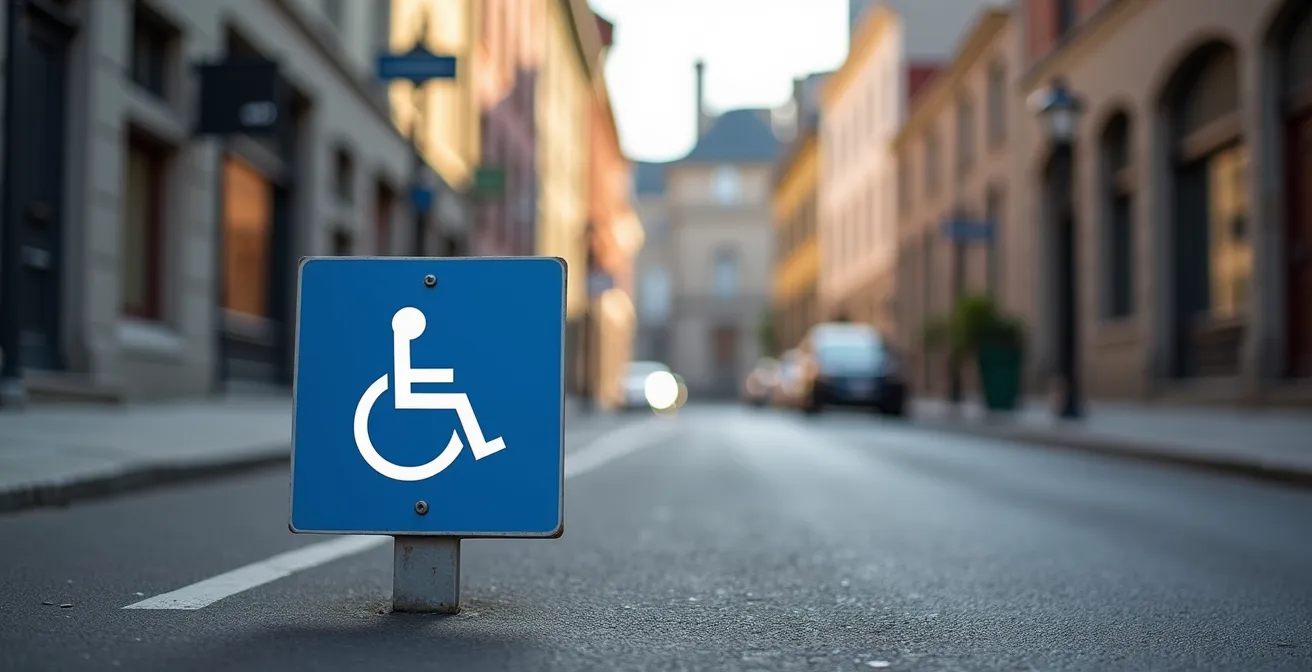
The best strategy is to park in the Upper Town, for instance near the Hôtel-Dieu hospital or City Hall, which places you at the highest elevation point of your visit. This creates a “downhill flow” for your exploration. You can leisurely make your way through the Upper Town’s attractions and then descend to the Lower Town via the Funicular or a bus. This approach minimizes uphill walking and maximizes the advantage granted by your permit. The official SAAQ guidelines provide a clear breakdown of these benefits.
This table, based on information from the Société de l’assurance automobile du Québec (SAAQ), clarifies the powerful advantages available to permit holders.
| Parking Type | Cost with Disabled Permit | Key Benefits |
|---|---|---|
| Street Parking Meters | Free (up to 3 hours) | Unlimited time in spaces with restrictions of 30 mins or more; 3 hours free at pay stations. |
| Reserved Accessible Spaces | Free | Closest proximity to entrances, level surfaces. |
| Out-of-Province Permits | Free (if valid) | Permit is valid in Quebec if it bears the international wheelchair symbol. |
The Citadel or the Ramparts: Which Tour Is Better for History Buffs?
For any history enthusiast, the fortifications are the main event. But a crucial distinction must be made between walking the ramparts and visiting the Citadelle of Quebec. While they are part of the same defensive system, they offer vastly different accessibility experiences. Trying to walk the full 4.6 km of the ramparts is not feasible for those with mobility challenges, as the path is often uneven, involves numerous stairs, and lacks railings in many sections.
According to Parks Canada, the agency that manages the walls, their guided tour of the fortifications has limited accessibility for people with impairments. In contrast, the Citadelle of Quebec is the more accessible option. As an active military base, its grounds are better maintained, and accessible areas are available to witness the famous Changing of the Guard ceremony in the summer or to take a guided tour of the Royal 22e Régiment Museum.
So, for a deep historical dive without the physical strain, the choice is clear: prioritize the Citadelle. But that doesn’t mean you have to miss the breathtaking views from the ramparts. The best approach is to experience the walls from accessible viewpoints. The Dufferin Terrace is a wide, flat boardwalk that runs alongside the Château Frontenac and offers the same spectacular panoramas of the St. Lawrence River and the Lower Town that you would get from the walls, but from a completely accessible surface. Similarly, exploring Artillery Park at ground level provides a fantastic look at the fortifications’ history without requiring any climbing. This strategy allows you to get the full historical context without compromising safety or comfort.
The Danger of Walking on the Walls During Icy Conditions
Visiting Quebec City in the winter offers a magical, snow-covered landscape, but it introduces a significant and often underestimated danger for visitors with mobility issues: ice. The stone pathways of the ramparts, uneven at the best of times, can become treacherous sheets of ice from November through April. With steep drop-offs and a lack of handrails in many areas, walking on the walls during icy or snowy conditions is extremely hazardous and should be avoided.
Winter conditions also shut down key accessibility infrastructure. As a critical reminder, the wheelchair-accessible Funicular is only available for wheelchair users from May 1st through October 31st each year. This means the easiest link between the Upper and Lower Towns is unavailable for half the year, making a winter visit require even more careful planning around heated, indoor transit options.
Instead of risking a fall, adopt a “view-from-within” strategy. You can get the same spectacular, elevated views from safe, warm, and fully accessible indoor locations. The Observatoire de la Capitale, on the 31st floor of the Marie-Guyart Building, offers a breathtaking 360-degree panorama of the entire city, including the fortifications, the Plains of Abraham, and the river. For a more intimate setting, the 1608 Bar inside the Château Frontenac provides stunning elevated views in cozy comfort. For sightseeing, the heated “Bus Rouge” double-decker bus offers tours of the city’s highlights without any exposure to the cold or ice. If you must walk short distances, purchasing a pair of ice cleats (crampons) from a local outdoor store like MEC is a wise investment.
When to Walk the Fortifications to Have the View to Yourself?
Old Quebec is a popular destination, and its narrow streets and viewpoints can become congested, especially during peak season from June to August and on cruise ship days. For visitors navigating with a wheelchair, walker, or stroller, these crowds can turn a pleasant outing into a stressful obstacle course. The secret to a peaceful and unobstructed experience is not just *where* you go, but *when* you go.
The undisputed best time to explore the most popular areas is in the early morning, ideally between 8:00 AM and 10:00 AM. During these hours, you’ll find the Dufferin Terrace, the streets of Petit-Champlain, and the accessible paths of the Plains of Abraham blissfully quiet. You can navigate the cobblestones without jostling for space, take photos without a crowd in the background, and truly soak in the historic atmosphere. This is when the city belongs to the locals and the early risers.
Another strategic time is during the “dinner rush” from approximately 6:00 PM to 8:00 PM, when many tourists are in restaurants. A post-dinner stroll can offer a similarly tranquil experience, with the added magic of the city’s evening lights. To plan effectively, always check the Quebec City cruise ship schedule online. Avoiding the hours when thousands of passengers descend on the Lower Town will dramatically improve the quality of your visit. By timing your explorations to these quieter windows, you trade the stress of crowds for the serenity of the historic city.
When to Hear the Great Organs of Quebec City for Free?
A tour of Old Quebec’s historic churches offers a fascinating glimpse into the region’s deep religious heritage. But beyond the architecture and art, these sacred spaces provide a practical and enriching opportunity for visitors with limited mobility: a scheduled, comfortable, and often free seated rest. Many of the city’s grand churches house magnificent pipe organs and host regular recitals or musical meditations.
Planning your day to include one of these events is a brilliant strategy. It allows you to transform a simple rest stop into a profound cultural experience. The Notre-Dame de Québec Basilica-Cathedral, for example, often features its organ during services or special events. Instead of just walking through, you can sit in a pew for 30 minutes, rest your feet, and be enveloped by the powerful music. This approach turns a potential moment of fatigue into a memorable highlight of your trip. These events are typically free, though donations are always appreciated.
To find schedules, check the websites of the major churches like the Notre-Dame de Québec Basilica-Cathedral, the Cathedral of the Holy Trinity, and the Saint-Jean-Baptiste Church before your visit. It is also wise to consult the Kéroul website, an organization that certifies accessible tourism in Quebec, to confirm the specific accessibility features of each church. By strategically integrating a free organ recital into your itinerary, you give yourself a guaranteed, peaceful break while experiencing one of the city’s most beautiful auditory traditions.
Staying Inside the Walls vs. Outside: Which Is Better for Carnival?
The Quebec Winter Carnival is the city’s signature event, drawing massive crowds and transforming the city into a festival ground. For visitors with mobility concerns, the choice of accommodation—inside or outside the historic walls—becomes a critical strategic decision. While staying inside offers unmatched historic charm and proximity to events, it comes with significant accessibility challenges during the festival.
Streets become packed with revellers, and snowbanks can narrow the already tight sidewalks, making navigation with a wheelchair or stroller very difficult. While a few historic hotels like the Clarendon offer accessible rooms, getting to and from the hotel through the crowds can be a major challenge. The main Carnival sites, like the ice palace and activity zones on the Plains of Abraham, are often situated on snow-covered ground, which can be tough to traverse.
For these reasons, staying just outside the walls is often the better choice for accessibility during Carnival. Modern hotels in the nearby Saint-Roch or Montcalm neighbourhoods offer full accessibility and are located near the 800/801 Métrobus routes. These high-frequency buses provide a quick and accessible ride to the edge of the festivities, allowing you to participate without being trapped in the densest crowds. This approach gives you a comfortable, accessible home base from which you can strategically dip into the Carnival action on your own terms.
This comparative table breaks down the key considerations for choosing your accommodation during the bustling Carnival period.
| Location | Accessibility During Carnival | Pros | Cons |
|---|---|---|---|
| Inside the Walls | Very Limited | Historic charm, close to main events. | Large stone blocks, steps into shops, crowds make access difficult. |
| Outside the Walls | Better | Near Métrobus 800/801 routes, modern hotels with full accessibility, easier parade viewing. | Less historic atmosphere, requires transport to Old City. |
Key Takeaways
- Leverage the Permit: Your disabled parking permit is a golden ticket. Use it for up to 3 hours of free on-street parking to start your day in the Upper Town and create a “downhill” itinerary.
- Zone Your Day: Don’t fight gravity. Explore the Upper Town and Lower Town as separate zones, using the Funicular (in season) or an accessible city bus for the single transition between them.
- Choose Quality Over Quantity: Instead of attempting exhausting walks on the ramparts, opt for high-impact, fully accessible experiences like the Citadelle tour, the Dufferin Terrace, or a visit to the Monastère des Augustines.
How to Experience Quebec’s Religious Heritage Respectfully and Deeply?
Quebec’s religious heritage is woven into its very fabric, with stunning churches and sacred sites dotting the landscape. However, for a visitor with limited mobility, the idea of a “church crawl” can be daunting, as many historic buildings have steps and limited access. The key to a profound experience is not to see everything, but to adopt a “One Masterpiece Approach.” Instead of attempting multiple difficult visits, choose one major, fully accessible site and immerse yourself in it.
The prime example of this approach is the Sainte-Anne-de-Beaupré Shrine. Located just outside the city, this world-renowned basilica was designed from the ground up to accommodate pilgrims, many of whom have health or mobility challenges. It is fully accessible, with wide-open spaces, ramps, and elevators. Spending a few hours here allows for a deep, unhurried, and stress-free connection to Quebec’s spiritual history, which is far more rewarding than a series of frustratingly brief stops at inaccessible chapels.
Another outstanding option is Le Monastère des Augustines in the Upper Town. This site beautifully combines a museum, a wellness hotel, and a heritage site in a former monastery. Its mission of care is reflected in its modern, award-winning accessibility. A visit here is not just about history; it’s a holistic experience that nourishes both mind and body. By focusing your energy on one such masterpiece, you trade the anxiety of logistics for the peace of genuine contemplation, ensuring your encounter with Quebec’s heritage is both respectful and deeply restorative.
Now that you are equipped with the strategies to navigate the city’s geography, parking, and attractions, the final step is to build your own personalized itinerary. Use this guide as a framework to select the experiences that excite you most, confident that you can enjoy the magic of Old Quebec comfortably and on your own terms.