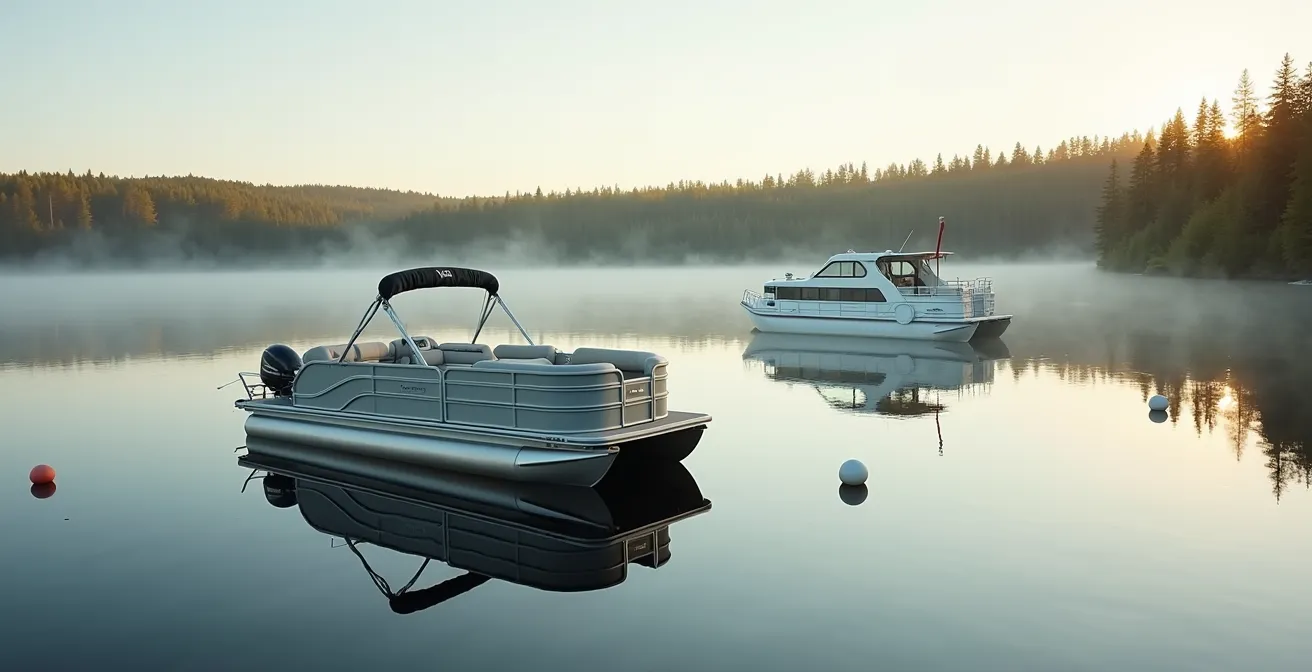
Renting a boat in Quebec without a license legally designates you as the ‘temporary captain,’ with full financial and criminal liability.
- The rental boat safety checklist is not a formality; it’s your temporary proof of competency and a legal document.
- Quebec’s alcohol laws on water are as strict as drunk driving, with severe penalties including fines and boat seizure.
Recommendation: Before leaving the dock, create a timestamped video of the boat’s condition to protect your security deposit from false damage claims.
The idea of spending a day on a Quebec lake with friends, cruising on a pontoon without the hassle of getting a full boating license, is incredibly appealing. Many assume that a standard driver’s license is sufficient, or that the rules are relaxed for rental clients. The common advice is to simply sign a form and head out. However, this perspective overlooks a critical reality: when you rent a boat, you are not just a customer. You are accepting the legal role of ‘temporary captain,’ with all the responsibilities that entails.
This guide moves beyond the basics. It’s written from an operator’s standpoint, focusing on what you absolutely need to know to ensure a safe, enjoyable, and financially sound trip. We will cover the nuances of Quebec’s strict alcohol laws on the water, the specific hazards of its reservoirs that go beyond simple navigation, and the single most common mistake that costs renters their security deposit. The key isn’t just knowing you *can* rent a boat without a Pleasure Craft Operator Card (PCOC), but understanding *how* to manage the liability you inherit the moment you take the helm. This isn’t about paperwork; it’s about competency and responsibility.
To navigate these responsibilities effectively, this article breaks down the essential knowledge every temporary captain needs. From understanding your legal standing on the water to practical tips on provisioning and respecting local regulations, each section is designed to empower you with the foresight of an experienced boater.
Summary: Your Guide to Renting a Boat in Quebec
- Can You Drive a Boat in Quebec with a Driver’s License?
- Why Drinking a Beer While Driving a Boat Is a Criminal Offense?
- Buoys and Markers: How to Avoid Shallow Rocks in Reservoirs?
- What to Do When a Thunderstorm Hits While You Are in the Middle of the Lake?
- The Docking Mistake That Costs Renters Their Security Deposit
- SAQ vs. Dépanneur: Where to Buy the Right Alcohol at the Right Price?
- Public vs. Private Access: Where Can You Legally Enter the Water?
- How to Ride the Fjord Route on a Motorcycle Safely and Enjoyably?
Can You Drive a Boat in Quebec with a Driver’s License?
The short answer is no. A driver’s license holds no authority on the water. However, you don’t need a permanent Pleasure Craft Operator Card (PCOC) to rent a boat. Instead, you operate under a specific legal provision where you are granted temporary proof of competency. This is achieved by completing a mandatory rental boat safety checklist with the rental agency. This document is far more than a simple waiver; it is your legal permission to operate the vessel for the duration of the rental period. Failure to produce this completed checklist if stopped by authorities is equivalent to operating without a license.
The process is standardized and non-negotiable. The rental agent must walk you through every item, covering safety equipment locations, vessel operation, local navigation hazards, and emergency procedures. Both you and the agent must sign it. Operating a boat without this proof of competency can result in a $250 minimum fine, a penalty that falls squarely on the operator—you. This process formally transfers responsibility from the rental company to the renter. You are not just borrowing a boat; you are assuming the legal status of its captain.
Action Plan: Completing Your Rental Boat Safety Checklist
- Request the checklist: It’s a legal requirement for the rental agency to provide it. Ask for it before you even load your gear onto the boat.
- Review safety items: Physically locate and inspect life jackets for all passengers, the fire extinguisher, signaling devices, and all other required emergency equipment with the agent.
- Complete the briefing: Pay close attention to the agent’s briefing on local hazards, specific navigation markers in the area, and emergency contact procedures.
- Sign and date: Your signature confirms you have received and understood the safety briefing. This turns the checklist into your temporary proof of competency.
- Keep it on board: This signed checklist must be kept on the vessel at all times. It is your official documentation if you are inspected by marine patrol.
Why Drinking a Beer While Driving a Boat Is a Criminal Offense?
The relaxed atmosphere of a pontoon boat can create a dangerous misconception about alcohol consumption. Let’s be unequivocally clear: in Quebec, operating a boat while impaired is a criminal offense with penalties identical to driving a car under the influence. The legal blood alcohol limit is the same, and the consequences are just as severe. This isn’t a minor infraction; it’s a criminal charge. The danger is real, as statistics show that 65% of boating-related accidents in Canada involve alcohol consumption.
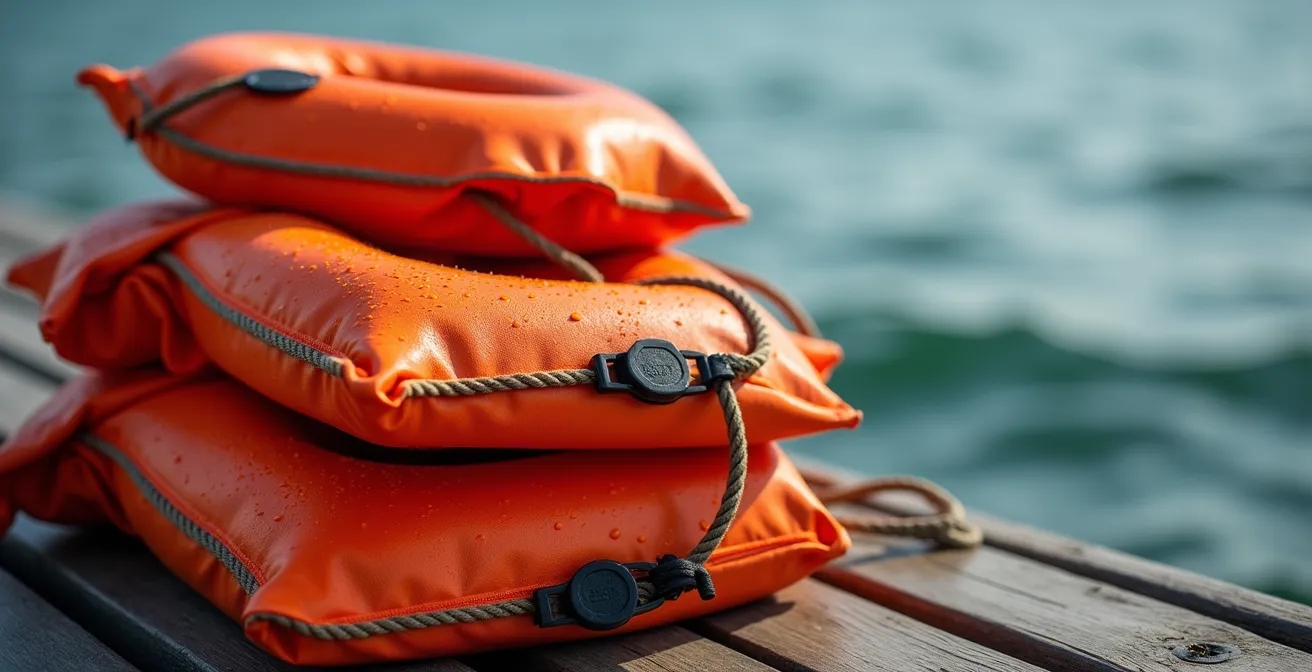
Under Quebec law, conviction for impaired boating can lead to an immediate license suspension (24 hours to 90 days), boat seizure and impoundment for 30 days, and a minimum $1,000 fine. The rules for passengers are also strict. Open alcohol is generally illegal on any boat that is underway. The only exception is if the vessel qualifies as a temporary dwelling. To meet this definition, the boat must have permanent sleeping facilities, a permanent toilet, and permanent cooking facilities. Furthermore, it must be anchored, docked, or beached for the night. A typical day-rental pontoon does not meet these criteria, meaning any open container of alcohol is illegal for everyone on board while the boat is in operation.
Buoys and Markers: How to Avoid Shallow Rocks in Reservoirs?
Navigating Quebec’s beautiful lakes and reservoirs requires more than just avoiding what you can see. The real danger often lies unseen beneath the surface. While standard red and green buoys guide you through main channels, the most significant risks in reservoirs like Baskatong or Poisson Blanc are not always marked. These bodies of water are often flooded forests, leaving behind a treacherous landscape of submerged tree stumps and hidden rock piles just below the waterline. Relying solely on your eyes is a recipe for a damaged propeller and a lost security deposit.
Experienced local boaters supplement official markers with modern technology and keen observation. Using a navigation app like Navionics on your phone with downloaded offline maps is highly recommended. These apps show detailed depth contours and known hazards. It’s wise to set a shallow water alarm for any depth less than 6 feet. Beyond technology, pay attention to visual cues. A sudden change in water color from deep blue to murky brown-green often signals a shallow area. On calm days, look for unusual ripple patterns on the surface, which can indicate a submerged object. And if you see birds standing in what looks like open water, it’s a clear sign of a hidden sandbar or rock pile.
Remember these basic rules for standard buoys:
- Red Buoys: Keep these on your right (starboard) side when “Returning” to shore or heading upstream. The mnemonic is “Red Right Returning.”
- Green Buoys: Keep these on your left (port) side when returning to shore.
- Yellow Buoys: Mark specific zones like swimming areas, speed limits, or underwater cables. Give them a wide berth.
- White Buoys with Orange Markings: These are regulatory markers with instructions like “No Wake” zones or hazard warnings.
What to Do When a Thunderstorm Hits While You Are in the Middle of the Lake?
Quebec’s summer weather can change in an instant. A sunny afternoon can quickly turn into a dangerous thunderstorm, and being caught on open water is a serious situation. Your immediate actions should depend on the type of vessel you’ve rented, as pontoons and houseboats behave very differently in high winds and waves. The key is to have a plan before the storm hits. As soon as you see dark clouds gathering or hear thunder, your leisurely cruise is over. It’s time to take decisive action.
For a pontoon boat, which has a high profile and flat bottom, the primary risk is being pushed around by the wind, making steering difficult. Your goal is to get off the water immediately. For a larger, heavier houseboat, the risk is more about its large surface area catching the wind and potentially dragging its anchor if not properly set. The strategy here is to find shelter rather than make a panicked run for the main dock.
The following table outlines the immediate emergency procedures. It is critical to follow these steps to ensure the safety of everyone on board, based on data from Transport Canada’s boating safety guidelines.
| Vessel Type | Immediate Action | Safety Position | Key Risk |
|---|---|---|---|
| Pontoon Boat | Head to nearest shore immediately | All passengers low in center of boat | High windage, difficult steering in wind |
| Houseboat | Deploy anchor in protected bay | Inside cabin, away from windows | High profile catches wind, anchor drag |
After the storm passes, don’t assume the danger is over. Before resuming your trip, you must inspect the vessel. Check that the anchor hasn’t dragged, scan the water for new floating debris like logs or branches, and inspect the propeller for any damage (with the engine off). This diligence is part of your responsibility as captain.
The Docking Mistake That Costs Renters Their Security Deposit
From a rental operator’s perspective, the vast majority of disputes over security deposits happen for one of two reasons: damage that occurred during docking, or disagreements over pre-existing scratches and dents. Both can be avoided with foresight. The most powerful tool a renter has is their smartphone. Before you even leave the dock, create a detailed, timestamped video walkthrough of the entire boat. This simple 5-minute process is your insurance policy.
Case Study: The Pre-Rental Video Documentation Strategy
Experienced Quebec boat renters have adopted a simple but effective strategy. They film a continuous video documenting the hull from every angle, paying close attention to the corners and waterline. They film the propeller and lower unit, the condition of the interior upholstery, and zoom in on any existing scratches or marks. They then email this video to the rental agent before departure, creating a timestamped record. This practice has been shown to resolve potential false damage claims that can average between $500 and $2,000 per incident.
Of course, preventing new damage is even better. Docking a pontoon is not intuitive; they pivot from their center, unlike a car. Approaching the dock too fast is the cardinal sin. Your approach speed should be no faster than you are willing to hit the dock. Use short bursts of power and let momentum do the work.
- Approach the dock at a shallow 45-degree angle, preferably into the wind or current to help slow you down.
- When you are about one boat length away from the dock, shift into neutral and coast.
- As the bow nears the dock, turn the steering wheel *away* from the dock. This will cause the stern to swing in towards the dock.
- Have your crew ready with fenders positioned between the boat and the dock, and with dock lines in hand.
- Use short, controlled bursts in reverse to stop your forward motion completely.
SAQ vs. Dépanneur: Where to Buy the Right Alcohol at the Right Price?
Provisioning for your boat trip, especially a multi-day houseboat rental, requires some strategic planning to avoid overpaying. The convenience stores (dépanneurs) located near marinas are certainly handy, but you’ll pay a significant premium for that convenience, particularly for beer and wine. A little planning can result in substantial savings, freeing up your budget for other parts of your trip. The key is to understand Quebec’s alcohol retail system.
For wine and spirits, the SAQ (Société des alcools du Québec) is your best and only option. It offers a wide selection and government-regulated prices that are consistently 20-30% lower than the limited, marked-up wine selection you might find at a dépanneur. For beer, your best bet is a grocery store (épicerie) like IGA, Metro, or Provigo, or a big-box store like Costco if you have a membership and are buying in bulk. Dépanneurs sell beer, but often at the highest price point. A strategic shopper can save $150-$200 on provisions for a group by avoiding marina-side convenience stores.
As this comparison based on SAQ and grocery store pricing shows, a two-stop strategy is the most effective approach for provisioning a multi-day trip.
| Store Type | Beer (24-pack) | Wine (bottle) | Spirits | Hours |
|---|---|---|---|---|
| SAQ | N/A | $15-25 avg | $30-45 | Limited Sunday |
| Dépanneur | $35-45 | Limited selection | N/A | 7am-11pm daily |
| Grocery Store | $28-35 | Limited imports | N/A | 8am-10pm |
Many popular boating regions also have excellent local microbreweries that are worth a visit before you head to the lake. For example, boaters heading to the Laurentians might stop at Brasserie Dieu du Ciel in Saint-Jérôme or Microbrasserie Saint-Arnould in Mont-Tremblant for unique, high-quality local beer.
Public vs. Private Access: Where Can You Legally Enter the Water?
Once you are on the water, it’s easy to feel like the entire shoreline is your playground. However, in Quebec, this assumption can lead to trespassing and conflicts with lakeside property owners. Understanding the boundaries between public and private land is a crucial part of boater etiquette and legal compliance. While navigable waterways themselves are considered public domain, the land under the water and the shoreline are often private property.
According to Quebec’s property laws, you can legally anchor your boat in open water, but you cannot simply beach your pontoon or tie up to a private dock without explicit permission from the owner. The boundary is typically defined by the high-water mark; everything above it is private land. The safest places to land your boat are designated public boat launches, municipal beaches, and specific day-use areas that are often marked on navigation charts. Trespassing can lead to fines and, more commonly, unpleasant confrontations with cottage owners who value their privacy.
Respect is the guiding principle. Many Quebec cottage owners have an unspoken tolerance for boaters who anchor respectfully, but this goodwill evaporates quickly when boaters are loud, get too close, or leave garbage behind. Adhering to a simple code of conduct will ensure you are a welcome visitor on the lake, not a nuisance.
- Maintain a minimum distance of 30 meters (about 100 feet) from all private docks and designated swimming areas.
- Reduce your speed to “no-wake” (idle speed) within 100 meters of any shoreline to prevent erosion and disturbance.
- Keep music at a conversational level, especially after 8 PM when sound travels easily across the water.
- Use shore-facing lights sparingly at night to avoid shining into cottages.
- Pack out everything you pack in. Never leave any garbage on a beach or in the water.
Key Takeaways
- Your rental safety checklist is a legal document that serves as your temporary proof of competency.
- Impaired boating in Quebec carries the same criminal penalties as drunk driving, including fines and vessel impoundment.
- Protect your security deposit by filming a timestamped video of the boat’s condition before departure and approaching docks slower than you’re willing to hit them.
How to Ride the Fjord Route on a Motorcycle Safely and Enjoyably?
At first glance, motorcycling and boating seem like separate worlds. However, the principles of safe operation—awareness, managing momentum, and constant risk assessment—are universal. For those looking to create a truly epic Quebec adventure, combining a boat rental with a scenic road trip offers an unparalleled “surf and turf” experience. The Saguenay Fjord is a prime example, where exploring from both the water and the famous surrounding motorcycle routes reveals the region’s majestic scale in two completely different ways.
Imagine starting with a two-day houseboat rental from Tadoussac, navigating up the fjord to witness 350-meter cliffs and waterfalls accessible only by water. Then, swapping the helm for handlebars to ride the panoramic Route 172 and Route 170 loop. From the water, the cliffs feel intimate and towering. From the road, the sweeping vistas show the fjord’s immense geological footprint. This combination transforms a simple rental into a comprehensive exploration of a world-class natural wonder.
Interestingly, the core safety concepts translate directly from one activity to the other. An experienced motorcyclist already has the mindset needed to be a good temporary captain. Thinking in these analogous terms can make boating safety principles more intuitive.
| Motorcycle Concept | Boating Equivalent | Application |
|---|---|---|
| Counter-steering | Managing momentum in currents | Turn opposite to initial direction for control |
| Scanning for road hazards | Reading water for shallows | Constant visual assessment ahead |
| ATGATT (All Gear All The Time) | PFDs and kill switch | Safety equipment always worn/attached |
| Apex cornering | Current navigation | Hit the optimal point for efficiency |
This mindset—of proactive safety, constant awareness, and respect for the environment—is what separates a tourist from a true adventurer, whether on two wheels or on the water.
Now that you understand the responsibilities and risks, the next logical step is to plan your trip with this new level of awareness. Begin by researching rental companies that prioritize safety and thoroughly review their procedures before booking.