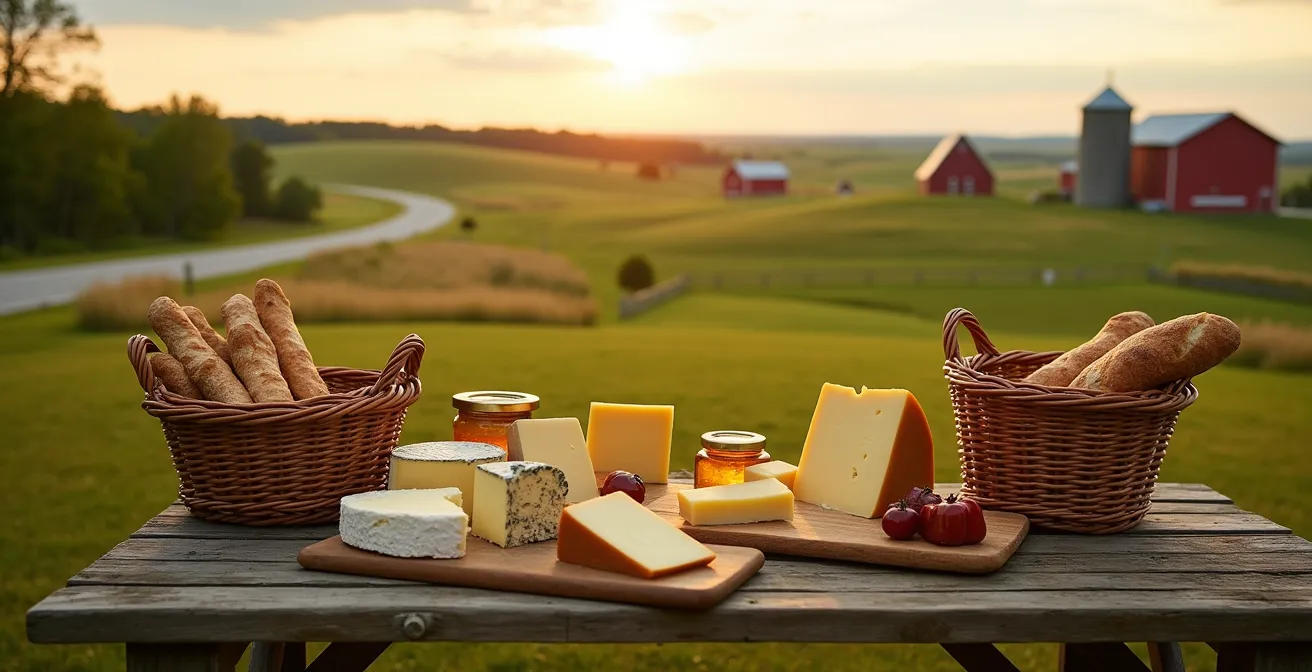
A successful Quebec cheese road trip isn’t about visiting the most places, but about mastering the logistics of taste and transport.
- Choose your region based on cheese density and pairing preferences (e.g., Eastern Townships for wine, Charlevoix for gastronomy).
- Master cheese preservation with a dual-cooler system and proper wrapping to protect your investment.
- Understand local etiquette: use free samples for quick decisions and paid platters for a true cultural immersion.
Recommendation: Prioritize a few high-quality experiences over a frantic dash between fromageries to truly savor the terroir.
Embarking on a cheese road trip through Quebec is an iconic Canadian culinary pilgrimage. For cheese enthusiasts, the allure of discovering dozens of artisanal fromageries, each with its own unique terroir and story, is irresistible. Yet, many travelers focus only on a list of destinations, overlooking the critical details that make or break the experience. They might know to try cheese curds but not how to preserve their signature squeak. They might pack a basic cooler, unaware of the specific needs of delicate, soft-ripened cheeses.
While it’s tempting to just follow the “Route des Fromages” signs, a truly memorable journey requires a strategist’s mindset. While French is the heart of Quebec, you’ll find that most producers along major tourist routes are happy to welcome you in English. The best time for this adventure is from late spring through early fall, when the countryside is lush and all the fromageries are fully operational. This is the season to dive deep into the culture of Quebec cheese.
But what if the key to the perfect trip wasn’t just *where* you go, but *how* you go? This guide moves beyond simple recommendations. We will decode the logistics and etiquette of a Quebec cheese tour, transforming your drive into a masterclass. We’ll cover everything from the science of cheese transport and regional strategy to the unspoken rules of the tasting counter and the art of rewarding your designated driver. Prepare to elevate your cheese-tasting journey from a simple tour to a flawless gastronomic operation.
This comprehensive guide is structured to answer the most pressing questions for planning your trip. Follow along as we break down each critical element for your ultimate Quebec cheese adventure.
Summary: How to Plan a Cheese Tasting Road Trip in Quebec?
- Electric Cooler vs. Ice Packs: What Do You Need for a 3-Day Cheese Trip?
- Free Samples vs. Paid Platters: What Is Expected?
- Eastern Townships or Saguenay: Which Region Has the Best Cheese Density?
- Where to Buy Bread on Sunday in Rural Quebec?
- Why Fresh Curds Don’t Squeak After 24 Hours in the Fridge?
- How to Keep Charlevoix Cheese Fresh in a Hot Car All Day?
- The Designated Driver Strategy: How to Reward the Person Who Doesn’t Drink?
- How to Complete the “Route des Bières” Without Losing Your License?
Electric Cooler vs. Ice Packs: What Do You Need for a 3-Day Cheese Trip?
The single most important piece of equipment for your cheese road trip is your mobile cellar. Bringing home a trunk full of world-class cheese only to find it bruised, sweaty, or spoiled is a tragedy. The choice between an electric cooler and a traditional one with ice packs depends on your commitment to “logistical integrity.” For a multi-day trip, a 12V electric cooler is the superior choice, as it provides consistent and controlled temperatures, which is vital for cheese health.
Artisanal cheese is a living product. According to experts, the ideal environment requires maintaining a temperature between 6°C to 16°C with high humidity. Standard coolers with ice or frozen water bottles often create a humid but overly cold environment that can cause cheese to sweat, damaging its texture and rind. An electric cooler plugged into your car’s outlet avoids these temperature swings, keeping your precious cargo stable during long drives and multiple stops.
For the ultimate setup, adopt the two-cooler strategy. One standard cooler with ice packs is for your drinks and other perishable picnic items. The second, your “cheese cellar,” should be an electric cooler set to around 10-12°C. This protects the cheese from extreme cold and moisture. Inside this cooler, never let cheese touch plastic wrap, which suffocates it. Always ask the fromagerie for cheese paper or use wax paper, then place the wrapped cheeses in hard-sided containers to prevent them from being crushed on Quebec’s famously scenic but winding roads.
Free Samples vs. Paid Platters: What Is Expected?
Navigating the tasting counter at a Quebec fromagerie involves a “tasting protocol” that balances curiosity with respect for the artisans. Understanding the difference between a quick, free sample and a paid tasting experience is key to a smooth and enjoyable visit. Free samples, typically offered at the counter, are designed for one purpose: to help you make a purchase decision. They are not a free-for-all snack bar.
It is customary to accept one or two small tastes of cheeses you are genuinely interested in buying. This is a quick interaction, lasting only a few minutes. On the other hand, a paid tasting—often called a “planche” or “assiette de dégustation”—is a cultural experience. It is an invitation to sit down, slow down, and appreciate a curated selection of cheeses, often paired with local breads, fruits, or jams. As a gastronomic guide, I always recommend budgeting for at least one paid platter per day. This not only supports the producer directly but also provides a far deeper understanding of their craft.
As a concrete example, Fromagerie La Station in the Eastern Townships masterfully offers both options. You can have a quick taste at their farm store counter to decide which of their organic, raw-milk cheeses to buy. Alternatively, you can opt for a more immersive experience, such as a guided farm tour followed by a light lunch or ordering one of their famous grilled cheese sandwiches, which showcases their products in a prepared dish. This demonstrates the different levels of engagement available to visitors.
To help you plan, it’s useful to understand the typical offerings and what they entail.
| Tasting Type | Cost | What’s Included | Duration | Best For |
|---|---|---|---|---|
| Free Counter Sample | Free | 1-2 small cheese tastes | 5-10 minutes | Quick purchase decision |
| Farm Tour with Tasting | $15-25 CAD | Tour, multiple tastings, education | 60-90 minutes | Full experience seekers |
| Planche/Assiette | $20-35 CAD | Curated selection with pairings | 45-60 minutes | Sit-down cultural experience |
| Wine & Cheese Pairing | $40-60 CAD | Premium cheeses with selected wines | 60-90 minutes | Gourmet enthusiasts |
Eastern Townships or Saguenay: Which Region Has the Best Cheese Density?
Choosing your battleground is a crucial strategic decision. While excellent cheese is found across Quebec, the “best” region depends on your priorities: cheese density, driving time, and pairing preferences. The two most popular contenders, the Eastern Townships (Cantons-de-l’Est) and Saguenay-Lac-Saint-Jean, offer distinctly different experiences. For a trip focused purely on maximizing the number of fromageries visited in a short time, the Eastern Townships are the undisputed champion of cheese density.
The Townships’ official “Cheesemakers Circuit” (Les Têtes Fromagères) boasts 14 fromageries in a relatively compact area, easily accessible from Montreal. This region is also Quebec’s premier wine-producing area, creating a perfect pairing ecosystem. The official Wine Route covers 87 miles with sixteen vineyards, allowing you to alternate fromagerie visits with winery tastings seamlessly. This makes it ideal for the wine and cheese enthusiast.
In contrast, Saguenay-Lac-Saint-Jean is a destination for the wilderness adventurer who also loves cheese. The region has fewer major producers, but they are iconic, including Fromagerie Perron, the historic home of Quebec cheddar. The drive is significantly longer from Montreal, but it rewards visitors with dramatic landscapes and a different pairing culture focused on wild blueberries and robust craft beers. For comparison, Charlevoix offers a third option: a balance of gastronomic pilgrimage and stunning scenery, known for its unique cheeses like the 1608 and its comprehensive “Route des Saveurs” (Flavour Trail).
This table breaks down the key differences to help you choose the region that best fits your road trip style.
| Criteria | Eastern Townships | Saguenay-Lac-Saint-Jean | Charlevoix |
|---|---|---|---|
| Cheese Density | 14 fromageries on circuit | 5-7 major producers | 8-10 artisan makers |
| Distance from Montreal | 1.5 hours | 5 hours | 4 hours |
| Distance from Quebec City | 2.5 hours | 2 hours | 1.5 hours |
| Signature Cheeses | Abbaye cheeses, raw milk varieties | Perron cheddar, fresh curds | 1608, Migneron, Le Ciel |
| Pairing Options | 22 wineries, 20+ microbreweries | Blueberry products, craft beers | Route des Saveurs, cider houses |
| Best For | Wine & cheese enthusiasts | Wilderness adventurers | Gastronomic pilgrims |
Where to Buy Bread on Sunday in Rural Quebec?
A successful cheese tasting requires a worthy companion: excellent bread. However, securing a fresh, crusty loaf on a Sunday in rural Quebec can be a logistical challenge, as many small, independent bakeries (boulangeries) are closed. This is a classic “rural cadence” problem that requires foresight. A true cheese strategist never leaves their bread supply to chance.
The most reliable strategy is to stock up on Saturday. Visit a high-quality artisan bakery and purchase a large ‘miche de campagne’ or a sourdough loaf. These breads have excellent keeping qualities and will still be delicious on Sunday for your picnic. This simple act of planning elevates your experience from a frantic search for subpar bread to a relaxed, well-prepared tasting. Another excellent option is to seek out the local ‘marchés publics’ (farmers’ markets), which are often bustling on weekend mornings in towns like Magog or Sutton and feature vendors selling fresh bread alongside produce and other local goods.
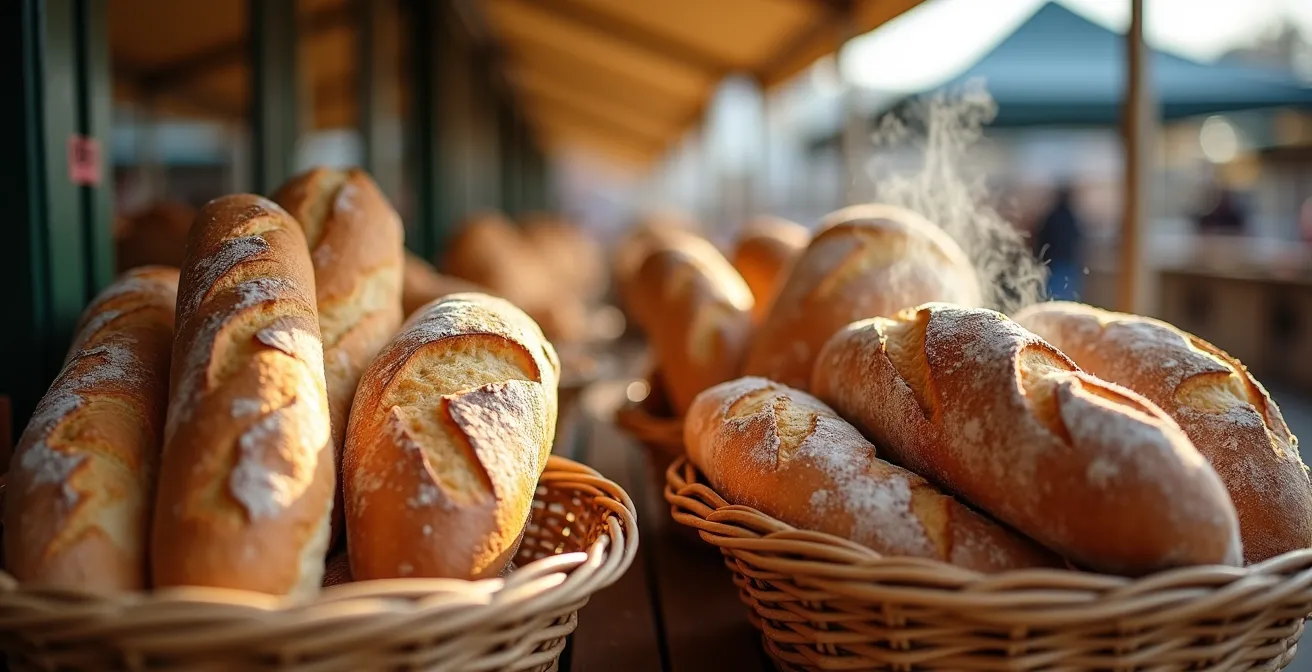
If Saturday shopping wasn’t possible, your next best bets are the major supermarket chains like IGA, Metro, or Provigo, which typically have Sunday hours and in-store bakeries. While not always at the same level as an independent boulangerie, they provide a solid option. As a last resort, convenience stores (dépanneurs) and gas stations will carry basic, pre-packaged bread, but this should be avoided if you want to do justice to the artisanal cheese you’ve so carefully collected.
Your Action Plan: Sunday Bread Hunting in Rural Quebec
- Saturday Stock-Up: Purchase high-quality ‘miche de campagne’ or sourdough on Saturday that will keep fresh through Sunday.
- Check Farmers’ Markets: Visit ‘marchés publics’ which often operate on weekends in towns like Magog and Sutton.
- Target Major Supermarkets: IGA, Metro, and Provigo typically have Sunday hours and fresh bread sections.
- Farm Stands Alternative: Look for roadside farm stands that often sell fresh bread alongside local produce.
- Last Resort Options: Convenience stores (dépanneurs) and gas stations carry basic bread options if needed.
Why Fresh Curds Don’t Squeak After 24 Hours in the Fridge?
The iconic “skouik skouik” sound of fresh Quebec cheese curds is the hallmark of authenticity. It’s an auditory confirmation of ultimate freshness. As one local wisely put it:
Did the cheese squeak? Well, it wasn’t fresh then. Fresh cheese curds do squeak.
– Audrey, Jack and Jill Travel Blog
This squeak isn’t magic; it’s science. The sound comes from the elastic protein network (primarily casein) within the curd rubbing against the enamel of your teeth. For this network to be perfectly springy, the cheese must be extremely fresh and served at room temperature. The moment you refrigerate cheese curds, the cold causes the protein structure to tighten and become brittle. This process, combined with the natural breakdown of proteins over time, irreversibly destroys the squeak.
Even if you bring refrigerated curds back to room temperature, the squeak will be gone or significantly diminished. The protein bonds have been fundamentally altered. This is why true connoisseurs know that ‘fromage en grains’ is a delicacy to be consumed within hours of its creation, never having seen the inside of a fridge. On your road trip, look for signs advertising “Fromage en grains du jour” (cheese curds of the day). This is your guarantee of morning-fresh curds.
Your mission, should you choose to accept it, is to buy your curds directly from a producer like Fromagerie Blackburn in Saguenay or any fromagerie making them fresh that morning. Plan to eat them as a car snack or your first appetizer that day. If you must keep them for more than 12 hours, then you can refrigerate them, but you must accept that you are sacrificing the squeak for longevity. They will still be delicious, but a part of their soul will be lost.
How to Keep Charlevoix Cheese Fresh in a Hot Car All Day?
The Charlevoix region presents a unique logistical challenge. It is a hub of gastronomic pilgrimage, home to some of Quebec’s most delicate and revered cheeses, which require even more careful handling than their firmer counterparts. Keeping a soft-ripened Le Ciel de Charlevoix or a washed-rind Migneron de Charlevoix in perfect condition in a hot car requires an upgrade to your preservation strategy.
These cheeses are more sensitive to temperature fluctuations and physical damage. While the average Canadian’s love for cheese is growing, with consumption estimated at around 12.6 kilograms per capita in 2024, not all cheeses are created equal. The robust cheddars of other regions can withstand more abuse than the fragile, nuanced creations of Charlevoix. Here, your dual-cooler system becomes non-negotiable. The “cheese cellar” cooler must be diligently maintained at a stable temperature, and you must avoid opening it frequently.

The key to success with Charlevoix’s treasures lies in three principles: minimal handling, stable temperature, and crush-proofing. When you purchase a cheese like the famous 1608, ask the cheesemonger for the best way to transport it. They will provide the correct wrapping. Once wrapped, place these softer cheeses in their own hard-sided container within the electric cooler. This prevents them from being compressed by heavier, harder cheeses as you navigate the region’s hilly roads. Think of it as a first-class cabin for your most valuable culinary souvenirs.
Key Takeaways
- A dual-cooler system (one electric for cheese, one standard for drinks) is the gold standard for a multi-day cheese trip.
- Respect local etiquette: use free samples for purchase decisions and paid platters for a full cultural experience.
- Choose your region strategically: the Eastern Townships for wine pairings and density, or other regions for different experiences.
The Designated Driver Strategy: How to Reward the Person Who Doesn’t Drink?
On a trip that so beautifully pairs cheese with wine, cider, and beer, the role of the designated driver (DD) is heroic. Ensuring your DD feels like a valued part of the gastronomic adventure, rather than just a chauffeur, is essential for group harmony. A proper DD strategy involves more than just a “thank you”; it requires actively integrating non-alcoholic delights into your itinerary.
A great way to do this is to create a “DD Reward System.” Grant the DD “Golden Hour” control, where they get to choose the playlist, the lunch spot, or a special non-alcoholic stop. Instead of just water, seek out local craft sodas like Bec Cola or artisanal sparkling apple juices from the region’s many cideries. This allows them to participate in the local tasting culture. Many cideries, like Michel Jodoin, offer fantastic non-alcoholic options and beautiful scenery that everyone can enjoy.
Furthermore, build your route to include DD-friendly stops that go beyond alcohol. Quebec is rich with économusées (working museums), honey producers (mielleries), lavender farms like Bleu Lavande, and artisan chocolate shops. These stops provide a sensory experience for everyone. A fun ritual can be to pool the money saved from the DD not drinking and letting them choose the most interesting or expensive cheese at the final fromagerie of the day. This turns their sacrifice into a tangible, delicious reward for the whole group to share later.
How to Complete the “Route des Bières” Without Losing Your License?
Integrating a beer tour with your cheese tour is a natural evolution of the Quebec tasting experience, especially in a region like the Eastern Townships, which boasts more than twenty microbreweries. However, navigating the “Route des Bières” requires even more stringent planning due to Quebec’s strict drinking and driving laws. A successful beer and cheese tour is one where you enjoy the pairings without ever risking your license.
The most critical piece of information is Quebec’s Blood Alcohol Concentration (BAC) limit, which is 0.05. This is lower than in many other places, including many U.S. states, and it is strictly enforced. It takes much less alcohol to reach this limit than you might think. Therefore, the strategy of “one person drinks per stop” is essential. Do not attempt to have a full pint at multiple breweries in one afternoon if you are driving.
The key to responsible enjoyment is pacing and sharing. Always opt for tasting flights with small 4-5oz samples and share them between two or more people. Alternate your stops: visit a brewery, then a fromagerie, then a scenic lookout. This naturally paces your consumption and gives your body time to process the alcohol. Better yet, plan your brewery visits around meals. Many brewpubs, like Microbrasserie La Memphré in Magog, are excellent restaurants, allowing you to pair your tasting flight with a full meal, which significantly slows alcohol absorption. The safest strategy of all is to book accommodations near a cluster of breweries, allowing you to walk between them and avoid driving entirely after you’ve started tasting.
Now that you are equipped with the strategies for transport, tasting, and responsible pairing, your Quebec cheese road trip is set for success. The final step is to put this plan into action and begin mapping out your personalized culinary adventure.