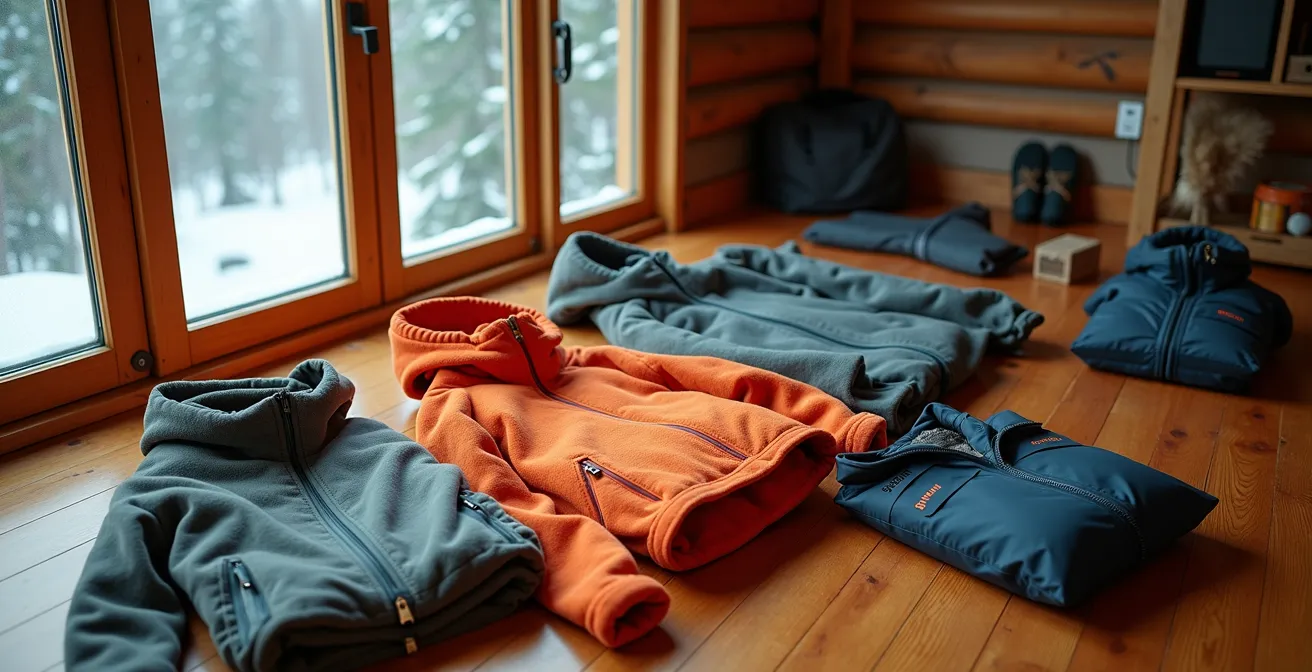
Packing for a Quebec road trip isn’t about bringing more clothes; it’s about adopting a smarter, modular system.
- Your core apparel must function as a technical three-part system (base, mid, outer) to handle rapid weather shifts.
- Gear choices, from footwear to electronics, require a mixed-use strategy that prioritizes adaptability and protection against thermal shock.
- Awareness of your environmental footprint, from soap to sunscreen, is a non-negotiable part of the packing list for accessing Quebec’s protected natural spaces.
Recommendation: Shift from a ‘just in case’ packing list to a ‘functional module’ philosophy. This allows you to stay comfortable, dry, and ready for any adventure Quebec throws at you.
The classic Quebec road trip presents a unique sartorial challenge. You might find yourself sweltering in Montreal’s humid urban heat, and less than 48 hours later, be shivering in a thick, damp fog rolling off the St. Lawrence in Gaspésie. This climatic chaos often leads to the same generic advice: “pack for all seasons” or “bring layers.” While not incorrect, this advice is frustratingly incomplete. It tells you *what* to do, but not *how* or, more importantly, *why*. It results in overstuffed suitcases and a reactive approach to dressing, where you’re always one step behind the weather.
The real secret isn’t buried under a mountain of extra sweaters. It lies in a fundamental shift in mindset. Instead of thinking about individual clothing items, you must think like a systems engineer. The key isn’t to pack *more*; it’s to pack *smarter* by creating a cohesive, modular packing system. Each piece in your luggage, from your socks to your sunscreen, is not just an item but a functional module designed to perform a specific task: wick moisture, provide insulation, block wind, or even facilitate a connection with locals.
This guide deconstructs that system. We will move beyond the platitudes and dive into the technical specifics of building a resilient and efficient packing strategy. We will assemble your core apparel system, select the right modules for footwear and gear maintenance, and even consider the tools needed for environmental and social integration. By the end, you won’t just have a packing list; you’ll have a strategic framework for tackling Quebec’s beautiful and unpredictable environments with confidence and comfort.
To help you navigate this comprehensive approach, this article is structured to build your modular system piece by piece. The following sections will guide you through each critical component, from your core clothing system to the essential gear that ensures a smooth and memorable journey.
Summary: A Modular System for Your Quebec Adventure
- Why the “Onion Strategy” Is Crucial for Quebec Weather?
- Hiking Boots or City Sneakers: Which to Choose for a Mixed Trip?
- Laundromats or Hotel Service: What Is Best for a 2-Week Road Trip?
- The Condensation Risk for Cameras Moving from AC to Humid Outdoors
- Soap and Sunscreen: What Products Are Legal in Protected Lakes?
- Hygge vs. Hibernation: How Locals Stay Sane in February?
- Rental vs. Purchase: Which Gear Protects Best Against -30°C Winds?
- How to Connect with Locals in Rural Quebec Despite the Language Barrier?
Why the “Onion Strategy” Is Crucial for Quebec Weather?
Forget the term “onion strategy”; it’s too simplistic. As a travel stylist, I call it a three-part technical apparel system. This is the engine of your comfort and the single most important concept to master. Quebec’s weather isn’t just “variable”; it’s a collection of distinct microclimates you can pass through in hours. A single day, especially in the shoulder seasons, can easily see temperature fluctuations from 10°C morning fog to 24°C midday sun. A simple cotton t-shirt and a heavy sweater leave you with only two options: too hot or too cold. A technical system gives you a thermostat.
The system is composed of three distinct functional layers you can add or remove to precisely regulate your temperature and moisture:
- Base Layer: This is your second skin. Its only job is to wick moisture (sweat) away from your body to keep you dry. Wetness is the enemy of warmth. Choose materials like merino wool or high-quality synthetics. Brands found in Canada like Icebreaker are specialists in this. Absolutely avoid cotton, which absorbs moisture and will leave you feeling chilled and clammy.
- Middle Layer: This is your insulation. Its job is to trap your body heat. The key here is air-trapping efficiency. A fleece jacket, a wool sweater, or a lightweight down vest are perfect modules. Look to Quebec-based brands like Chlorophylle that design products specifically for these conditions.
- Outer Layer (Shell): This is your shield against the elements. It must be windproof and waterproof. This layer protects your insulation from getting wet (which would render it useless) and prevents wind from stripping away your trapped body heat. Look for a shell with sealed seams and technical fabrics. Renowned Canadian brand Arc’teryx sets the standard here.
This system allows for micro-adjustments. On the Gaspésie coast, you’ll rely on your windproof outer shell. During a cool evening in the Laurentians, your fleece mid-layer is key. In Montreal, a stylish base layer might be all you need. It’s an adaptable, high-performance solution for a demanding environment.
Hiking Boots or City Sneakers: Which to Choose for a Mixed Trip?
The classic footwear dilemma for a mixed urban-and-wild Quebec trip is a false choice. You don’t need to choose between heavy hiking boots and flimsy city sneakers; you need to select a single, versatile module that can handle both. The solution lies in the category of waterproof trail runners. These shoes are the ultimate compromise, offering the support and grip needed for a national park trail while being light and stylish enough for exploring Old Quebec.
This single piece of gear must perform on cobblestones, muddy paths in the Forillon National Park, and slick granite by the Saguenay Fjord. When selecting your model, consider two sub-types. Some are built like the Sylan GTX, designed for speed on relatively smooth trails and excel in wet, muddy conditions. Others are workhorses like the Norvan LD 4 GTX, built for stability on more rugged terrain with rocks and roots. For the typical Montreal-Gaspésie-Saguenay loop, the latter offers more confidence across the board. The non-negotiable feature is a GORE-TEX or similar waterproof membrane. Quebec is a wet province, and nothing ends a day of exploration faster than soaked feet.
This image perfectly captures the reality of a Quebec trail in autumn—conditions your footwear must be prepared to handle effortlessly.
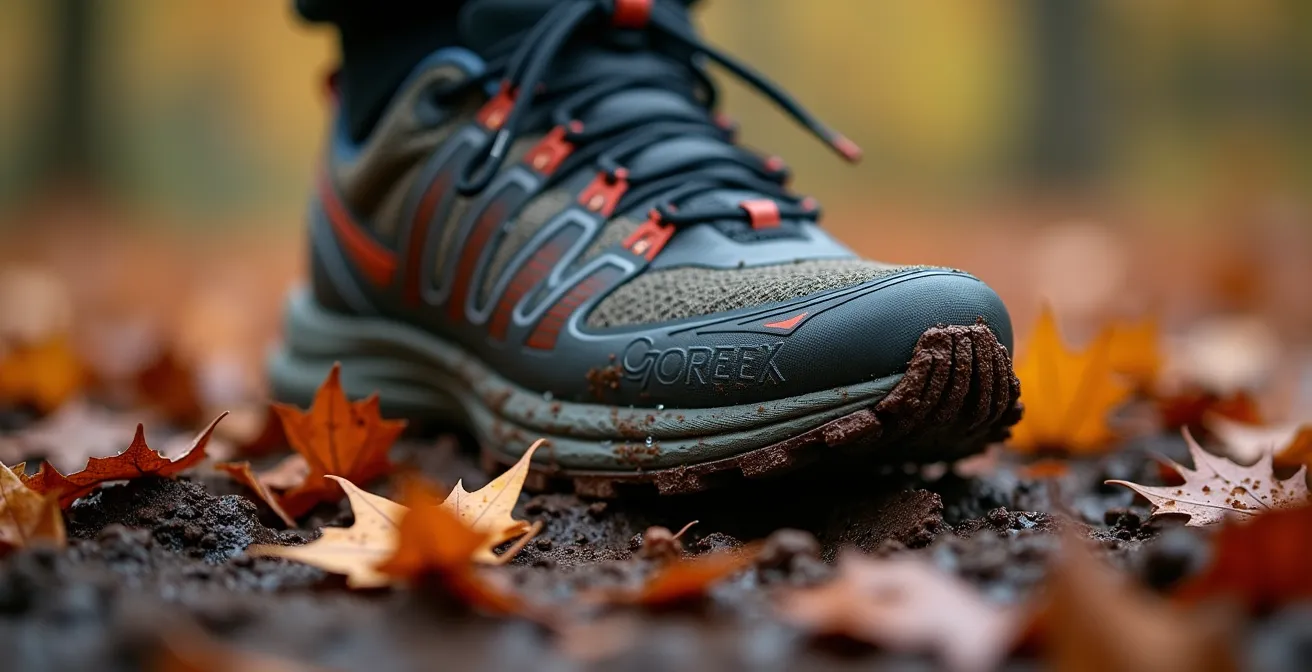
Pairing these shoes with quality merino wool socks (part of your base layer system) completes the foot-comfort module. The wool wicks moisture from the inside while the shoe’s membrane blocks it from the outside. This systematic approach ensures your feet remain dry, warm, and comfortable, whether you’re logging 15,000 steps in Montreal or tackling a challenging coastal hike.
Laundromats or Hotel Service: What Is Best for a 2-Week Road Trip?
On a two-week road trip, laundry isn’t a chore; it’s a strategic component of your packing system that I call “system maintenance.” Your approach to it directly impacts how light you can pack. Relying on hotel laundry services is a critical error. It’s not only financially inefficient— typical Canadian rates show hotel laundry can cost around $25 for just a few items versus $7 for a full load at a laundromat—but it’s also slow and inflexible. To pack light, you must plan for one or two “laundry days” in strategically chosen hub towns.
An efficient laundry strategy allows you to pack for 5-7 days and simply cycle through your clothes. This is only possible if you build a small “laundry module” into your packing list and plan your stops accordingly. Rather than a last-minute panic, you treat it like a planned stop for gas or groceries. This proactive approach saves a significant amount of money and, more importantly, suitcase space.
By integrating a laundry day, you can cut the amount of clothing you pack by half, freeing up critical space for other gear or souvenirs. It is the single most effective trick for lightening your load on an extended trip.
Your Action Plan: Strategic Laundry Planning for Quebec
- Map laundromat (‘buanderie’) locations: Plan your laundry days around hub towns like Rimouski, Gaspé, or Baie-Comeau, where facilities are readily available and often open late.
- Pack a laundry micro-kit: Bring a universal sink plug and a small bottle of biodegradable soap (like Dr. Bronner’s, available at Canadian stores like SAIL or MEC) for hand-washing single items.
- Utilize your vehicle: A simple travel clothesline can be strung up in the back of your car, turning driving time between destinations into drying time for quick-dry items.
- Segregate your clothes: Use packing cubes to separate dirty or damp clothes from clean ones. This keeps your clean clothes fresh and makes grabbing your laundry bag easy.
- Calculate the benefit: Over a two-week trip, choosing laundromats can save you over $150—more than enough to cover a memorable experience like a whale-watching tour in Tadoussac.
The Condensation Risk for Cameras Moving from AC to Humid Outdoors
One of the most overlooked aspects of a Quebec road trip is managing thermal shock on your electronics. The danger isn’t the cold or the heat itself, but the rapid transition between them. Imagine stepping out of your air-conditioned car (20°C) into the warm, humid air of the Tadoussac fjord on a summer morning (26°C with 95% humidity). For your camera, drone, or laptop, this is a recipe for disaster. The cold mass of the electronics causes the moisture in the warm air to instantly condense on and, more critically, *inside* the lens and circuitry.
This condensation can cause immediate functionality issues, long-term corrosion, or even permanent damage. Protecting your expensive gear requires a simple but non-negotiable procedure. It’s a module of your system focused on risk mitigation. You must think of your electronics not just as tools, but as sensitive instruments that need to be acclimatized.
The most effective method is both cheap and simple. Here is a step-by-step process to prevent condensation:
- The Ziploc Bag Trick: Before you leave your cold environment (AC car, hotel room), seal your camera and other sensitive electronics in an airtight Ziploc bag.
- Slow Acclimatization: Once you are outside in the warm, humid air, leave the device inside the sealed bag for at least 15-20 minutes. This allows the device to warm up slowly to the ambient temperature. Condensation will form on the *outside* of the bag, not inside your lens.
- Moisture Absorption: Pack a few silica gel packets (the kind you find in new shoe boxes) in your camera bag. They will help absorb any ambient moisture within the bag, providing an extra layer of protection.
- Extend the Principle: This same technique applies to all your valuable electronics. Your laptop, drone, and even your smartphone are vulnerable to the same thermal shock. Get in the habit of protecting them all.
Failing to follow this simple procedure can lead to a ruined photo opportunity or a very expensive repair. It’s a five-minute habit that protects a thousand-dollar investment.
Soap and Sunscreen: What Products Are Legal in Protected Lakes?
Your packing system doesn’t just interact with you; it interacts with the environment. In Quebec, home to stunning national parks like Mont-Tremblant and Jacques-Cartier, this interaction is governed by strict rules. The soap, sunscreen, and bug spray you bring are not just personal items; they are an “environmental interface module.” Using the wrong products can not only harm fragile ecosystems but can also be against park regulations. The guiding principle is simple: if you wouldn’t drink it, don’t swim with it on your skin.
Many conventional toiletries contain phosphates, oxybenzone, and other chemicals that are devastating to aquatic life. SÉPAQ (the agency managing Quebec’s provincial parks) and Parks Canada enforce regulations to protect these pristine waters. This means your standard drugstore sunscreen might be prohibited. To be safe and responsible, you must pack or purchase products that are biodegradable and eco-friendly. This isn’t a suggestion; it’s a requirement for anyone planning to swim or even camp near natural water sources.
Fortunately, finding compliant products in Quebec is easy if you know where to look. You can plan ahead or make a quick stop at the beginning of your trip.
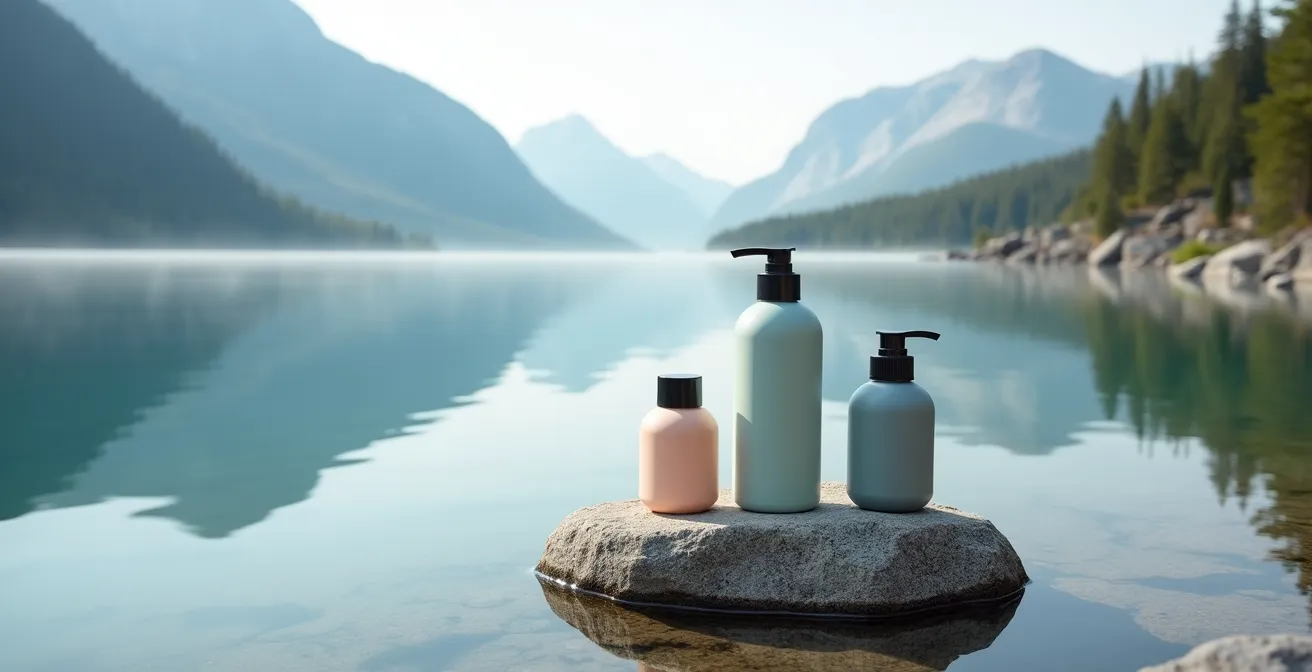
Here’s your shopping guide for building a park-approved toiletry kit:
- Where to Shop: Look in local Quebec pharmacies like Jean Coutu or Pharmaprix, or dedicated outdoor stores like MEC and SAIL. They have dedicated sections for these products.
- Local Brands: Support local expertise by choosing Quebec or Canadian brands like ‘Attitude Living’ or ‘Green Beaver’, which specialize in eco-conscious formulas.
- Soap: For backcountry use, your soap must be biodegradable and phosphate-free.
- Sunscreen: The key is to choose mineral-based sunscreens (with zinc oxide or titanium dioxide) and ensure they are free of oxybenzone and octinoxate, which are known to damage coral and other aquatic organisms.
Choosing the right products is a sign of a respectful and prepared traveler. It shows you understand that accessing Quebec’s incredible nature is a privilege that comes with responsibilities.
Hygge vs. Hibernation: How Locals Stay Sane in February?
While your road trip may be planned for the milder seasons, understanding Quebec’s relationship with winter provides a deep insight into the local culture of resilience and comfort. The modular system we’ve discussed for a three-climate trip finds its ultimate expression in the face of a Quebec winter. It’s not about mere survival; it’s about a conscious choice to embrace the season. As local experts put it:
There’s tolerating winter, and then there’s celebrating winter. Here in the capital of Canada’s only fully Francophone province, winter is a way of life.
– Quebec City Tourism, Quebec City Winter Road Trip Guide
This “celebration” is an active state, not a passive one. It’s less about the Danish concept of ‘Hygge’ (cozy contentment) and more about a robust Quebecois strategy of alternating between vigorous outdoor activity and warm, social “cocooning.” Locals don’t hibernate; they layer up for the Carnaval de Québec, then retreat to a bustling pub or a cozy auberge. To do this comfortably, their packing list includes a “cocooning module” designed for this transition. This includes items like thick merino wool socks for instant comfort indoors, a thermos for hot drinks, and a ‘smart casual’ warm outfit for participating in the vibrant ‘5 à 7’ (happy hour) culture. It’s about having the right gear to be both active outdoors and comfortable indoors.
Rental vs. Purchase: Which Gear Protects Best Against -30°C Winds?
For the traveler considering an extreme winter trip to Quebec, the modular system extends to a critical decision: what to bring versus what to rent. Packing for -30°C windchills is a specialized task. Bringing your own sub-zero parka and insulated pants is often impractical due to their bulk. An efficient packing system for a winter trip relies heavily on local rentals for specialized, heavy-duty gear. This saves immense luggage space and gives you access to high-performance Canadian brands designed specifically for these brutal conditions.
Your personal packing module should focus on the items closest to your skin, where fit and personal comfort are paramount. You bring the base and mid-layers; you rent the heavy outer shell. This hybrid approach is the most effective and efficient strategy. The key is knowing which items fall into which category.
This following breakdown, based on an analysis of Canadian winter wear strategies, provides a clear decision-making framework for assembling your winter gear.
| Item Category | Rent or Bring? | Reason | Estimated Cost |
|---|---|---|---|
| Bulky Parka (-30°C rated) | RENT | High-quality Canadian brands (Canada Goose, Kanuk) available | $150/week rental vs $1000+ purchase |
| Insulated Pants | RENT | Bulky to pack, specialized use | $75/week rental |
| Merino Base Layers | BRING | Personal comfort, multiple uses | $50-100 to own |
| Warm Hat (Tuque) | BRING | Personal fit, souvenir value | $20-40 |
| Quality Gloves | BRING | Personal fit crucial for comfort | $30-80 |
By renting the bulkiest items, you transform an impossible packing list into a manageable one. You travel light with your personal comfort essentials and equip yourself with top-tier, locally-appropriate gear upon arrival. This is the modular system applied at its most strategic level.
Key Takeaways
- Adopt a “modular system” mindset: Every item in your bag is a functional module, not just a piece of clothing.
- Master the three-part technical apparel system (base, mid, shell) to actively manage your comfort in Quebec’s variable climate.
- Choose versatile gear, like waterproof trail runners, and plan for “system maintenance” like laundry to pack significantly lighter.
How to Connect with Locals in Rural Quebec Despite the Language Barrier?
The final module in your Quebec packing system isn’t for comfort or safety, but for connection. In the rural regions of Gaspésie or the Saguenay–Lac-Saint-Jean, where French is the dominant language of daily life, the language barrier can feel intimidating. However, connection is less about perfect fluency and more about demonstrating genuine effort and goodwill. Your “social connection module” is a small collection of items designed to bridge this gap and open doors to authentic interactions.
Relying solely on a translation app on your phone can feel impersonal and create distance. The goal is to show you care. A physical item can be a powerful icebreaker that transcends language. Packing a few specific, low-tech tools signals that you are an engaged and curious visitor, not just a passing tourist. This small kit can transform your experience from one of observation to one of participation.
Consider adding these items to your social toolkit:
- A pocket-sized French phrasebook: Even if you stumble, the act of physically opening a book shows far more effort and is more endearing than staring at a screen.
- A deck of playing cards: A universal language for a quiet evening at a local pub or campsite.
- Montreal Canadiens merchandise: Wearing a “Habs” cap or t-shirt is an instant signal of goodwill and a powerful conversation starter across the entire province.
- Small hometown souvenirs: A few postcards, pins, or local candies from your hometown are a wonderful way to say “thank you” for unexpected hospitality.
These simple items communicate respect and a willingness to engage on a human level. They are tools that help you participate in the local culture, not just observe it from behind a car window.
Now that you have all the modules, from technical apparel to social tools, you can build your personalized packing system. Start assembling these components today and prepare to experience Quebec with the confidence and comfort of a seasoned traveler.