In summary:
- You don’t need a permit for most groundfish (like mackerel) in Quebec’s tidal waters, known as Zone 21.
- The law is strict: you can only use one line with a maximum of three hooks.
- There is a daily catch limit of 20 mackerel per person.
- Success depends on timing the summer mackerel run (late July-October) and respecting wharf etiquette.
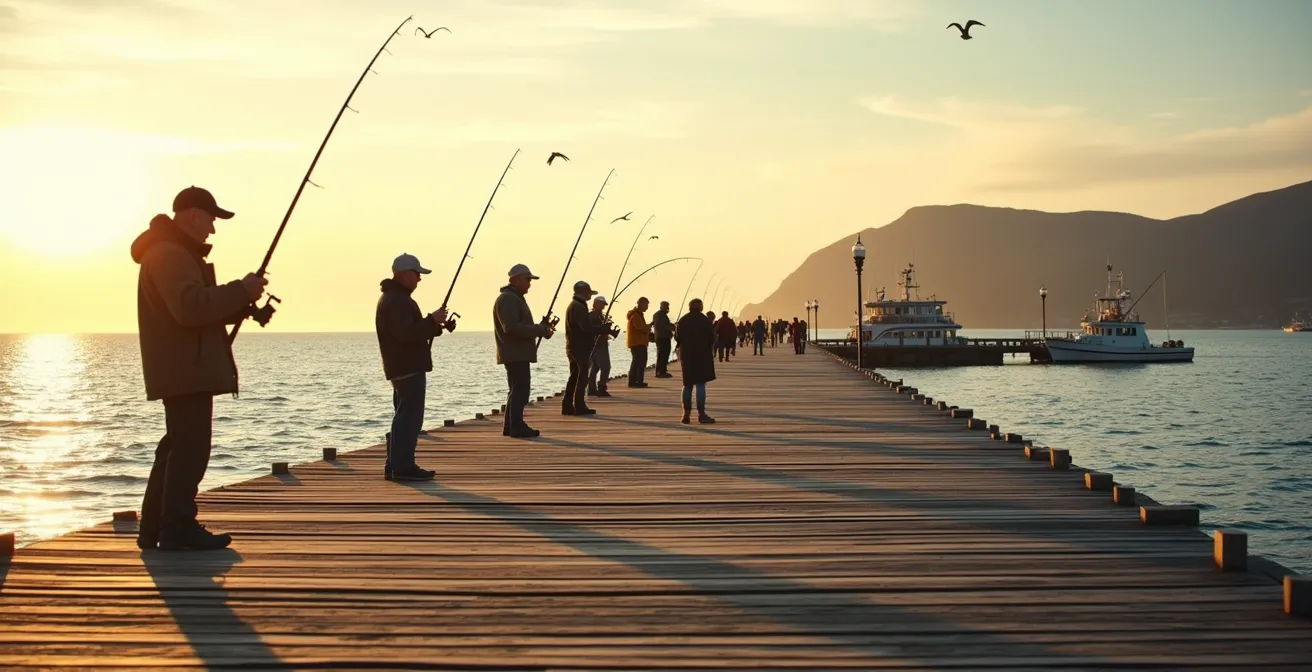
Picture this: a sunny afternoon on the Gaspé coast, a light sea breeze, and the rhythmic clang of a bell buoy in the distance. Families line the wharf, kids squealing with delight as they reel in shimmering, silver-blue fish, sometimes two or three at a time. This is mackerel fishing in Quebec, one of the province’s most cherished and accessible summer traditions. It seems simple, and it can be, but there’s a lot of confusing information out there. Many tourists show up thinking it’s a free-for-all, only to get tangled lines, disapproving looks from locals, or worse, a visit from a wildlife officer.
Most guides will give you the basic, generic advice: “use a Sabiki rig” and “you don’t need a saltwater license.” While true, that’s barely scratching the surface. It doesn’t tell you why that five-hook rig you bought at the big box store is illegal here, or how to avoid causing a pier-wide tangle with a sloppy cast. It doesn’t explain the crucial difference between fishing in a freshwater river just a stone’s throw from the wharf and fishing in the tidal saltwater of the St. Lawrence.
But what if the key wasn’t just knowing the rules, but understanding the local rhythm? This guide isn’t just about avoiding a fine; it’s about fishing like you belong here. We’re going to move beyond the platitudes and get into the practical, on-the-ground knowledge that separates the folks who go home empty-handed from those who are planning a fresh mackerel BBQ. We’ll cover the specifics of the license exemption, the gear that actually works (and is legal), the unspoken rules of the wharf, and how to make sure your catch stays fresh all the way home.
This article breaks down everything you need to know, from the legal fine print to the practical tips that will make your experience more enjoyable and successful. Follow along to understand the specifics of Quebec’s unique fishing culture.
Summary : Your Guide to Permit-Free Mackerel Fishing on Quebec Wharves
- Why You Don’t Need a License for the St. Lawrence River Tidal Zones?
- What Rig to Use to Catch 5 Mackerel at Once?
- When Does the Mackerel Run Hit the Gaspé Coast?
- The Casting Etiquette Mistake That Causes Fights on the Pier
- Cooler or Salt: How to Keep Mackerel Fresh for the Drive Home?
- The License Rule Non-Residents Often Miss When Fishing
- Buying Groceries on the Mainland vs. on the Islands: Is the Price Difference Real?
- How to Choose the Right Outfitter in Northern Quebec for Your Needs?
Why You Don’t Need a License for the St. Lawrence River Tidal Zones?
Here’s the single most important rule to understand: the fishing license exemption isn’t about “saltwater,” it’s about a specific geographical area. In Quebec, this magical, permit-free zone for many species is known as Zone 21. This zone covers the tidal waters of the St. Lawrence River and Gulf. Essentially, an official guide states that the tidal zone extends east of the Pont Laviolette in Trois-Rivières, which means that nearly all the popular tourist wharves in the Gaspésie, Percé, and the North Shore are included. When you’re standing on a wharf in these areas, you’re fishing in tidal waters where different rules apply.
This exemption is for recreational “sport fishing” for groundfish. It’s not just mackerel you can catch without a permit. The list includes a surprising variety of species that you might pull up, including Atlantic tomcod, rainbow smelt, winter flounder, and cunner. However, there are critical exceptions. The biggest one is Atlantic salmon, which always requires a special, separate license, no matter where you are. The other major exception is striped bass. While you might hook one accidentally when fishing for mackerel, it is a protected species with very strict rules and must be released immediately if caught outside of the specific regulations for that species.
So, the reason you don’t need a license on that Gaspé wharf is simple: you are standing in Zone 21 and fishing for a species covered by the groundfish exemption. Step 500 meters up a freshwater river that feeds into the gulf, and you’re in a different world with different rules that absolutely require a provincial license.
What Rig to Use to Catch 5 Mackerel at Once?
This is where many well-intentioned anglers get into trouble. You’ll see rigs in stores with five or even six flashy hooks, and you might hear stories of people hauling up a whole string of fish at once. The truth is, while you *can* catch multiple mackerel on a single line, there’s a strict legal limit you must follow in Quebec. The most common and effective setup is a “Sabiki rig,” which is a pre-tied line with several small, feathered, or shiny hooks that mimic small baitfish. They are incredibly effective.
However, the key is the hook count. In Quebec, you are legally allowed a maximum of three hooks per line. Using a pre-packaged 5-hook or 6-hook Sabiki rig is illegal and can get you a fine. The smart move is to either buy a 3-hook rig or simply snip off the extra hooks from a larger one before you start fishing. Don’t risk it; the rule is there to help manage the fishery sustainably.
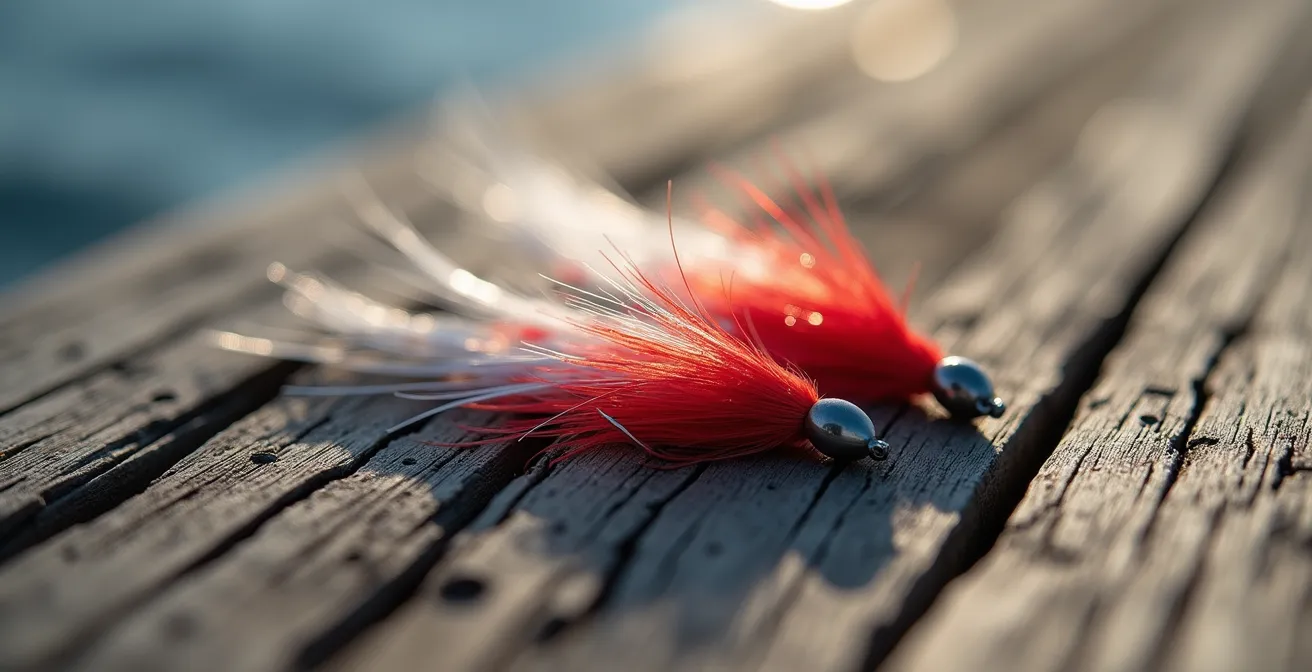
As you can see, the rig is simple but effective. A local pro-tip to make your rig even more irresistible is to add a tiny piece of bait to the bottom hook. A small sliver of mackerel skin from your first catch is perfect. This adds a natural scent to the visual flash of the feathers, often triggering more aggressive strikes from a passing school. For a beginner, a 3-hook rig is also far easier to manage and less prone to tangling, especially on a crowded wharf.
The following table breaks down the practical differences between using a legal 3-hook rig versus an illegal 5-hook rig on a typical Quebec wharf.
| Feature | 3-Hook Rig | 5-Hook Rig |
|---|---|---|
| Best For | Beginners, children, crowded piers | Experienced anglers (where legal) |
| Catch Rate | 1-3 fish per drop | Up to 5 fish per drop |
| Tangle Risk | Low – easier to manage | High – requires skill |
| Legal in Quebec | Yes – max 3 hooks allowed | No – exceeds Quebec’s 3-hook limit |
| Price Range | $8-10 CAD | $10-12 CAD |
When Does the Mackerel Run Hit the Gaspé Coast?
Mackerel are not here year-round; they are migratory fish. Timing your trip is everything. Showing up in June and expecting to fill a cooler is a recipe for disappointment. The main mackerel run is a summer and fall event. According to the official species profile, the Atlantic Mackerel feeding migration occurs from late July to October or even November in Atlantic Canada and Quebec waters.
Locals will tell you the season really kicks into gear in late July and peaks through August and September. The arrival can vary slightly year to year based on water temperatures, but August is almost always a safe bet. The fish typically appear first in the waters around the Magdalen Islands and the mouth of the Chaleur Bay before spreading along the entire Gaspé Peninsula and up the North Shore. Following local fishing reports on social media groups like “Pêche en Mer Gaspésie” can give you real-time updates on where the schools are.
The time of day also matters. While you can catch mackerel at any time when a school is passing, many experienced anglers find the best action happens on a moving tide. A rising or falling tide creates current that concentrates the small baitfish that mackerel feed on, bringing the schools closer to the wharves and into casting range. Check a tide chart app (like ‘Tide Alert’ or ‘Tides Near Me’) for the wharf you plan to visit. Fishing for an hour or two on either side of high or low tide is often the most productive window.
The Casting Etiquette Mistake That Causes Fights on the Pier
A busy wharf on a summer day is a community, and like any community, it has unwritten rules. Ignoring them is the fastest way to get on everyone’s bad side. The most common source of conflict is poor casting etiquette. With dozens of lines in the water, a little consideration goes a long way. The number one mistake is the “cross-cast.” This happens when you cast your line over top of your neighbours’ lines, creating a high risk of a massive, multi-line tangle that can take ages to fix and ruin the fishing for everyone involved.
The rule is simple: cast straight out from your position. Imagine the wharf is a pie, and everyone has their own slice of water. Your line should stay within your slice. Before you cast, look to your left and right to make sure you have enough space and that nobody is in the middle of reeling in a fish. A simple overhand cast is usually all you need; there’s no need for a dramatic, side-arm whip that can send your rig flying sideways into someone else’s space. This is especially important when using a weighted Sabiki rig, which can easily snag other lines if cast carelessly.
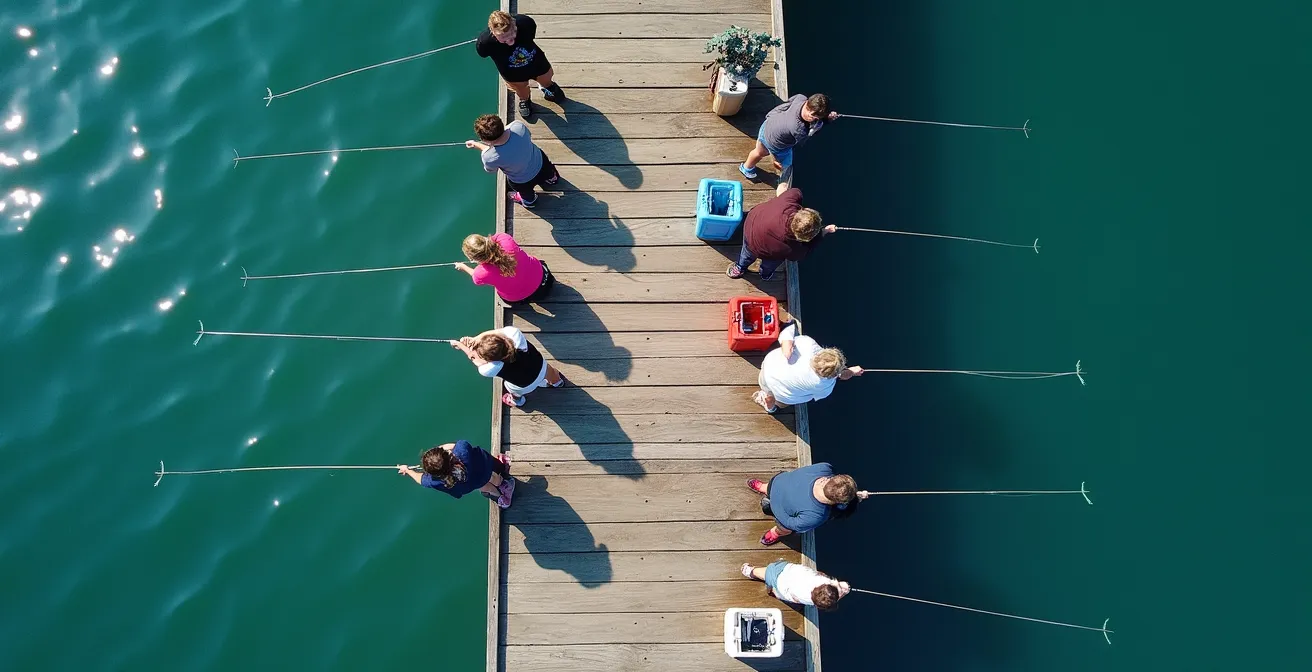
Beyond casting, basic courtesy includes giving people space. Don’t set up your gear right on top of someone who’s already there. A few metres of separation is standard. Also, keep an eye on your gear and cooler so they don’t become a tripping hazard. And remember the official rules: Gulf Region fishing regulations specify the daily limit is 20 Atlantic mackerel per person, with only one line in the water at a time. Respecting these limits and the personal space of others ensures a fun, safe, and productive day for everyone on the wharf.
Cooler or Salt: How to Keep Mackerel Fresh for the Drive Home?
You’ve had a great day and caught your limit of beautiful, fresh mackerel. Now what? This is where many visitors make a critical error. Mackerel is an oily fish, and its quality can degrade very quickly if not handled properly, especially on a hot day with a long drive ahead. Just throwing them in a bucket is not an option if you want them to be delicious when you get home.
The first and most important step happens the moment you catch the fish: you must bleed it immediately. A quick cut with a knife just behind the gills and under the fish’s “throat” will sever the main artery. Holding the fish head-down for a minute will allow most of the blood to drain out. This single step makes a massive difference in the flavour of the meat, removing much of the “fishy” taste that can develop.
Once bled, you need to get the fish cold, fast. For drives under a few hours, a good cooler packed with plenty of crushed ice is sufficient. But here’s a local secret: don’t buy expensive bags of cubed ice from the gas station. Head to the local ‘poissonnerie’ (fish plant or market) at the port. They sell large bags of crushed ice, the same stuff they use for commercial fishing boats, for just a few dollars. It’s cheaper and cools the fish down much more effectively. For longer drives, a simple brine is the professional’s choice. A mix of about one cup of salt to a gallon of water creates a super-chilled slurry that preserves the fish perfectly.
Your Action Plan: Mackerel Preservation for the Drive Home
- Bleed Immediately: Make a quick cut behind the gills right after catching to remove the ‘fishy’ taste and improve flesh quality.
- Short Drive (Under 3 Hours): Pack the bled fish in a cooler with plenty of crushed ice, ideally sourced from a local fish plant for better value and cooling.
- Long Drive (Over 3 Hours): Prepare a simple brine solution inside your cooler (1 cup of salt to 1 gallon of water) to create a super-chilled, preserving slurry.
- Bag and Submerge: Place the bled fish into a heavy-duty plastic bag, then submerge the bag in the ice or brine slurry within your cooler.
- Consider Local Services: Ask at the ‘poissonnerie’ if they offer filleting services. Many fish markets and smokehouses in the Gaspésie region can clean your catch for a small fee, saving you a messy job later.
The License Rule Non-Residents Often Miss When Fishing
The “no license needed” rule for mackerel on tidal wharves is beautifully simple, and it applies equally to Quebec residents and tourists from anywhere in the world. However, this simplicity can create a dangerous blind spot for non-residents who want to try other types of fishing during their visit. The exemption is extremely specific, and stepping outside its boundaries without a license can lead to serious fines and the confiscation of your gear.
The most common mistake is assuming the exemption applies to all nearby waters. If you are a non-resident of Quebec, you absolutely need a Quebec sport fishing license to fish in any freshwater lake or river, even if it’s just a short walk from the saltwater wharf. The rules change the second you leave the tidal zone. Furthermore, if you are a non-resident hoping to fish in the vast territories of Northern Quebec (north of the 52nd parallel), you are not only required to have a license but also legally obligated to use the services of an outfitter. You cannot simply go on your own.
This table clarifies where a license is, and isn’t, required for a tourist or non-resident angler.
This is further confirmed by a breakdown of license requirements on the official Quebec government site.
| Location/Situation | License Required? | Note |
|---|---|---|
| Zone 21 tidal waters (mackerel) | NO | Includes all Quebec residents and tourists |
| Any freshwater river | YES | Even 500m from wharf |
| Salmon fishing anywhere | YES | Special salmon license needed |
| North of 52nd parallel | YES + Guide | Non-residents must use outfitter |
| ZEC territories | YES + Access fees | Additional daily fees apply |
Buying Groceries on the Mainland vs. on the Islands: Is the Price Difference Real?
You’ve got your fresh mackerel, and now you’re planning the perfect seaside cookout. This brings up a common logistical question for travellers, especially those heading to more remote areas like the Magdalen Islands or Anticosti, but it also applies to the Gaspé Peninsula: should you stock up on groceries in a major city like Quebec City or Montreal, or buy locally? The price difference is definitely real, but the best strategy is a hybrid one.
For non-perishable, bulk items, you will almost always save money by buying them on the mainland. Things like paper towels, aluminum foil, bulk drinks, and basic seasonings can be significantly cheaper at a large supermarket. A large, good-quality cooler is also something that can be 30-40% cheaper on the mainland than in a small-town tourist shop. It makes sense to stock up on these staples before you hit the coast.
However, for the best cookout experience, you should plan to buy some items locally. Here’s a smart shopping list for your mackerel feast:
- Buy on the mainland: Bulk drinks, paper towels, aluminum foil, basic seasonings (salt, pepper, oil), and a large cooler.
- Buy locally near the wharf: Fresh produce like lemons and herbs, a good loaf of bread from a local bakery, and a local craft beer to pair with your fish.
- Special local products to seek out: Don’t miss the chance to visit a ‘fumoir’ (smokehouse). Many are located near the wharves and offer incredible smoked mackerel and other seafood products. It’s the perfect appetizer while you grill your fresh catch.
Key takeaways
- Zone 21 is Key: The license exemption applies specifically to tidal waters (Zone 21), not all saltwater. Freshwater rivers nearby require a permit.
- The 3-Hook Rule: You are only allowed one fishing line with a maximum of three hooks. Do not use standard 5 or 6-hook Sabiki rigs.
- Respect the Limits: The daily catch and possession limit is 20 mackerel per person. Fishing is for sport and personal consumption, not commercial profit.
How to Choose the Right Outfitter in Northern Quebec for Your Needs?
Wharf fishing is a fantastic and accessible entry point into Quebec’s fishing scene. It’s free, social, and perfect for families. But for many, it’s a gateway. After a few successful trips, you might find yourself dreaming bigger. What about the cod that live in deeper waters? What about exploring different parts of the coast away from the crowds? This is when you might consider moving from the wharf to a boat, and that often means looking at charter or outfitter options.
You don’t always need a full-blown, expensive outfitter, especially for coastal fishing. Many areas have “micro-outfitters” or local captains who run half-day charters. These are often small, 3-7 hour trips that include a guide and all the gear you need. This is an excellent way to target different species like cod or sea bass, or simply get to larger schools of mackerel that are further offshore. The cost is higher than free wharf fishing, but it provides a completely different experience.
For those who just want to be self-sufficient, you can easily build your own “DIY outfitting” kit for coastal fishing. The essentials are simple:
- Rod and Reel: A basic 7-foot spinning rod combo from a store like Canadian Tire is perfectly adequate.
- Tackle: A few 3-hook Sabiki rigs and a couple of lead weights (2-4 oz, depending on the current).
- Tools: A tide chart app on your phone and access to local social media groups for real-time fishing reports.
Deciding whether to stick to the wharf, hire a local charter, or go full DIY depends on your goals and budget. The table below outlines the options.
| Fishing Option | Cost | Best For | Advantages |
|---|---|---|---|
| Wharf fishing | Free (gear ~$50) | Families, beginners | No seasickness, social atmosphere |
| Half-day charter | $150-200/person | Experienced anglers | Access to cod, larger mackerel schools, multiple species |
| Micro-outfitter | $75-100/person | Small groups | 3-7 hour trips with gear and guide included |
So grab your 3-hook rig, a cooler, and a sense of adventure. Head out to the coast, find a spot on the wharf, and cast your line. By following these local tips and respecting the rules, you’re not just fishing; you’re taking part in a timeless Quebec tradition. Enjoy the fresh air, the beautiful scenery, and hopefully, a delicious meal you caught yourself.