In summary:
- Focus on an emotional connection rather than exhaustive research by treating the landscape as a living archive.
- Prepare before you go by using free online resources like FamilySearch to access key parish registers without an appointment.
- Master Quebec-specific challenges like ‘dit’ names and anglicization to avoid common roadblocks in your search.
- Plan a realistic route using a “hub and spoke” model, focusing on 1-2 ancestral villages for deep exploration.
- Learn to interpret churches, cemeteries, and even the layout of farm fields to understand your ancestors’ daily lives.
The pull to connect with one’s origins is a powerful force. For the millions of North Americans with Quebecois heritage, a trip to the province often feels like a pilgrimage. You arrive with a handful of names, a desire to walk where your ancestors walked, and a limited amount of time. The immediate challenge can feel overwhelming: where do you even begin? The common advice is to visit the archives or subscribe to a database, but this often leads to more time spent in front of a screen than experiencing the land itself.
This approach misses the true potential of a heritage journey. The key isn’t just to collect names and dates, but to develop a kind of genealogical empathy—to understand the world your ancestors inhabited, the challenges they faced, and the community that sustained them. What if the most profound clues weren’t just in dusty records, but etched into the very landscape of Quebec? From the unique layout of seigneurial farm lots along the St. Lawrence to the votive offerings in a village church, the province is a living museum waiting to be decoded.
This guide shifts the focus from frantic data collection to meaningful connection. We’ll explore how to turn genealogical facts into a tangible, emotional journey. Instead of just finding an ancestor’s name, you’ll learn to find their world. We will cover how to prepare efficiently before your trip, how to navigate the specific quirks of Quebec records, and most importantly, how to read the historical landscape to feel a genuine presence across the centuries.
Discover how to transform your short visit into a deeply personal quest. This article will guide you through the essential steps, from accessing records without an appointment to planning a route that brings your family’s story to life, ensuring your journey back in time is as rich and rewarding as possible.
Summary: A Traveler’s Guide to Quebecois Ancestry
- Why Visiting Your Ancestors’ Village Changes Your Trip Perspective?
- How to Access Parish Registers in Quebec Without an Appointment?
- Online Databases vs. Local Historical Societies: Which Is More Reliable?
- The Name Variation Mistake That Blocks 80% of Genealogy Searches
- How to Plan a Route Based on Your Family Name Distribution?
- Museum or Active Church: How to Interpret the Votive Offerings?
- Cemeteries and Archives: How to Find English Ancestors in a French Region?
- How to Drive the Chemin du Roy Without Losing Your Patience?
Why Visiting Your Ancestors’ Village Changes Your Trip Perspective?
Simply finding a name on a piece of paper can feel abstract. But standing on the land where your 8th great-grandparents lived, married, and raised their family transforms genealogy from a hobby into a profound, personal experience. It shifts your trip from that of a tourist to one of a returning descendant. This connection isn’t just sentimental; it’s a way of understanding history through a deeply personal lens. The weather, the proximity to the river, the distance to the church—these were the realities of their daily existence. Visiting the physical place makes these facts tangible.
The experience collapses time. When you walk through a village cemetery and see familiar surnames repeated over generations, you grasp the stability and tightness of these early communities. You’re not just looking at old stones; you are witnessing a record of survival, continuity, and family alliances. This physical immersion provides context that no online database can offer. It answers the “where” and helps you imagine the “how” and “why” of your ancestors’ lives, turning a simple vacation into a meaningful pilgrimage.
Case Study: Rita Daley’s DNA-Verified Journey to Marie Rollet’s Quebec Sites
Paula Daley and her family provide a powerful example of this transformation. After confirming their genetic connection to Marie Rollet and Louis Hébert, New France’s first family, their trip to Quebec became a multi-sensory experience. According to a feature by the Quebec City tourism office, the family visited archaeological sites linked to their ancestors. They were able to handle 400-year-old artifacts recovered from their ancestors’ home and view 17th-century documents bearing King Louis XIV’s seal that mentioned their ancestor, Guillemette Hébert. This direct, physical interaction with their family’s past created an unforgettable bond that went far beyond names on a family tree.
To ground your own visit, focus on the “social triangle” of the village: the church, the cemetery, and the location of the former general store. These three points formed the spiritual, communal, and economic heart of your ancestor’s world. By exploring this triangle, you begin to map out their daily life and movements, making their existence feel incredibly close.
How to Access Parish Registers in Quebec Without an Appointment?
For any Quebecois ancestral search, the Catholic parish registers are the gold standard. These records, which often begin in the 1600s, document the three key events of life: baptism, marriage, and burial. The good news for a traveler on a tight schedule is that you don’t need to book a formal appointment months in advance to access this treasure trove. Thanks to massive digitization efforts, many critical resources are available instantly.
The most crucial fact to know is that, according to Genealogy Quebec, all of Quebec’s Catholic parish registers from 1621 to the 1940s have been digitized. This means your preparatory work can be done from your hotel room or even before you leave home. Creating a free account on FamilySearch.org gives you immediate access to a vast collection of Quebec’s religious records up to 1900. This is your number one tool for getting started without delay. You can search for names, browse registers by parish, and save images of the original documents written by the parish priest.

If you hit a wall online or prefer an in-person experience, you can simply walk into one of the 10 Bibliothèque et Archives nationales du Québec (BAnQ) centers across the province. They offer self-service access to public computers and microfilm readers, with no appointment necessary. This is perfect for a rainy afternoon or a dedicated research day. For very recent records or specific questions, you can try contacting the parish office directly, but be prepared for limited hours and always offer a donation for their time.
Online Databases vs. Local Historical Societies: Which Is More Reliable?
In the world of Quebec genealogy, you have two primary types of resources: massive online databases and small, hyper-local historical societies. A common question for visitors is which one to trust. The answer is that they are not competitors; they are partners in your research. Neither is more “reliable”—they are simply reliable for different things. Understanding their distinct strengths is key to using your limited time effectively.
Online databases, like the PRDH-IGD (Programme de recherche en démographie historique) and GenealogyQuebec.com (The Drouin Institute), are masters of scale and structure. Their greatest strength is linking millions of individual records (baptisms, marriages, burials) into reconstructed family units. The PRDH, backed by the University of Montreal’s demographic research, provides a verified genealogical skeleton of names, dates, and places. These platforms are unparalleled for building the foundational branches of your family tree quickly and accurately.
This table breaks down how each resource complements the other, based on an analysis of research tools.
| Resource Type | Strengths | Unique Assets | Best Used For |
|---|---|---|---|
| Online Databases (PRDH-IGD) | Links individual records into family reconstructions | Verification through University of Montreal’s demographic research | Building genealogical skeleton with names, dates, places |
| GenealogyQuebec Platform | 50+ million images and documents | 15 specialized tools including migration mapping | Comprehensive searches across multiple record types |
| Local Historical Societies | Grey literature and unpublished materials | Anniversary booklets, photo collections, elder volunteers’ knowledge | Adding personal narratives and local context |
Local historical societies, on the other hand, hold the “flesh”—the stories, photos, and community context that bring the skeleton to life. They possess resources you will never find online: unpublished “grey literature,” anniversary booklets from the local church, old photo collections, and, most importantly, the knowledge of local volunteers who may personally remember the families or places you’re researching. They provide the narrative and personality behind the names.
Case Study: Combining Digital and Local for a Complete Family History
A researcher planning a trip to Quebec perfectly illustrates this synergy. They used the TFCG.ca website for initial digital research, translating marriage contracts to identify key family members. However, to truly plan their on-the-ground visit, they worked with a local genealogist. This expert helped them find additional family documents not available online, which ultimately allowed them to visit specific sites relevant to their 8th great-grandparents in Montreal and Quebec City—places they never would have identified using digital sources alone.
The Name Variation Mistake That Blocks 80% of Genealogy Searches
You have a name, a date, and a place. You type it into the search box, and… nothing. This is one of the most common and frustrating roadblocks in Quebec genealogy, and it almost always comes down to name variations. Surnames in New France were far more fluid than they are today. Understanding the three main types of variation is not just helpful; it’s essential for breaking through research brick walls.
The most famous Quebecois variation is the “nom dit,” or “said name.” These were nicknames or secondary surnames added to a family’s original name, often based on a location, a physical trait, or a military title. For example, the Hébert family might have a branch known as “Hébert dit Jolicoeur.” The critical mistake is only searching for one part of the name. In records, your ancestor could appear as Hébert, Jolicoeur, or Hébert dit Jolicoeur, often inconsistently. You must search for all possibilities.
Second is anglicization. As French-Canadians migrated to the United States or interacted with English-speaking officials, their names were often translated or phonetically altered. Roy became King, Leblanc became White, and Aucoin was frequently changed to O’Quinn. If your family has been in the U.S. for generations, the name you know might be an anglicized version of the original French surname.
Finally, there are simple phonetic misspellings. In an era of varying literacy, priests and clerks wrote names as they heard them. This means a single family line could have multiple spellings in the records (e.g., Gauthier, Gautier, Gaultier). The key is to think about sound, not just spelling. Authoritative resources like René Jetté’s index of name variations, available in many Quebec databases, are invaluable for uncovering these “phonetic ghosts.”
Webinar Example: Breaking Through Name Variation Barriers
The Quebec Genealogical eSociety hosted a webinar specifically on how French-Canadian names changed upon entering the United States. It documented the myriad transformations that occurred, helping researchers spot likely culprits for their search failures. By providing specific examples of phonetic anglicization, it demonstrated how a search for a name like “Pariseau” might be blocked until the researcher tries searching for its common U.S. variation, “Perry.” This highlights the need to think beyond the name as you know it today.
How to Plan a Route Based on Your Family Name Distribution?
Once you’ve gathered some names, dates, and ancestral villages, the next step is to turn that data into a coherent travel plan. A scattershot approach of driving all over the province will lead to exhaustion and frustration. The key is to plan a strategic route that maximizes your time and deepens your connection to the land your ancestors traveled.
Before you even book a hotel, your first step should be to visualize your family’s migration. The “Lignée Migratoire” (Migratory Line) tool on GenealogyQuebec.com is exceptional for this. It can visually map your paternal line’s movement across Quebec, generation by generation. This will instantly show you the geographic heartland of your family and prevent you from chasing a single ancestor to a remote region when the rest of your family was clustered elsewhere. Then, use the Fichier Origine database to identify where your very first immigrant ancestor settled—often on the historic Île d’Orléans or the Beauport shore near Quebec City. This is your “Ground Zero.”
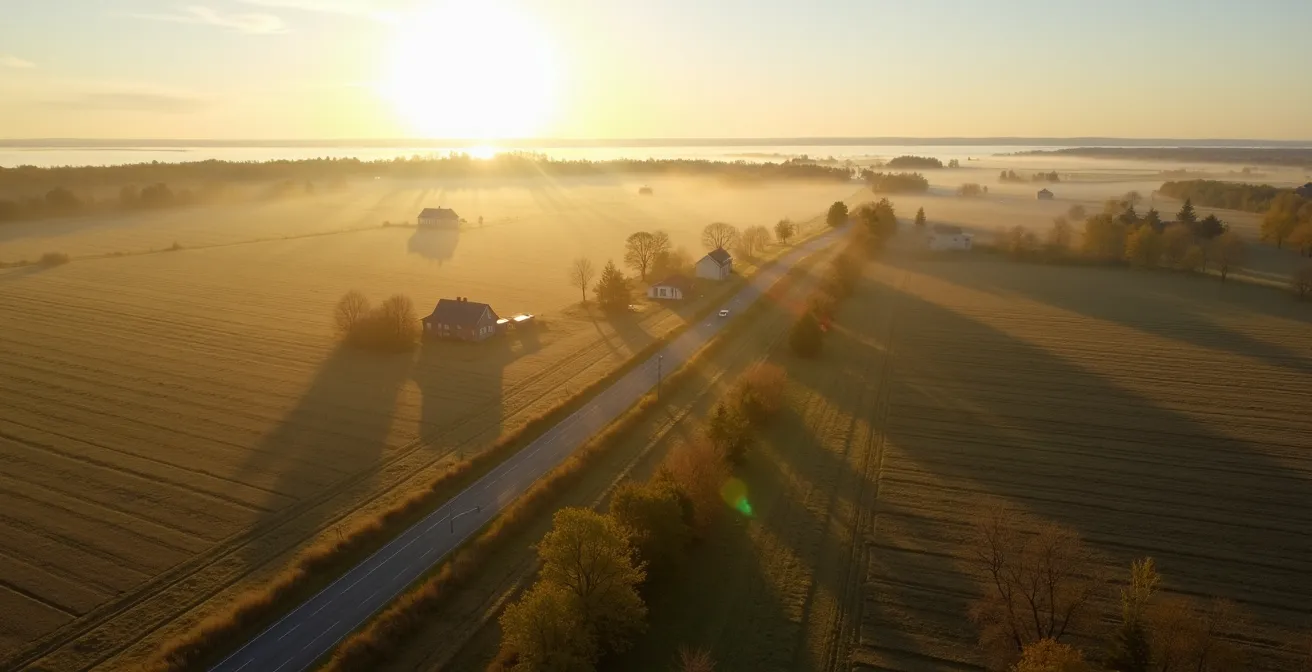
With this geographic cluster identified, adopt the “Hub and Spoke” model for your trip. Instead of changing hotels every night, choose a central base—Quebec City, Trois-Rivières, or Montreal are the three most common hubs—and plan day trips to the surrounding ancestral villages. This minimizes travel time and allows for a more relaxed, immersive experience in each location. Your goal is deep exploration, not a rushed checklist.
Your Strategic Quebec Genealogy Trip Plan
- Visualize Migration: Use GenealogyQuebec’s ‘Lignée Migratoire’ tool to map your paternal line’s movement across the province.
- Identify Ground Zero: Use the Fichier Origine database to find the settlement location of your first immigrant ancestor (often Île d’Orléans or Beauport).
- Adopt a Hub: Choose Quebec City, Trois-Rivières, or Montreal as a base for day trips to nearby ancestral villages.
- Plan Village Stops: Aim for only 1-2 villages per day to allow for deep exploration of the church, cemetery, and local archives.
- Integrate Your Route: Consider geolocated genealogical tours that provide turn-by-turn directions to specific ancestral homes and plots of land.
By using your family’s own migration patterns to dictate your route, you are literally following in their footsteps. This methodical approach transforms a potentially chaotic road trip into a structured, meaningful journey through your own family’s history.
Museum or Active Church: How to Interpret the Votive Offerings?
When you step inside your ancestral parish church, you are entering more than a place of worship; you are entering a historical archive. Among the most personal and poignant records are the ex-votos, or votive offerings. These are objects left as thanks for a prayer answered or a miracle received. Learning to “read” them provides a unique window into the fears, hopes, and daily struggles of your ancestors’ community.
An ex-voto can be anything from a simple plaque to a small painting depicting a dramatic event—a shipwreck, a fire, a recovery from illness. In some pilgrimage sites, you’ll find piles of crutches, braces, and other medical devices left behind. These are not just curiosities; they are tangible evidence of life’s perils. They tell you what dangers were top of mind for the community: was it illness, accidents at sea, or farming injuries? The types of miracles requested are a direct reflection of the community’s relationship with survival.
To start your interpretation, first identify the church’s patron saint. A parish dedicated to St. Peter in a riverside village suggests a community reliant on fishing. Then, carefully examine the ex-votos themselves. Look for dates, names, or depictions of events that might correspond to periods when your family lived in the area. An ex-voto commemorating survival from a specific shipwreck or epidemic tells a powerful story about the collective experiences that shaped your ancestors’ lives.
Case Study: The Ex-Voto Collection at Sainte-Anne-de-Beaupré
Quebec’s most famous pilgrimage site, Sainte-Anne-de-Beaupré, offers a stunning example of this. The basilica contains thousands of ex-votos, most famously the pillars adorned with crutches and canes left by those who believed they were healed. These objects create a direct, physical link to ancestors’ health struggles and faith. They serve as historical records of daily life’s greatest threats, revealing the community’s deep-seated reliance on divine intervention for survival. These tangible objects tell a story of suffering and gratitude in a way that written records rarely can.
By taking the time to study these offerings, you move beyond the official records of birth, marriage, and death. You connect with the intimate, emotional, and spiritual world of your ancestors, gaining a deeper appreciation for their resilience and faith in the face of hardship.
Cemeteries and Archives: How to Find English Ancestors in a French Region?
While the history of Quebec is overwhelmingly French and Catholic, it is by no means exclusively so. Significant waves of English, Scottish, and Irish Protestant settlers also made Quebec their home, but tracing their lineage requires a different set of tools and a different mindset. If your ancestors were part of this minority, you must look beyond the Catholic parish registers and understand their distinct settlement patterns.
The first rule is to follow the denominational trails. Instead of Catholic records, your search will focus on Anglican, Presbyterian, and Methodist church archives. Specialized genealogical societies are your best allies here. The Quebec Family History Society, the largest English-language genealogical society in the province, is an essential resource, as is the Eastern Townships Resource Centre in Lennoxville. The BAnQ also holds extensive non-Catholic collections that are crucial for this research.
Geographically, you must focus on specific areas of Protestant settlement. These include:
- The Eastern Townships: The primary destination for United Empire Loyalists fleeing the American Revolution.
- The Gaspé Peninsula: Another significant area for Loyalist settlement.
- Montreal and Quebec City: Major centers for Scottish merchants and businesspeople.
- Grosse Île: The quarantine station that processed vast numbers of Irish immigrants, many of whom were Protestant.
When visiting an ancestral town, be aware of the “two-cemetery system.” In many communities, you will find a large, central Catholic cemetery and a separate, often smaller, Protestant graveyard. Local maps or a quick visit to the historical society can help you locate this second cemetery, which may hold the key to finding your family’s resting place. Tracing English ancestors in a French region is a specialized hunt, but by focusing on the right archives, regions, and religious denominations, it is an eminently achievable goal.
Key Takeaways
- Genealogical success in Quebec depends on understanding its unique historical context, not just searching for names.
- Leverage both large-scale digital databases for structure and small local societies for personal stories and context.
- Mastering the ‘nom dit’ system and phonetic variations is non-negotiable for breaking through common research barriers.
How to Drive the Chemin du Roy Without Losing Your Patience?
The Chemin du Roy (King’s Road), which connects Quebec City and Montreal, is North America’s oldest highway. Driving it feels like a journey back in time, winding through some of the province’s most historic villages. For a heritage traveler, it’s an essential route. However, with its slower speeds and local traffic, it can also test your patience if you’re trying to cover too much ground. The key to enjoying it is to adopt a mindset of “Seigneurial Time.”
Instead of trying to drive its entire length, use the Strategic Bypass Method. Drive the most scenic and relevant sections of the Chemin du Roy (officially Route 138) between your key ancestral villages, such as the beautiful stretch from Neuville to Cap-Santé. Then, when you need to cover a longer distance between hubs, hop on the parallel Autoroute 40. This hybrid approach allows you to enjoy the historic atmosphere without the frustration of slow-moving traffic on less relevant segments.
Turn the drive itself into an active scavenger hunt. As you travel, look for the hallmarks of the seigneurial system: the iconic long, narrow farm fields running perpendicular to the river, the ancestral stone homes built close to the road, the larger manor houses of the seigneurs, and the old communal mills. This transforms the drive from a simple transit into an interactive history lesson. For a truly immersive experience, plan a stop at the Village Québécois d’Antan in Drummondville, a reconstruction of a village from 1810-1930, to experience the very environment your last Quebec generation might have left behind.
Case Study: Walking in an Ancestor’s Daily Footsteps in Quebec City
A powerful account from a descendant demonstrates that connection is possible even without physical buildings. After tracing their baker ancestor’s 1800s home to an empty lot in Quebec City, they used historical maps to imagine the family’s daily life. They contemplated the challenges of raising eight children in a tiny house with an attached bakery. By walking the same streets the family would have used for trips to the market, they created a powerful connection across time. The experience proved that the landscape itself—the streets, the distances, the views—is an archive, allowing you to walk in your ancestors’ footsteps and feel their presence.
Your journey into your family’s Quebec past begins with this shift in perspective—from a search for data to a quest for connection. Start by mapping your family’s migration patterns and choose one or two villages for a deep, meaningful visit.