Engaging respectfully with Indigenous tourism in Quebec is less about memorizing a list of rules and more about understanding the core principles of sovereignty, relationship, and living culture behind them.
- Recognize that everything from art to land access has a protocol rooted in self-determination and cultural significance.
- Shift your mindset from a “tourist” consuming an experience to a “guest” entering a sovereign cultural space.
Recommendation: Before you travel, use a resource like native-land.ca to identify the traditional territories you will be visiting. This simple action is the foundation for all respectful interaction.
The desire to connect with the deep-rooted cultures of Quebec is a powerful and enriching motivation for any traveler. Yet, this desire is often shadowed by a quiet anxiety: the fear of saying or doing the wrong thing. Many guides will offer simple checklists—don’t touch artifacts, ask before taking photos, buy authentic art. While well-intentioned, this approach treats respect as a set of rules to follow to avoid a penalty, not as a genuine posture of listening and learning. It frames ancient, living cultures as fragile exhibits where one wrong move could cause irreparable offence.
This perspective, however, misses the very essence of the invitation extended by Indigenous communities. The true path to respectful engagement isn’t found in a memorized list of faux pas. It lies in understanding the foundational principles that give those rules meaning: sovereignty, the relationship to the land, and the vibrant, evolving nature of contemporary Indigenous life. It’s the difference between learning a few phrases in a foreign language and beginning to understand its grammar. Once you grasp the underlying structure, you can navigate new situations with intuition and genuine awareness, not just a script.
This guide is designed to help you make that shift. We will explore the “why” behind the “what,” moving from common questions about photography and shopping to deeper concepts of terminology, land access, and the very nature of a cultural experience. By focusing on these core ideas, you can move past the fear of making a mistake and toward building a bridge of true, reciprocal understanding.
This article will guide you through the key facets of respectful engagement, from public ceremonies to private lands. By exploring the context behind each interaction, you will be better equipped to travel as a thoughtful and welcome guest in the diverse and beautiful Indigenous territories of Quebec.
Summary: A Journey into Respectful Indigenous Engagement in Quebec
- Can You Take Photos at a Pow Wow?
- How to Know If the Moccasins You Buy Are Really Indigenous-Made?
- Inuit vs. First Nations vs. Metis: What Terms Should You Use?
- Bannock and Game: What to Expect from Indigenous Cuisine?
- Museum vs. Community Stay: Which Experience Fits Your Comfort Level?
- Landholding Corporations vs. Public Land: Where Can You Actually Hike?
- Why Visiting Your Ancestors’ Village Changes Your Trip Perspective?
- How to Plan a Trip to Nunavik Without Spending a Fortune?
Can You Take Photos at a Pow Wow?
The vibrant colours, the rhythmic drumming, and the powerful energy of a Pow Wow are captivating. It’s natural to want to capture such a beautiful moment. However, the question of photography isn’t a simple yes or no; it’s an introduction to the crucial concept of visual sovereignty. This principle asserts that Indigenous peoples have the right to control their own image and cultural narrative. A dancer’s regalia isn’t a “costume” for public consumption; it is sacred attire, often with deep family history and spiritual significance. Asking for permission isn’t just polite; it’s acknowledging the individual’s ownership of their image and heritage.
Your primary guide at any Pow Wow is the Master of Ceremonies (MC). Listen closely to their announcements. They will clearly state when photography is prohibited, such as during the Grand Entry, honour songs, prayers, or specific ceremonies. These are moments of deep spiritual importance, and respecting the restriction is paramount. When photography is permitted, it’s still essential to ask individual dancers for their consent before taking a close-up photo. A simple, respectful inquiry is always appreciated and shows you see them as a person, not just a subject.
This principle extends to sharing images online. Even with permission, consider the impact. Avoid geotagging locations that may be sensitive or sacred. The goal is to share beauty and admiration, not to expose private community spaces to uncontrolled tourism. By following these protocols, you move from being a passive spectator to an active, respectful guest who helps uphold the community’s right to tell its own story. It’s a powerful first step in engaging with cultural events on their own terms.
Your Action Plan: Pow Wow Photography Protocol
- Listen to the MC: Always prioritize the Master of Ceremonies’ announcements regarding photography restrictions during sacred moments like Grand Entry, Honor songs, or Flag songs.
- Ask for Consent: Treat regalia as sacred attire. Always ask individual dancers for permission before photographing them or their regalia.
- Respect Prohibited Times: Do not take photos or videos during prayers, ceremonies, or any other time the MC announces a restriction.
- Post Thoughtfully: Never geotag sensitive cultural sites or sacred locations when posting photos online to protect community privacy.
- Embrace Visual Sovereignty: Understand and respect that Indigenous communities have the inherent right to control their cultural narrative and representation.
How to Know If the Moccasins You Buy Are Really Indigenous-Made?
Bringing home a piece of handcrafted art is a wonderful way to remember your trip and support local artists. But in a market flooded with “Native-inspired” fakes, how do you ensure your purchase contributes to economic reconciliation rather than cultural appropriation? The key is to look for signs of authenticity that connect the art directly to an artist and their Nation. This isn’t just about a better-quality product; it’s about ensuring the money you spend supports Indigenous families, communities, and the continuation of ancestral skills.
For Inuit art, the single most important symbol of authenticity is the Igloo Tag Trademark. This tag certifies that the work was made by an Inuit artist in Canada. It’s a powerful tool for cultural and economic sovereignty, managed directly by the Inuit Art Foundation. The impact is significant; a study confirmed that for art sold with the Trademark, consumers are willing to pay an average of $117 more, which adds millions annually to the Inuit arts economy. This proves that buyers value genuine connection and are willing to invest in it.
Beyond a specific tag, look for information. Authentic art is almost always accompanied by the artist’s name and their specific Nation (e.g., Atikamekw, Cree, Innu). Vague terms like “Native style” are a major red flag. Purchase from recognized galleries, community-owned businesses, or members of the Indigenous Tourism Quebec network. These venues, like the boutiques in Wendake, are committed to ethical sourcing. They can often share the story behind the piece and the artist who made it, transforming your purchase from a simple transaction into a meaningful relationship.
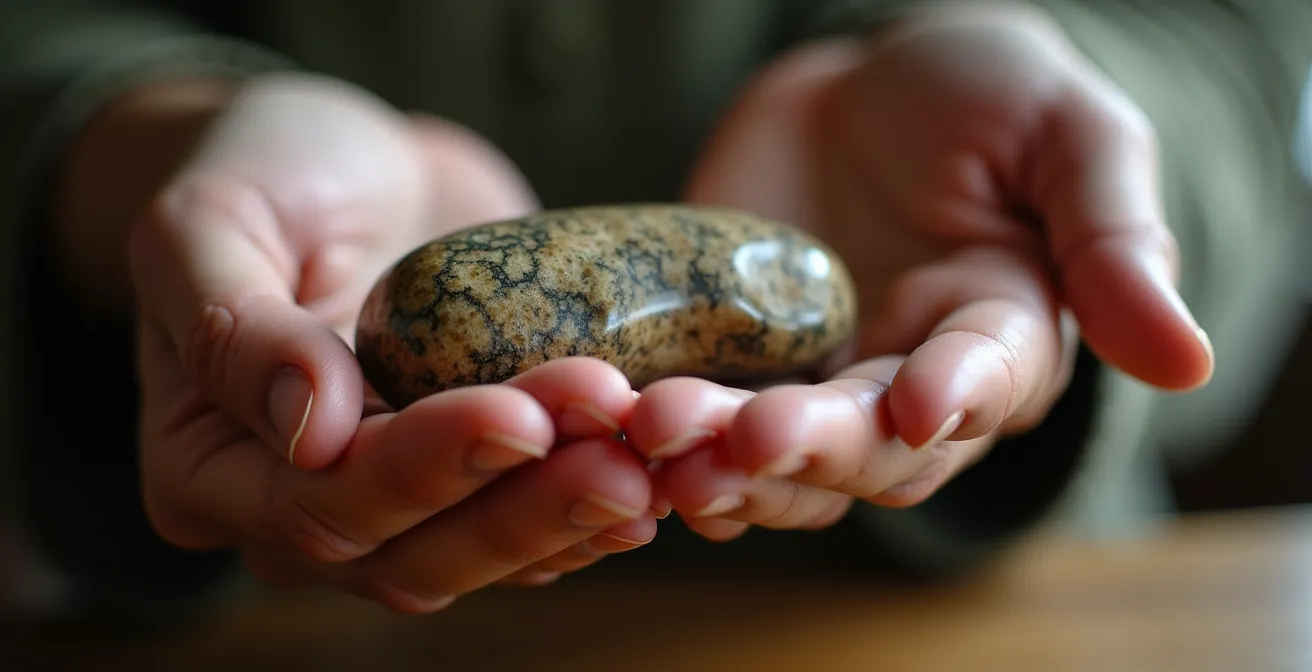
The following table provides clear indicators to help you distinguish between a genuine piece of art and a mass-produced imitation, ensuring your support goes directly to the creators.
| Authentic Indigenous Art | Common Fakes/Cultural Appropriation |
|---|---|
| Igloo Tag with artist’s name, community, and license number | Generic ‘Native-inspired’ labels without specific Nation |
| Artist’s Nation clearly identified (e.g., Atikamekw, Cree, Innu) | Vague terms like ‘Native American style’ or ‘Eskimo art’ |
| Sold through Indigenous Tourism Quebec network members | Mass-produced imports with plastic wrapping |
| Artist biography and story included | No artist information or fake ‘Indigenous-sounding’ names |
| Available at recognized venues like Wendake boutiques | Tourist trap shops selling Pacific Northwest totems in Quebec |
Inuit vs. First Nations vs. Metis: What Terms Should You Use?
Language is powerful. Using the correct terminology is one of the most fundamental signs of respect, as it acknowledges distinct identities, histories, and rights. The general, umbrella term to use is “Indigenous,” as it is an inclusive term for the original inhabitants of the land. In Quebec, the Indigenous population is composed of distinct groups, primarily the First Nations and the Inuit. The Métis Nation also has a presence, though its historical communities are more concentrated in Western Canada.
The most crucial thing to understand is that colonial-era labels like “Indian” and “Eskimo” are now widely considered offensive. These terms were imposed by outsiders and lump diverse peoples together, erasing their unique identities. Using the correct terms is an act of recognizing self-determination. For example, “Inuit” is the proper term for the Indigenous people of the Arctic regions; “Eskimo” is a pejorative term from the past. Similarly, instead of “Indian,” the term is “First Nations.”
Whenever possible, the best practice is to be specific. As confirmed by official sources like Indigenous Tourism Quebec, there are eleven distinct Nations in the province: the Abenaki, Anishnabe (Algonquin), Atikamekw, Cree of Eeyou Istchee, Huron-Wendat, Innu, Maliseet, Mi’kmaq, Mohawk, Naskapi, and Wolastoqiyik (Maliseet). If you know someone’s Nation, use it (e.g., “a Huron-Wendat guide”). If you are unsure and the context is appropriate, it is acceptable to respectfully ask, “What is your Nation?” This shows a genuine interest in their specific identity rather than relying on a generic label. This specificity is not just about politeness; it’s about acknowledging that each Nation has its own language, culture, and relationship with the land and the Canadian state.
Bannock and Game: What to Expect from Indigenous Cuisine?
Exploring a culture through its food is a universal joy, and Indigenous cuisine in Quebec offers a delicious journey into the relationship between people and the land. This is not a static, historical curiosity; it is a living culinary tradition that blends ancestral ingredients with contemporary techniques. From the rich flavours of wild game to the comforting warmth of bannock bread, food provides a tangible connection to the territory and the seasons. It’s an opportunity to taste ingredients sourced directly from the boreal forest, the tundra, and the St. Lawrence River.
You’ll find a spectrum of culinary experiences. In some communities or at cultural centres, you might have the chance to try bannock (a simple, versatile bread) roasted over an open fire. In Haudenosaunee communities, you can learn about “Three Sisters” agriculture, the symbiotic cultivation of corn, beans, and squash. In Nunavik, “country food” is a staple, featuring Arctic char, caribou, and marine mammals, reflecting a diet perfectly adapted to the Arctic environment. These experiences are deeply rooted in place and tradition.
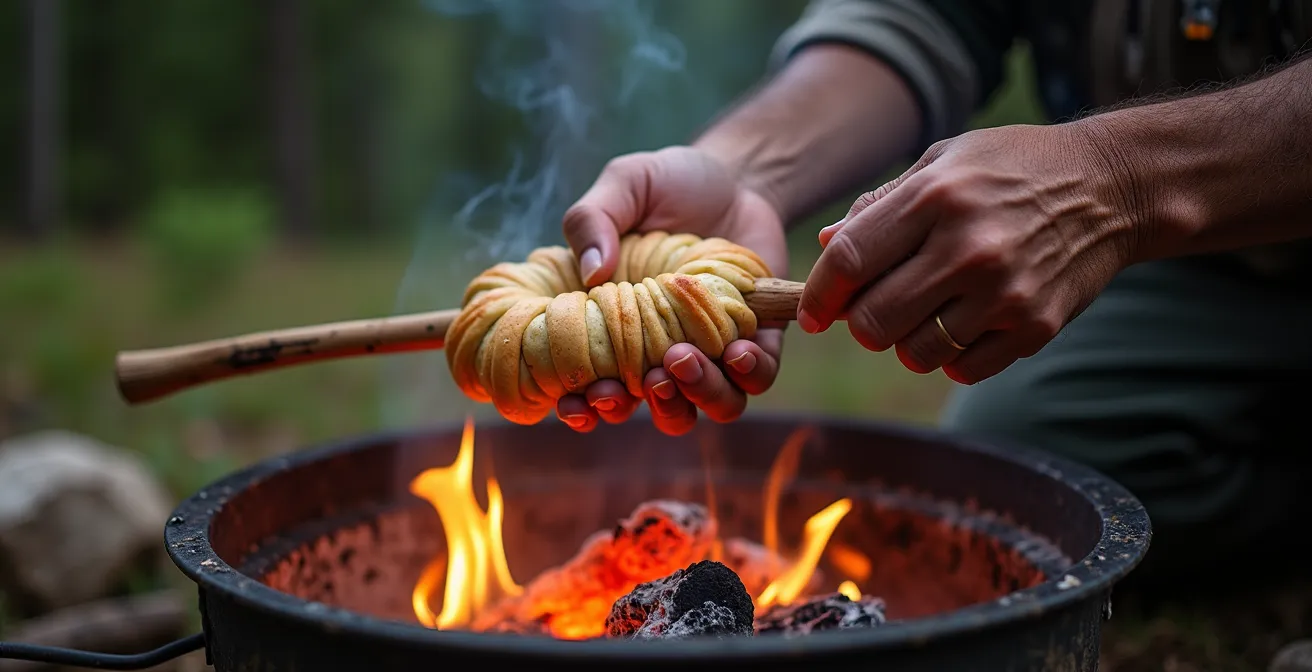
At the same time, Indigenous chefs are at the forefront of modern gastronomy. A powerful example is the restaurant Sagamité in Wendake. Since 1999, it has been a place for people to discover Huron-Wendat culture through food. As detailed in their story, a signature dish like Yatista (La Potence) uses fire to cook hanging chunks of elk, deer, and bison right at your table. This is more than a meal; it’s a performance that tells a story about the sacred role of fire in communicating with the Creator and bringing the community together. Similarly, Hôtel-Musée Premières Nations’ restaurant, La Traite, builds its menu around 100% local ingredients, showcasing a modern, sophisticated take on Indigenous terroir.
- Try sagamité soup at La Sagamité restaurant – a traditional dish with corn, squash, red beans and venison.
- Experience bannock bread roasted over an open fire at cultural centers.
- Sample ‘country food’ in Nunavik featuring marine mammals and Arctic char.
- Explore Three Sisters agriculture (corn, beans, squash) at Haudenosaunee communities.
- Visit La Traite at Hôtel-Musée Premières Nations for 100% local ingredients including boar and Arctic char.
Museum vs. Community Stay: Which Experience Fits Your Comfort Level?
Indigenous tourism in Quebec is not a one-size-fits-all experience. It exists on a spectrum of engagement, from quiet observation to deep immersion. Understanding this spectrum is key to choosing an experience that aligns with your comfort level, interests, and travel style. There is no “right” or “wrong” level; the most respectful choice is the one you can fully and genuinely participate in. For some, a world-class museum provides the perfect entry point, while for others, an overnight stay in a community is the goal.
Think of it in three levels. Level 1 is Observation. This includes visiting museums with strong Indigenous curation, like the McCord Stewart Museum in Montreal or the Musée de la civilisation in Quebec City. Here, you learn through expertly curated exhibits with minimal direct interaction. Level 2 is Interaction. This is the most common form of Indigenous tourism, involving cultural centres and guided experiences. Visiting the Hôtel-Musée Premières Nations in Wendake, participating in a workshop, or experiencing the Onhwa’ Lumina night walk are great examples. You are actively participating and learning from Indigenous hosts.
Level 3 is Immersion. This involves overnight stays within a community, offering a profound cultural exchange. Experiences like an overnight stay in the Ekionkiestha’ National Longhouse or a multi-day trip to a community in Nunavik fall into this category. Here, you are a guest living, even briefly, according to local protocols. This level requires the most flexibility and openness but offers the deepest connection. As one traveler noted, these experiences create a unique space for learning and understanding.
As travel writer Pamela MacNaughtan reflects on her experiences in Quebec, particularly in Wendake, she highlights the unique depth of these encounters:
Experiences are led with a level of intention and respect that I don’t often see in other travel experiences. Here you can first hand feel the respect and connection to the culture and a passion for sharing that with guests… This gives space where we learn from elders, can seek to understand and respect our Indigenous friends, and invest in their futures by supporting their businesses.
– Pamela MacNaughtan, Adventure Awaits Travel Blog
This table, based on information from sources like guides to Indigenous experiences in Quebec, helps visualize these levels of engagement, allowing you to find the perfect fit.
| Experience Level | Type of Engagement | Examples in Quebec | What to Expect |
|---|---|---|---|
| Level 1: Observe | Museums with Indigenous curation | McCord Stewart Museum, Musée de la civilisation | Learn through exhibits, minimal direct interaction |
| Level 2: Interact | Cultural centres and guided experiences | Hôtel-Musée Premières Nations in Wendake, Onhwa’ Lumina night walk | Participate in workshops, storytelling, guided tours |
| Level 3: Immerse | Community stays and overnight experiences | Ekionkiestha’ National Longhouse overnight, Nunavik community stays | Live within community, follow local protocols, deep cultural exchange |
Landholding Corporations vs. Public Land: Where Can You Actually Hike?
In Quebec, a trail is never just a trail. The land you walk on is steeped in history and is part of the traditional territory of an Indigenous Nation. Respectful hiking begins long before you lace up your boots; it starts with understanding that access to land is a complex issue rooted in treaties, rights, and stewardship. The Western concept of “public land” often doesn’t apply in the same way. Many territories, especially in Northern Quebec, are managed by Indigenous Landholding Corporations or are part of reserves. This means you are a guest, and access requires permission.
The first step is always to perform a territorial acknowledgement, not just as a statement, but as an action. Use a resource like native-land.ca to identify whose traditional land you are on. Next, you must verify access rights. Is it a provincial park (like a SEPAQ), where general rules apply? Or is it Category I or II land under the James Bay and Northern Quebec Agreement, where specific rules are in place? For example, Category I lands near communities in Nunavik are managed by local Landholding Corporations, and you must obtain their permission before accessing them for activities like hiking or camping. These bodies are the stewards of the land, and their authority must be respected.
The best way to ensure you are proceeding respectfully and to gain a much richer experience is to hire a local Indigenous guide. They are not just navigators; they are storytellers, knowledge keepers, and your bridge to an authentic understanding of the ecosystem. They can lead you to places you would never find on your own and explain the cultural significance of the landmarks you see. This transforms a simple hike into a profound learning experience, supports the local economy, and ensures you are a welcome visitor on the land. It’s the ultimate expression of leaving no trace—not just environmentally, but culturally as well.
Your Action Plan: The Respectful Hiker’s Checklist
- Acknowledge the Territory: Use native-land.ca to identify the First Nation or Inuit traditional territory you plan to visit before you go.
- Verify Access Rights: Determine if the area is a SEPAQ park, a reserve, or territory managed by a local Landholding Corporation, as rules will differ significantly.
- Obtain Permission: For Category I lands in Nunavik near communities, you must contact and obtain permission from the local Landholding Corporations before any activity.
- Hire Local Guides: Engage Indigenous guides for authentic access, safety, and invaluable cultural insight into the land.
- Practice Enhanced Leave No Trace: Go beyond packing out trash; be mindful not to disturb potential archaeological sites or culturally significant natural landmarks.
Why Visiting Your Ancestors’ Village Changes Your Trip Perspective?
Engaging with Indigenous history in Quebec often means visiting places like the Ekionkiestha’ National Longhouse in Wendake or the Droulers-Tsiionhiakwatha archaeological site. These are not just historical curiosities or relics of a bygone era. They are powerful educational tools that fundamentally shift a visitor’s perspective. These sites challenge the colonial “new world” myth by making the deep, pre-colonial history of the land tangible. Standing inside a reconstructed longhouse, smelling the wood smoke, and hearing stories by the fire isn’t about nostalgia; it’s about understanding the complex, sophisticated societies that thrived on this land for millennia.
As Indigenous Tourism Quebec explains, this act of witness is a form of cultural resilience:
Visiting a reconstructed historical site isn’t about nostalgia, but about understanding the deep, pre-colonial history of the land you stand on, directly challenging the ‘new world’ myth and recognizing that Indigenous cultures are not relics of the past but living, contemporary communities.
– Indigenous Tourism Quebec, Cultural Resilience and Survivance Guide
This experience connects the past to the present. The longhouse was the traditional dwelling for Iroquoian peoples, including the Huron-Wendat. Experiencing a recreated one helps you understand the social structure, engineering, and daily life that existed before colonization. It provides context for the contemporary communities you see today. It reminds you that Indigenous cultures are not a chapter in a history book but are living, breathing, and evolving. This realization changes your entire trip. A mountain is no longer just a mountain; it’s a place of stories. A river is not just a waterway; it’s an ancestral highway. Every part of the landscape becomes imbued with a deeper meaning.
This shift in perspective is the true gift of these experiences. It moves a traveler from being a consumer of scenery to a guest in a storied landscape. It fosters an appreciation for the resilience and “survivance”—the active presence and continuation—of Indigenous cultures in the face of immense change. It’s a profound education that stays with you long after you’ve returned home, enriching your understanding of Quebec and Canada as a whole.
Key Takeaways
- True respect goes beyond rules; it requires understanding the principles of sovereignty and self-determination.
- Authenticity has a system: Look for official markers like the Igloo Tag and detailed artist information to ensure your money supports communities.
- Language matters: Use specific Nation names (Inuit, Cree, Huron-Wendat) instead of outdated colonial terms to show genuine respect for identity.
How to Plan a Trip to Nunavik Without Spending a Fortune?
A trip to Nunavik, the vast and breathtaking Arctic region of Quebec, is an unparalleled adventure. Home to 14 Inuit communities across a territory of over 500,000 square kilometers, it offers a chance for deep immersion in Inuit culture and stunning landscapes. However, the logistical reality is that this trip comes with a significant cost. As Bonjour Quebec tourism materials note, Nunavik is inaccessible by road and can only be reached by air. Everything from food to fuel must be flown in, which is reflected in the price of flights, accommodation, and goods.
However, planning a trip to Nunavik without breaking the bank is possible with a strategic approach. The key is to reframe your thinking from a standard vacation to a purposeful expedition and to work directly with local operators. Instead of booking flights and hotels separately, book a package through a local Nunavik tourism operator like those in the Ungava Polar Eco-Tours network. They often have access to better rates on Air Inuit flights and can bundle accommodation and guided experiences for greater overall value.
Another crucial strategy is to embrace “slow travel.” The most expensive part of a Nunavik trip after the initial flight from the south can be the intra-regional flights between communities. By basing yourself in one community for a longer period, you minimize these costs and allow for a deeper, more meaningful connection with the people and place. Finally, a small but important tip is to bring some of your own non-perishable specialty snacks. This not only saves you money but also reduces your impact on the limited and expensive stock available in local stores, which is primarily for residents. By planning thoughtfully, you can make this dream trip a reality while ensuring your visit is a positive and supportive one for the northern communities that welcome you.
- Book packages through local Nunavik tourism operators for better overall value on Air Inuit flights and accommodation.
- Practice ‘Slow Travel’ by basing yourself in one community for longer to minimize expensive intra-regional flights.
- Bring your own specialty snacks to reduce impact on limited and expensive local store stock.
- Connect with Indigenous-owned companies for authentic, value-driven experiences.
- Reframe the higher cost as a direct investment in the logistics and economy of northern communities.
By shifting your focus from a fear of making mistakes to a genuine desire to understand, you transform your role from that of a simple tourist to a respectful guest. The next logical step is to begin your own journey of learning and planning. Start by identifying the Indigenous territories you wish to visit and exploring the websites of their official tourism organizations.