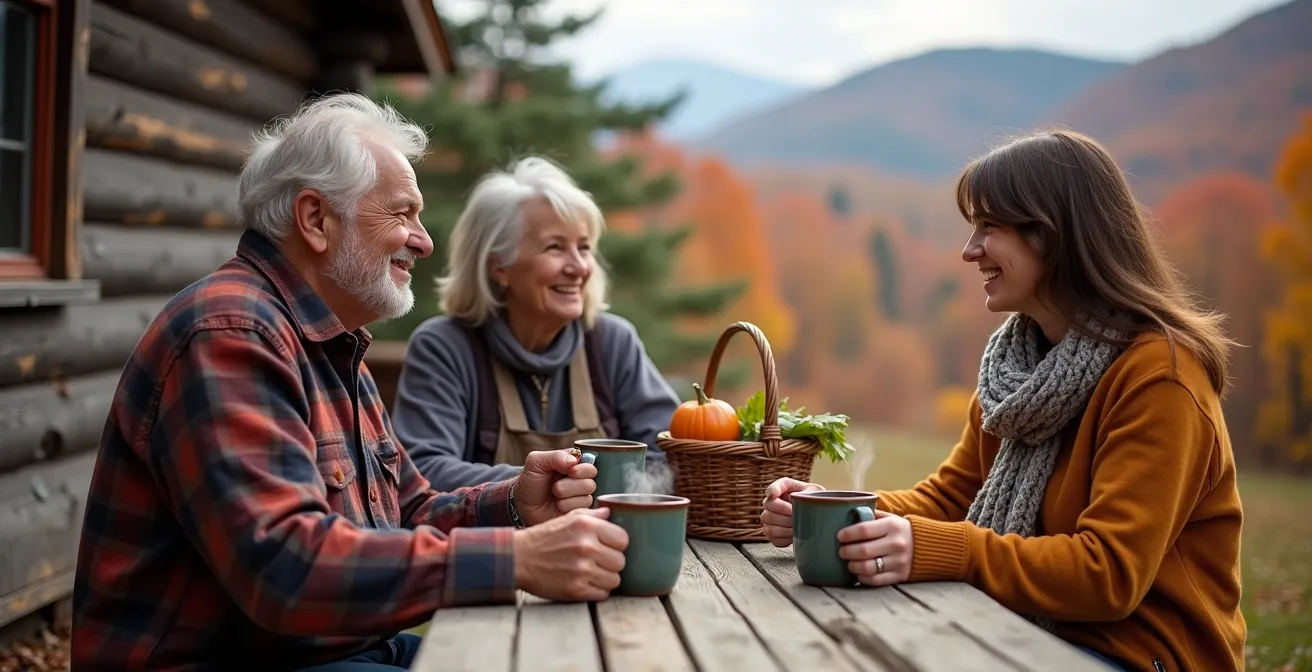
You might think mastering French is the key to connecting with locals in rural Quebec, but that’s not the whole story. The real secret lies in understanding and participating in the unwritten social rituals that define daily life. This guide decodes the cultural logic behind local customs, from dining etiquette to communication styles, turning you from a tourist into a welcome guest.
Picture this: you’re driving through the rolling hills of the Bas-Saint-Laurent, a landscape dotted with silver-roofed barns and charming farmhouses. You see a sign for fresh strawberries, but a wave of hesitation washes over you. Will they speak English? Will you intrude? This feeling is common for English-speaking travelers venturing beyond Quebec’s major cities. Most guidebooks offer the standard advice: learn a few key phrases like ‘Bonjour’ and ‘Merci’. While this is a crucial first step, it barely scratches the surface.
True connection isn’t just about transactional pleasantries. It’s about grasping the subtle ‘social grammar’ of a place. It’s understanding why a direct “no” from a shopkeeper is a sign of help, not rudeness, or why an entire village seems to rush outside to a restaurant patio the moment the temperature hits 10°C. These moments are the real entry points into the local culture, yet they are often the most confusing for visitors.
But what if the key wasn’t language fluency, but cultural fluency? This guide is your invitation to look beyond the language barrier and see the underlying cultural logic. We’ll explore the unspoken rules and shared rituals that, once understood, can open more doors and create more meaningful interactions than a perfect French accent ever could. By the end, you won’t just be visiting rural Quebec; you’ll be participating in it.
To help you navigate these cultural waters, this article breaks down the essential social rituals and local customs. From choosing the right accommodation to understanding the rhythm of the seasons, you’ll find the keys to unlocking a truly authentic Quebec experience.
Summary: How to Truly Connect with Locals in Rural Quebec
- Why Speaking a Few French Words Opens More Doors Than English Fluency?
- Homestays vs. Hotels: Which Offers the True Quebec Experience?
- The Tipping and Dining Etiquette Mistakes Tourists Make in Countryside Diners
- When to Visit Rural Quebec to Avoid the Tourist Crowds?
- The Misunderstanding About “Quebecois Frankness” That Confuses Americans
- The Mistake of Walking Into Barns Without Permission
- The “Terrace” Rush: Why Do Quebecers Eat Outside at 10°C in May?
- How to Buy Authentic Products on the Flavor Trail Without Tourist Traps?
Why Speaking a Few French Words Opens More Doors Than English Fluency?
The first hurdle for many English-speaking travelers is the language. The fear of not being understood can be paralyzing. However, in rural Quebec, the goal isn’t fluency; it’s the gesture of effort. Starting every single interaction with a warm “Bonjour” is non-negotiable. It signals respect and acknowledges that you are a guest in a francophone culture. Skipping it and launching directly into English is seen as abrupt and can unintentionally create a barrier.
Beyond the basics, a few well-chosen phrases can transform an interaction from transactional to relational. Learning something specific and appreciative, like “C’est ben beau, votre coin” (Your area is really beautiful), shows you see and value their home. Asking “Quelle est la spécialité d’icitte?” (What’s the specialty from around here?) opens a conversation about local pride, food, and history—a far more genuine connection than simply ordering from a menu. Don’t worry about perfection. In fact, admitting your limitations with a smile and “Je m’excuse, mon français n’est pas parfait” often works like a charm.
Case Study: The Power of Imperfect French
Traveler reports from the Eastern Townships highlight a common experience: in smaller towns, many service staff speak little to no English. However, visitors who make an effort with even broken French phrases report overwhelmingly positive reactions. Locals often become more patient, helpful, and will frequently switch to whatever English they know to bridge the gap, appreciating the visitor’s respectful attempt to engage on local terms.
This approach demonstrates humility and a willingness to meet people halfway. In rural Quebec, this effort is valued far more than flawless grammar. It’s the key that unlocks the warmth and helpfulness for which Quebecers are known.
Homestays vs. Hotels: Which Offers the True Quebec Experience?
Where you choose to sleep can define your entire trip. While a hotel offers predictability and anonymity, a homestay—known locally as a ‘gîte’ or a farm stay—plunges you directly into the heart of Quebec culture. The booming agritourism sector, which is rapidly growing, demonstrates a clear demand for these authentic accommodations. It’s the difference between observing local life from a distance and being invited into it, even for a short time.
In a gîte, your host isn’t just a receptionist; they are your cultural guide. The morning doesn’t start with a generic continental buffet, but with a homemade breakfast featuring local cheeses, homemade jams, and fresh bread, often shared around a communal table. This is where the magic happens. You’ll get insider tips on the best non-touristy restaurants, the prettiest backroads for a drive, or which local artisan is worth a visit—advice you’ll never find in a brochure.
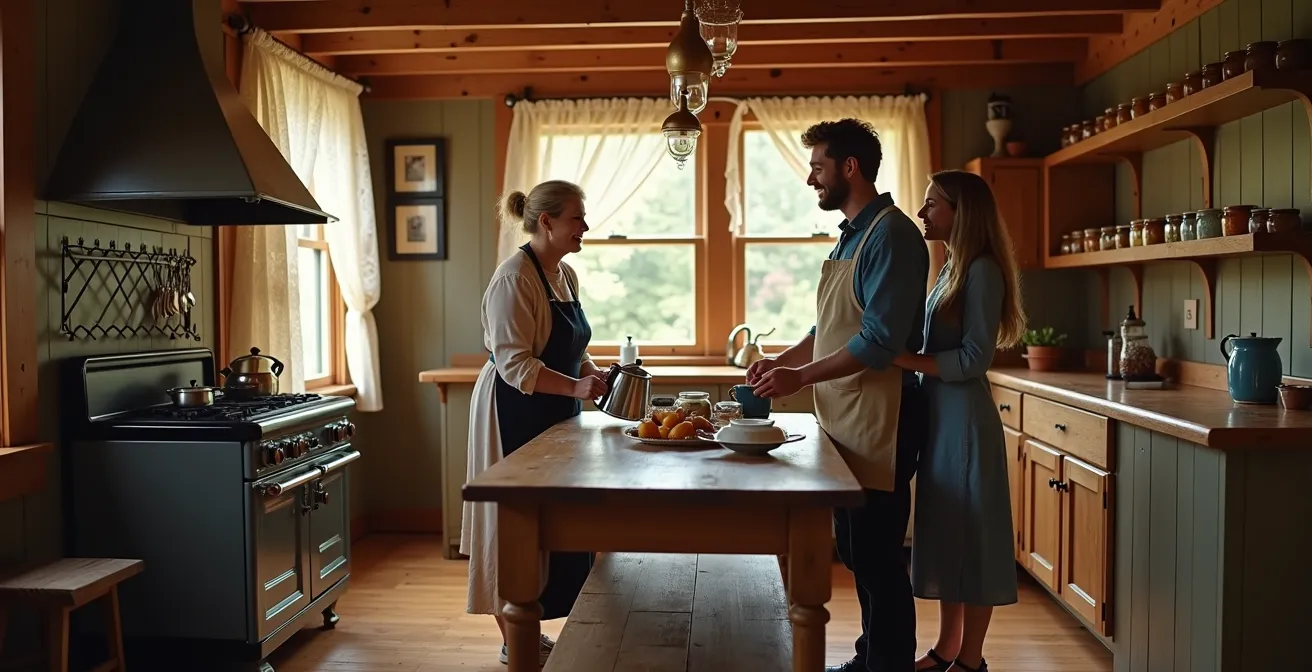
Choosing a homestay is about embracing a relational, not a transactional, experience. You become a temporary neighbor, not just a customer. It’s a social contract built on mutual curiosity and respect. This environment fosters genuine conversations and provides a window into the daily rhythms and values of rural life that a standardized hotel room simply cannot offer.
This table breaks down the fundamental differences in the experience, showing how your choice of lodging is a choice about the type of travel you want to have.
| Aspect | Homestay/Gîte/Farm Stay | Traditional Hotel |
|---|---|---|
| Morning Experience | Homemade breakfast with local products, shared with hosts | Continental buffet, eat alone or with other tourists |
| Cultural Immersion | Direct conversation with locals about the region | Limited interaction beyond check-in/check-out |
| Local Knowledge | Insider tips on non-tourist restaurants and markets | Tourist brochures and standard recommendations |
| Accommodation Type | Historic farmhouses, cabins, or family homes | Standardized rooms with predictable amenities |
| Social Contract | Guest becomes temporary neighbor, gift exchange common | Transactional relationship, service-oriented |
The Tipping and Dining Etiquette Mistakes Tourists Make in Countryside Diners
A countryside ‘casse-croûte’ (snack bar) or diner is more than just a place to eat; it’s the village’s living room. Understanding its social codes is crucial. While tipping is standard (15-20% on the pre-tax amount), the biggest mistakes tourists make are not about the percentage but about the social interaction itself. As one local expert noted in the Rural Quebec Travel Guide:
The ‘Casse-Croûte’ is the village’s living room. The mistake isn’t just tipping, it’s the transactional mindset.
– Local Tourism Expert, Rural Quebec Travel Guide
First, the pace is different. A meal is a social event, not a race. Rushing through your food is seen as odd. Linger over your coffee, engage in conversation, and enjoy the moment. Secondly, servers will rarely bring the bill to your table unless you specifically ask. When you’re ready to leave, the custom is to walk up to the cash register to pay. This is normal and not a sign of poor service.
In smaller establishments, other small gestures matter. Make eye contact and offer a nod to the cook. Acknowledge other diners with a quiet “Bonjour” when you enter. This transforms you from an anonymous customer into a participant in the community space. Many rural restaurants are also BYOB (‘Apportez votre vin’). If you bring a bottle, it’s a kind gesture to offer your server a small taste, further reinforcing a friendly, relational atmosphere.
- Arrive for dinner on the earlier side (5:30-6:30 PM), as many rural kitchens close by 8:00 PM.
- In a BYOB restaurant, you are expected to open your own wine bottle.
- Don’t be surprised if your meal lasts two hours or more; this is a sign of a good time.
When to Visit Rural Quebec to Avoid the Tourist Crowds?
Timing your visit to rural Quebec can dramatically change your experience. While summer and fall are beautiful, they are also peak seasons, which can make genuine local interaction more difficult. For a more authentic trip, consider the “shoulder seasons” of spring and early fall, when communities are living at their own pace. A critical piece of local knowledge is the ‘construction holiday’, as local travel patterns show that the last two weeks of July see a mass exodus from cities into the countryside, creating a secondary peak season.
Visiting in the shoulder season allows you to participate in unique seasonal rituals. Late March and April are ‘temps des sucres’ (sugar season), when you can visit a ‘cabane à sucre’ (sugar shack) and see maple syrup being made—a cornerstone of Quebec culture. September offers the beauty of the harvest, with farmers’ markets overflowing and wineries in the Eastern Townships bustling with activity.
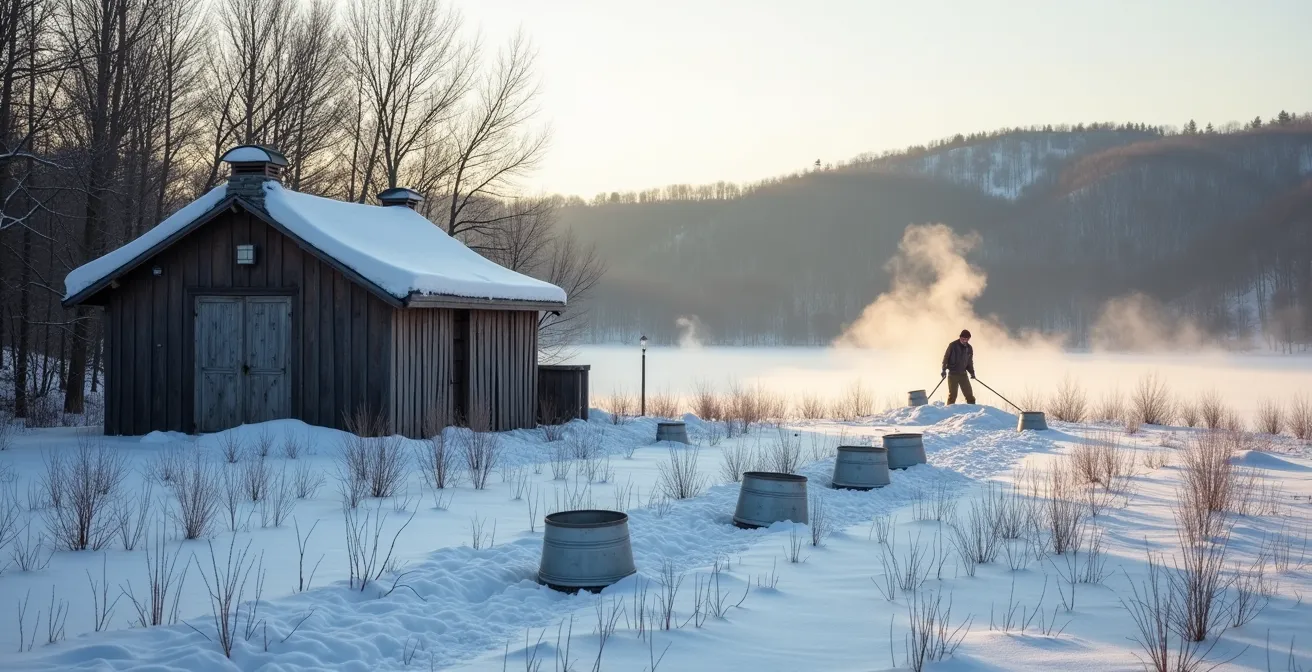
Each region has its own rhythm. By avoiding the peak tourist crush, you’ll find locals more relaxed and available for conversation, and you’ll get a more honest glimpse into the true pace of life. The following table provides a general guide to help you plan a trip that prioritizes authenticity over crowds.
| Region | Peak Season (Avoid) | Shoulder Season (Best) | Special Events |
|---|---|---|---|
| Gaspésie | July-August | September-early October | Fall colors, whale watching |
| Eastern Townships | October (leaf peepers) | Late March-April, September | Sugar shack season, wine harvest |
| Charlevoix | July-August, October | May-June, September | Spring hiking, harvest season |
| Laurentians | December-March (skiing) | April-May, November | Spring melt activities |
The Misunderstanding About “Quebecois Frankness” That Confuses Americans
Perhaps the most significant cultural difference for many visitors is the Quebecois communication style, often described as frank or direct. What might be perceived as abruptness or even rudeness by an American is, in reality, a form of genuine helpfulness. This directness is rooted in a cultural preference for authenticity and efficiency over the performative politeness common in many service industries.
For example, if you ask for directions to a place a local knows is closed or a tourist trap, they won’t just give you the directions you asked for. They are more likely to say, “No, that’s a bad idea. You should go here instead.” This isn’t a criticism of your judgment; it’s a sincere attempt to ensure you have the best possible experience. Similarly, a shopkeeper might advise you *not* to buy a certain product if they feel another is a better fit for your needs. This is honest advice, not poor salesmanship.
Case Study: Decoding Direct Communication
Quebec’s egalitarian social structure values honest advice between equals over polite deflection. This frankness can manifest in various ways that confuse outsiders. A one-word answer from a busy farmer isn’t unfriendliness; it’s practicality. Light-hearted teasing, or ‘taquinerie’, is often an invitation to friendly banter, a sign of acceptance. Understanding that the motive behind this directness is care, not coldness, is essential for positive interactions.
Once you reframe this frankness as a sign of respect for your time and intelligence, it becomes a welcome and refreshing aspect of the culture. Locals are treating you like a neighbor they want to help, not a customer they need to please. Embracing this directness, and perhaps even responding in kind, is a fast track to being treated like an insider.
The Mistake of Walking Into Barns Without Permission
The picturesque red barns and rolling pastures of rural Quebec are incredibly inviting. For a visitor, it can be tempting to wander onto a farm property to get a closer look at the animals or take a photo. This is a significant mistake. A farm is not a public park; it is a private home and a place of business. More importantly, it is a biosecure environment. Unannounced visitors can pose a real risk to the health of livestock by unknowingly carrying contaminants on their shoes or clothing.
The agricultural sector takes this very seriously. As agricultural safety data reveals that there are over 300 certified agritourism operations in Quebec, all of which operate under strict biosecurity protocols. Respecting this boundary is not just about politeness; it’s about protecting a family’s livelihood and the welfare of their animals. If you wish to visit a farm, the rule is simple: always find the farmer first.
They are usually found at the main house or working in the yard. Approaching them respectfully and asking for permission is the only acceptable way to proceed. A gracious “no” must be accepted without question, as it is almost always due to safety or operational reasons, not unfriendliness. The best approach for farm exploration is to seek out designated agritourism sites or farms with clear “Kiosque à la ferme” (farm stand) signs, which indicate they are set up to welcome the public.
Your Action Plan for a Respectful Farm Visit
- Find the farmer first: Always head to the main farmhouse or yard area to locate the owner before proceeding further.
- Use the right phrase: Approach and say, “Bonjour, on trouve votre ferme magnifique. On se demandait s’il serait possible de jeter un œil, sans déranger?” (Hello, we find your farm magnificent. We were wondering if it would be possible to have a look, without disturbing you?).
- Accept ‘no’ graciously: Understand that a refusal is likely due to biosecurity, animal welfare, or work constraints, not unfriendliness.
- Look for public signs: Seek out farms with “Kiosque à la ferme” signs or official certifications, as these are set up for visitors.
- Use official programs: Participate in organized events like the ‘Portes Ouvertes sur les Fermes’ (Open Farm Days) for guaranteed access.
The “Terrace” Rush: Why Do Quebecers Eat Outside at 10°C in May?
One of the most telling social rituals in Quebec occurs on the first warm-ish day of spring. When the temperature creeps up to a seemingly chilly 10°C (50°F), you will see restaurant ‘terrasses’ (patios) suddenly packed with people, many still in their spring coats, happily dining outdoors. For an outsider, this can look bizarre. For a Quebecer, it is a deeply meaningful, collective ritual marking the definitive end of a long, dark winter.
Case Study: Terrace Culture as Social Resilience
The first terrace day is a public celebration of resilience. It’s a way of collectively stating, “on est pas fait en chocolat!” (we’re not made of chocolate!), a popular expression for toughness. This shared experience of braving the cool air for the first taste of outdoor dining bonds communities and represents a powerful psychological release after months of being indoors. Participating in this ritual—keeping your jacket on and joining the crowd—is an authentic way to connect with the local rhythm and its core values of endurance and a deep appreciation for the sun.
This “terrace rush” is not about comfort; it’s about catharsis. After six months of short days and cold weather, the craving for direct sunlight is a primal need. As one cultural observer puts it:
After 6 months of short, dark days, the craving for direct sunlight is a real, physical need. The terrace is the first opportunity to ‘recharge’ en masse.
– Quebec Cultural Observer, Understanding Quebec’s Seasonal Rituals
Joining in this ritual is a simple yet profound way to connect. Don’t wait for a perfectly warm day. If you see a packed terrace on a cool spring afternoon, grab a seat, order a drink, and be part of the celebration. You’ll be participating in a cultural moment that is far more telling than any museum exhibit.
Key Takeaways
- The gesture of trying to speak French is more important for connection than fluency.
- Choosing a homestay (‘gîte’) over a hotel is the single best way to immerse yourself in the local culture.
- What seems like ‘frankness’ or abruptness in communication is almost always a sign of genuine helpfulness.
How to Buy Authentic Products on the Flavor Trail Without Tourist Traps?
Quebec’s ‘routes des saveurs’ (flavor trails) and terroir products are a highlight for any traveler. However, it’s easy to fall into tourist traps selling generic souvenirs. Buying authentic local products requires a bit of savvy. The most reliable sign of a direct-from-producer operation is a simple, often handmade, “Kiosque à la ferme” sign by the side of the road. This indicates you’re buying directly from the people who grew or made the products.
When in a store, look for official certifications. The “Aliments du Québec” label guarantees the product was made in the province and is a trusted marker of authenticity. Some regions also have Protected Geographical Indications (PGIs), like “Fromage de Charlevoix” or “Agneau de Charlevoix,” which certify a product’s origin and quality, much like Champagne in France. These labels are your shield against imitation goods.
Beyond labels, the best tool is conversation. Instead of just asking the price, engage the producer. Ask them, “De quoi êtes-vous le plus fier, cette saison?” (What are you most proud of this season?). A true artisan’s face will light up. Their passionate, detailed answer about the soil, the weather, and their process is the ultimate proof of authenticity. This approach turns a simple purchase into a memorable human interaction and ensures your money is directly supporting the local economy.
- Use official resources: Rely on maps from the local MRC (regional municipality) website rather than commercial tourist maps, which may feature paid placements.
- Visit during harvest: Plan your trip during a region’s harvest season (e.g., apples in fall, strawberries in early summer) for the freshest products and the best chance to interact with producers.
- Look for passion: A producer’s enthusiasm for their craft is the clearest indicator of an authentic, high-quality product.
Now that you’re equipped with an understanding of these cultural nuances, the final step is to put them into practice. Go beyond being a passive observer and become an active, respectful participant in the life of rural Quebec. Your travels will be infinitely richer for it.