In summary:
- A successful Quebec trip depends less on the destination and more on mastering the specific logistical and regulatory details.
- The “cheaper” European Plan can become more expensive than the American Plan once hidden costs like food transport and excess baggage fees are factored in.
- Non-resident anglers and hunters face mandatory requirements, such as using an outfitter’s services in certain northern zones, that can significantly alter trip plans.
- Strict bush plane weight allowances and cross-border meat transport regulations (especially CWD rules) are non-negotiable and require precise planning.
Planning a hunting or fishing expedition in Quebec’s vast wilderness is an exciting prospect. Many experienced sportsmen and women focus on choosing the perfect lake or territory, dreaming of trophy brook trout or a majestic moose. However, as representatives of Quebec’s outfitter federation, we can attest that the most successful trips are defined not by the spot on the map, but by a mastery of logistics. The common advice to “pack light” or “get a license” barely scratches the surface of a system with unique regulatory nuances.
The real challenge—and the key to a seamless experience—lies in understanding the variables that brochures often overlook. This includes calculating the true cost of your trip beyond the package price, navigating the specific rules that apply to non-residents, and planning for the strict realities of bush plane travel and cross-border transport. What seems like a minor detail, such as the difference between a daily quota and a possession limit, can have significant legal and practical consequences once you’re in the field.
But what if the key to the perfect trip wasn’t about finding a secret fishing hole, but about mastering this logistical framework? This guide is designed from a regulator’s perspective to move beyond the platitudes. We will dissect the critical decisions and rules that govern a Quebec outfitting experience, providing the clarity you need to plan with confidence. By focusing on these details, you ensure your adventure is remembered for the thrill of the catch, not for unexpected costs or regulatory headaches.
This comprehensive guide will walk you through the essential logistical and regulatory checkpoints for your Quebec outfitting adventure. Explore the sections below to plan your trip with the precision of an expert.
Summary: A Regulator’s Guide to Quebec Outfitter Logistics and Rules
- American Plan or European Plan: Which Saves You More Money?
- The License Rule Non-Residents Often Miss When Fishing
- Beaver or Otter Plane: How Much Gear Can You Actually Bring?
- How to Bring Moose Meat Back Across the US Border Legally?
- Quotas vs. Possession Limits: What Is the Difference?
- Why You Don’t Need a License for the St. Lawrence River Tidal Zones?
- Why Are Flights to Kuujjuaq More Expensive Than to Europe?
- How to Fish for Mackerel on Quebec Wharves Without a Permit?
American Plan or European Plan: Which Saves You More Money?
One of the first decisions you’ll make when booking with an outfitter is choosing between the American Plan (all-inclusive) and the European Plan (self-service). At first glance, the European Plan often appears 30-40% cheaper, making it seem like the obvious choice for the budget-conscious. However, this initial saving can quickly be eroded by a series of hidden costs, or what we call “logistical friction.” The true cost of your trip requires a more detailed calculation.
The European Plan requires you to bring all your own food and supplies. In remote, fly-in locations, this food becomes part of your baggage allowance, which is strictly limited. Exceeding this limit incurs significant fees, often charged per pound. Furthermore, you must account for the cost of the groceries themselves, which can be substantial, along with any cooking supplies or rentals (like a satellite phone) not included in the base package. In contrast, the American Plan has a higher upfront cost but offers predictable expenses and minimal planning, making it ideal for first-time visitors or those on a tight schedule.
To make an informed financial decision, you must compare the all-inclusive price of the American Plan with the fully-loaded cost of the European Plan. The following table breaks down the key differences.
| Factor | American Plan (All-Inclusive) | European Plan (Self-Service) |
|---|---|---|
| Base Package Cost | Higher upfront | 30-40% lower |
| Meals Included | All meals & snacks | None – bring your own |
| Hidden Costs | Minimal | Baggage fees, food transport, cooking supplies |
| Planning Time Required | Minimal | Significant pre-trip planning |
| Best For | First-timers, limited time | Experienced, budget-conscious |
The License Rule Non-Residents Often Miss When Fishing
Securing the correct fishing license is a fundamental requirement, but for non-residents, Quebec’s system has specific rules that are often overlooked and can lead to serious compliance issues. It’s not as simple as buying a single, all-purpose license. The regulations are tiered based on species, location, and residency status, creating critical “regulatory compliance boundaries” you must be aware of before your trip. For instance, an annual fishing license for non-residents costs $86.35, but this may not be the only permit you need.
A primary point of confusion is the license for Atlantic salmon, which is entirely separate from the general sportfishing license. If your trip involves any salmon fishing, you must purchase this specific, additional permit. Furthermore, geography plays a crucial role in your legal requirements. As a non-resident, if you plan to fish in Quebec’s vast northern territories—specifically, north of the 52nd parallel or east of the St. Augustin River—you are legally obligated to use the services of an outfitter.
Another frequently missed regulation concerns baitfish. To prevent the spread of invasive species, Quebec has a strict ban on importing live baitfish from other provinces or states. All bait must be purchased from licensed vendors within Quebec. Attempting to bring your own bait across the border is a violation that carries significant penalties. These rules underscore the importance of consulting with your outfitter to ensure you have all the necessary permits and are compliant with local restrictions before casting a line.
Beaver or Otter Plane: How Much Gear Can You Actually Bring?
For many of Quebec’s premier outfitters, access is exclusively by float plane. This leg of the journey is often the most memorable, but it’s governed by a strict and unforgiving factor: weight. Bush planes like the de Havilland Beaver or Otter are workhorses of the north, but they have firm operational limits. Mastering the concept of “weight economy” is not just a suggestion; it’s a critical component of your trip’s budget and logistics. Overpacking is not an option and will result in either leaving gear behind or paying steep overweight fees.
As a general rule, float plane travel typically allows 75-125 lbs of gear per person, including personal belongings, fishing or hunting equipment, and, for those on a European plan, all your food and beverages. This allowance can vary between outfitters, so it’s imperative to confirm the exact limit with your chosen provider. Every pound matters, and strategic packing is the only way to stay within your allowance.
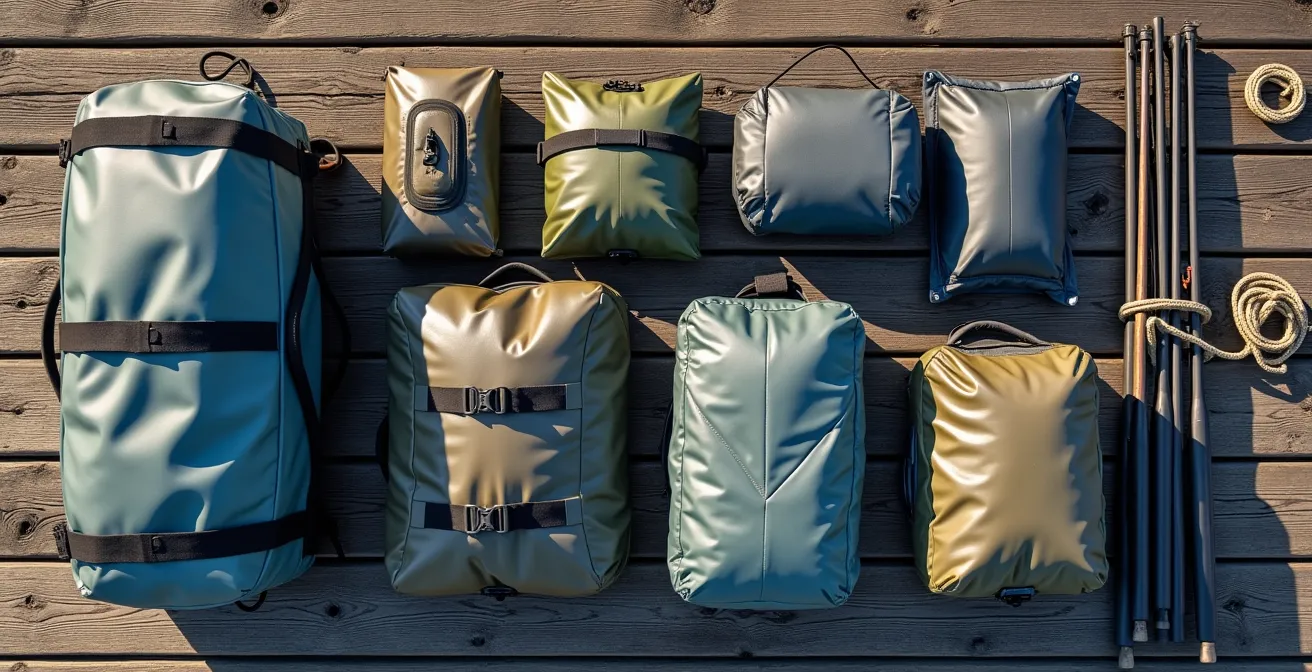
As this layout suggests, success lies in efficiency. Opt for soft-sided, waterproof duffel bags instead of heavy, hard-sided suitcases. Repackage items to eliminate bulky commercial packaging and use lightweight rod tubes. A common mistake is bringing a massive, 40-pound tackle box when a compact 5-pound version will suffice. By planning your gear with weight as the primary consideration, you can avoid the stress and expense of last-minute repacking on the dock.
How to Bring Moose Meat Back Across the US Border Legally?
For many hunters visiting from the United States, a successful moose hunt is only half the journey. The other half is navigating the complex process of legally transporting your game meat back across the border. This is not a simple matter of loading a cooler in your truck. Due to regulations designed to prevent the spread of Chronic Wasting Disease (CWD), both Canadian and U.S. authorities have established a strict protocol that must be followed to the letter. Failure to comply can result in the seizure of your meat.
The cornerstone of these regulations is the prohibition on transporting high-risk tissues, specifically the brain and spinal cord. This means all meat must be completely deboned before it can cross the border. Your outfitter is experienced in this process and will provide the necessary services. They will also issue a crucial Quebec export permit, known as the “Laissez-passer de transport,” which you must present to officials.
Upon reaching the U.S. port of entry, you must declare your game meat using the U.S. Fish & Wildlife Service Declaration Form 3-177. It is also essential to have proof of the animal’s sex and species, and to ensure your meat is packaged in clearly labeled, sealed containers. Crucially, CWD rules vary by state, so you must verify your home state’s specific importation restrictions *before* your trip. What is legal to bring into one state may be prohibited in another.
Your Action Plan: Border Crossing Checklist for Game Meat
- Obtain the Quebec ‘Laissez-passer de transport’ export permit directly from your outfitter.
- Complete the U.S. Fish & Wildlife Service Declaration Form 3-177 before arriving at the border.
- Ensure all meat is 100% deboned, with no spinal cord or brain tissue present in any package.
- Keep proof of the animal’s sex and species readily available for inspection, as required by your destination state.
- Verify your specific state’s Chronic Wasting Disease (CWD) importation restrictions well in advance of your travel.
Quotas vs. Possession Limits: What Is the Difference?
Among the most misunderstood regulations for visiting anglers are the distinct concepts of a daily catch limit (quota) and a possession limit. Confusing the two is a common mistake that can lead to unintentional violations. As a federation, we stress the importance of understanding this difference, as it is fundamental to Quebec’s conservation-based fisheries management. The rules are designed to be firm but fair, ensuring sustainable fish populations for years to come.
The daily catch limit, or quota, refers to the maximum number of a specific fish species you are legally allowed to catch and keep in a single day (from midnight to midnight). Once you have reached this limit, you must stop fishing for that species or practice catch-and-release exclusively. As the official regulations state:
any fish caught after you have reached the daily catch limit must be released immediately
– Gouvernement du Québec, Quebec Fishing Regulations 2024-2026
The possession limit, on the other hand, is the total number of a fish species you are allowed to have in your possession at any given time. This includes fish in your boat, at your camp, in a cooler for transport, or stored in a freezer. In Quebec, for most sport fish species, the possession limit is equal to the daily catch limit. This means you cannot accumulate fish over several days. If the daily limit for walleye is 6, you can never possess more than 6 walleye at any one time. This rule prevents stockpiling and ensures fishing pressure is distributed sustainably.
Why You Don’t Need a License for the St. Lawrence River Tidal Zones?
While most of Quebec requires a sportfishing license, there are specific and noteworthy exceptions that offer unique fishing opportunities. The most significant of these applies to the tidal portions of the St. Lawrence River and its tributaries. This jurisdictional nuance often surprises visitors, but it is rooted in the historical and biological classification of these waters. For certain species and in designated areas, you are indeed permitted to fish without holding a provincial sportfishing license.
The primary exemption applies to anyone fishing for any species—*except* Atlantic salmon—in the waters of what the ministry defines as Zone 21 and the river portion of Zone 1 located downstream from route 132. This vast area covers the St. Lawrence Estuary and Gulf, where the fishery has historically been managed with a mix of federal and provincial jurisdiction, leading to this unique license-free status for many species like mackerel and striped bass.
However, “license-free” does not mean “rule-free.” All catch limits, possession limits, size restrictions, and seasonal closures for each species still apply and are strictly enforced. Furthermore, fishing from wharves and shorelines requires adherence to both written and unwritten rules of etiquette. Many wharves are private property, requiring permission for access. On public wharves, maintaining adequate spacing between anglers, avoiding casting over others’ lines, and cleaning up after yourself are essential for a positive and respectful shared experience. Always check tide charts, as fishing is often most productive on an incoming tide.
Why Are Flights to Kuujjuaq More Expensive Than to Europe?
For those planning a trip to the remote wilderness of Nunavik in northern Quebec, the cost of airfare to hubs like Kuujjuaq can come as a shock. It is not uncommon for a round-trip ticket from Montreal to be more expensive than a flight to a European capital. This isn’t a pricing error; it’s a reflection of the harsh economic realities and logistical challenges of northern aviation. Understanding these factors is key to budgeting for a trip to this world-class fishing and hunting destination.
Several factors contribute to these high costs. First, there is a lack of competition on these routes, which are typically serviced by only one or two specialized airlines. Second, the operating costs are immense. Fuel must be transported long distances, increasing its price significantly. Maintenance for aircraft operating on gravel runways and in extreme weather is more frequent and costly. Finally, the aircraft themselves—like the Dash 8 or Twin Otter—are specialized for these conditions and expensive to operate. The vast, isolated landscape itself dictates the cost; as an example, many outfitters in the region confirm that access to camps is exclusively by seaplane from a base like Air Tunilik’s.
While these costs are largely unavoidable, there are strategies to mitigate them. Booking your flights as part of a complete outfitter package can often yield significant savings. Being flexible with your travel dates and flying mid-week instead of on a weekend can also reduce the price. For trips to the James Bay region, choosing a more accessible hub like Radisson can be considerably cheaper than flying further north. The table below outlines some effective cost-saving strategies.
| Strategy | Potential Savings | Best For |
|---|---|---|
| Book outfitter package including flights | 20-30% on airfare | First-time visitors |
| Fly midweek vs weekend | 10-15% | Flexible schedules |
| Choose accessible hubs (Radisson/LG-2) | 30-40% | James Bay destinations |
| Group booking discounts | 15-25% | Parties of 4+ |
Key takeaways
- The final cost of a trip is more than the package price. Meticulously calculate food, baggage, and transport costs for European Plans.
- Non-resident regulations are strict. Verify mandatory outfitter zones, species-specific licenses, and bait rules before you arrive.
- Bush plane weight limits are non-negotiable. Practice “weight economy” by using lightweight gear and packing efficiently to avoid costly fees.
How to Fish for Mackerel on Quebec Wharves Without a Permit?
One of the most accessible and exciting summer fishing experiences in Quebec is angling for Atlantic mackerel from the wharves of the Gaspé Peninsula and Côte-Nord. As discussed, this activity falls under the license exemption for Zone 21, making it a perfect, low-barrier way for families and visitors to enjoy a day of fishing. From late June to early September, schools of mackerel swarm the coastal waters, offering fast and furious action for anglers of all skill levels.
The technique is simple and the gear is inexpensive. The most effective method is using a rig known as a “ligne à plumes” (feather rig), which consists of several small, shiny hooks that imitate small baitfish. These can be purchased for a few dollars at any local hardware or Canadian Tire store. You don’t need fancy equipment; a light-to-medium action spinning rod with a 10-15 lb test line is perfectly adequate.
Success often depends on timing. Mackerel tend to move closer to shore with the incoming tide, so consulting a local tide chart is highly recommended. The technique involves casting your feather rig out and retrieving it with a quick, jerking motion to attract the fish. When you hook one, you’ll often hook several at once, so be prepared! It is crucial to handle your catch properly to ensure freshness. Keep the mackerel in a bucket with seawater that is changed regularly, and transport them home in a cooler with plenty of ice. This simple and rewarding activity is a quintessential part of a coastal Quebec summer.
To put these principles into practice and find a certified outfitter that aligns with your needs, we invite you to consult the official directory on the Quebec Outfitters Federation website.
Frequently Asked Questions about Quebec Outfitting
Do I need a special license for Atlantic Salmon?
Yes. In Quebec, there are three main types of fishing licenses. The license required for Atlantic salmon is a specific permit and is completely separate from the general sportfishing licenses. You must purchase it in addition to any other license if you intend to fish for salmon.
Are there zones where non-residents must use an outfitter?
Yes, this is a critical regulation. Non-residents who plan to fish north of the 52nd parallel or east of the St. Augustin River are legally required to use the services of a registered outfitter. This rule is in place to ensure safety and support conservation in these remote regions.
Can I bring my own baitfish from another province?
No. It is strictly prohibited to import live baitfish into Quebec from another province or country. This regulation is essential to prevent the introduction and spread of invasive species and aquatic diseases. You must purchase all live bait from a licensed local vendor within Quebec.