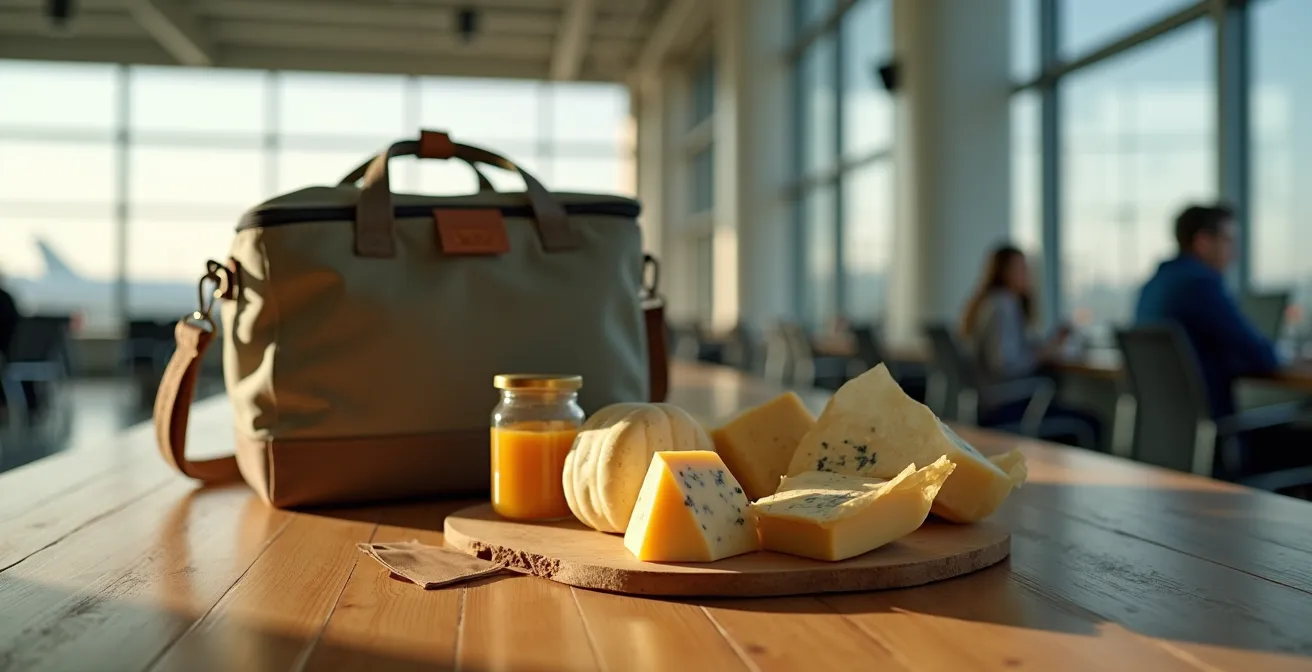
In summary:
- Raw milk cheese is allowed into the US if it’s aged for a minimum of 60 days; always keep the receipt.
- Game meat like moose is permissible for personal use if you have a complete “compliance packet” including hunting licenses and official tags.
- For fragile items like maple syrup, choose traditional metal cans over glass bottles to eliminate breakage risk.
- All food items must be declared to U.S. Customs and Border Protection (CBP) officers upon entry.
You’re standing in a fromagerie in Quebec’s Eastern Townships, the scent of aging cheese in the air. You’ve just tasted a phenomenal raw milk cheese, a perfect edible memory of your trip. But a familiar anxiety creeps in: “Can I even bring this home?” For many international travelers, the fear of having their precious, hard-found terroir products confiscated by customs turns a joyful purchase into a gamble. Most advice simply says “declare everything,” but this offers little comfort when you don’t know if the item itself is legal.
The common belief is that the rules are arbitrary, a confusing mix of regulations that depend on the mood of the customs officer. Travelers often resort to hiding items or choosing less interesting, commercially sealed products just to be safe. But what if the key wasn’t hiding your souvenirs, but preparing for them? What if you could approach the border with the confidence of a professional importer, armed with the right documentation and knowledge?
This guide moves beyond generic advice. It’s a pre-clearance manual built from a customs compliance specialist’s perspective. We will break down the specific rules for Quebec’s most iconic exports—from raw milk cheese and ice cider to hunted moose meat. You will learn not just *what* is allowed, but the exact packaging, documentation, and declaration strategies required to ensure your food souvenirs make it home safely. This is about transforming border-crossing anxiety into a smooth, successful, and repeatable process.
To help you navigate these specific regulations, this article is structured to address each type of souvenir individually. You’ll find detailed sections on everything from cheese and alcohol to game meat and the best containers for maple syrup, giving you a clear roadmap for your return journey.
Summary: How to Bring Quebec Cheese and Pâté Back Home Through Customs?
- Can You Bring Raw Milk Cheese into the USA?
- The Packing Trick to Stop Maple Syrup Jars from Breaking in Luggage?
- Gel Packs or Dry Ice: What Is Allowed in Checked Bags?
- How Many Bottles of Ice Cider Can You Really Take Home?
- Food vs. Crafts: Which Souvenirs Last Longer Than a Week?
- How to Bring Moose Meat Back Across the US Border Legally?
- SAQ vs. Dépanneur: Where to Buy the Right Alcohol at the Right Price?
- How to Choose the Right Grade of Maple Syrup for Your Needs?
Can You Bring Raw Milk Cheese into the USA?
Yes, you can bring raw milk cheese from Quebec into the United States, but only if it meets one critical requirement: it must be properly aged. This is the single most important factor that separates a permissible souvenir from a prohibited item. The fear surrounding soft or raw-milk cheeses often stems from a misunderstanding of the regulations. It’s not the softness but the age that matters to U.S. customs officials. To be compliant, the cheese must have a documented aging period of 60 days or more.
According to current USDA regulations specifying a 60-day minimum aging, this process effectively eliminates harmful pathogens, making the cheese safe for import. When at the fromagerie, you should ask the cheesemonger directly: “Est-ce que ce fromage au lait cru a plus de 60 jours d’affinage?” (Does this raw milk cheese have more than 60 days of aging?). Reputable artisans will know the exact age of their products. Always keep the receipt and, if possible, the original packaging with the label, as this serves as your primary evidence.
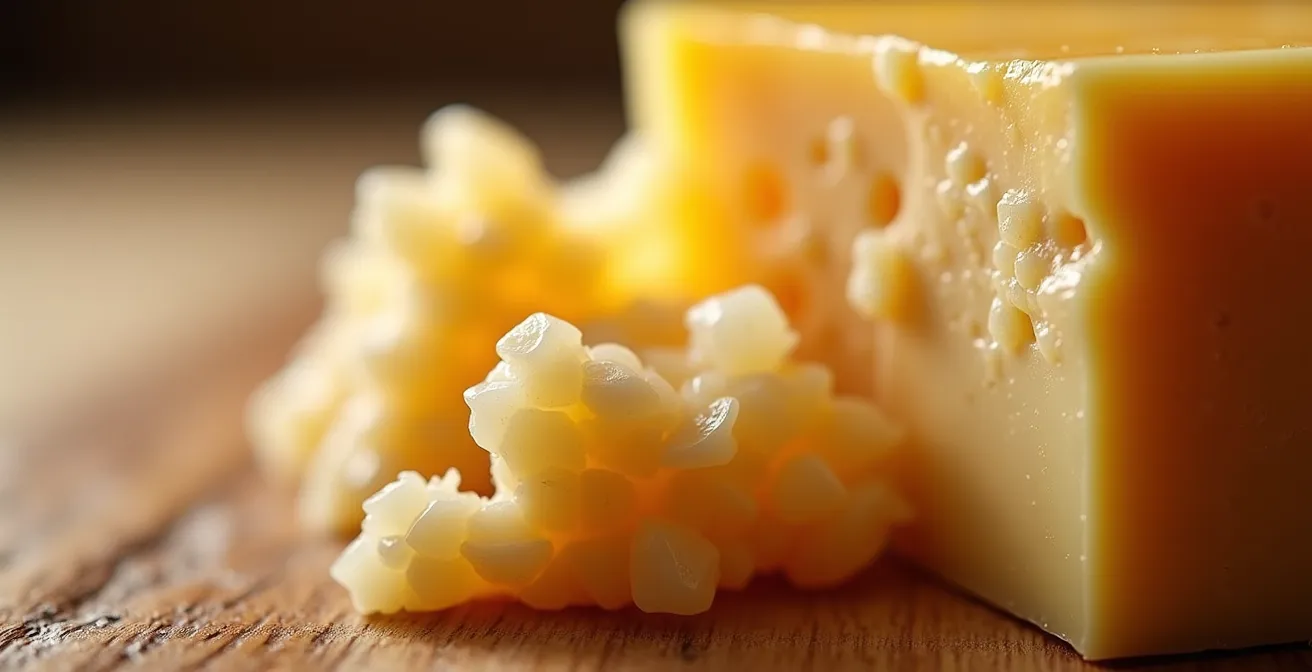
The visual characteristics seen above, like the formation of calcium lactate crystals on an aged wheel, are often indicators of a cheese that has surpassed the 60-day mark. Finally, and most importantly, you must declare all food items on your U.S. customs form. Honesty is crucial. When you declare “cheese,” be prepared to present it. Having it vacuum-packed not only contains the odor but also presents it in a professional, intentional manner that signals to the officer you are a prepared and informed traveler.
The Packing Trick to Stop Maple Syrup Jars from Breaking in Luggage?
The sinking feeling of finding a sticky, syrup-soaked suitcase is a traveler’s nightmare. While wrapping a glass bottle in a sweater is a common tactic, it’s an amateur’s gamble. The professional trick to guarantee your liquid gold arrives intact is to rethink the container itself. The most effective strategy to prevent breakage is to avoid glass containers entirely whenever possible. Traditional Quebec maple syrup is often sold in metal cans, which are virtually indestructible in luggage.
If you must transport syrup in a fragile container, adopt the multi-layer method used by professional food importers. This involves creating a protective cocoon around the item. First, ensure the lid is tight and seal the top with tape. Then, wrap the bottle securely in bubble wrap. Finally, place the bubble-wrapped bottle inside a rigid, secondary container, like a sturdy box or a hard-sided lunchbox, before placing it in your checked bag. This “box-in-a-box” approach provides a crucial buffer against the impacts and pressures of baggage handling.
For travelers weighing their options at the souvenir shop, the choice of container involves a trade-off between aesthetics, weight, and durability. A quick comparison makes the best choice clear for checked luggage.
| Container Type | Break Risk | Weight | Customs Acceptance |
|---|---|---|---|
| Metal Can (Traditional) | Zero | Light | Excellent |
| Glass Bottle | High | Heavy | Good with protection |
| Plastic Bottle | Low | Very Light | Good |
Ultimately, selecting a traditional metal can is the simplest and most foolproof solution. It’s lightweight, completely secure, and bypasses the need for elaborate packing strategies, allowing you to pack with confidence.
Gel Packs or Dry Ice: What Is Allowed in Checked Bags?
When transporting perishable souvenirs like cheese, pâté, or meat, maintaining a safe temperature is paramount. The two most common options are gel packs and dry ice, but each comes with specific airline and security regulations. For the vast majority of travelers, frozen gel packs are the simplest and most recommended solution. You can purchase these at local Quebec stores like Canadian Tire or Jean Coutu. The key rule is that they must be completely frozen solid when you pass through security for them to be allowed in checked luggage. A partially thawed, slushy pack may be confiscated.
In a well-insulated bag with two solid-frozen gel packs, most cheeses and meats will remain at a safe temperature for a typical 12 to 16-hour travel day. This is usually more than sufficient for flights from Quebec to most destinations in the United States. This method avoids the extra procedural steps required for other cooling agents.
Dry ice is a more powerful cooling agent but comes with stricter regulations. Due to its nature as a hazardous material (it sublimates into carbon dioxide gas), dry ice must be declared at the airline check-in counter. You cannot simply pack it and forget it. The container holding the dry ice must be specially designed to be vented, allowing the gas to escape safely. A sealed, airtight container like a standard cooler could pressurize and rupture. While highly effective, the need for special packaging and mandatory declaration makes dry ice a less practical choice for the average tourist compared to the convenience of gel packs.
How Many Bottles of Ice Cider Can You Really Take Home?
Quebec’s unique ice cider (cidre de glace) is a prized souvenir, but bringing alcohol across the border often causes confusion regarding limits and taxes. The good news is that the process is more straightforward than many believe. For U.S. citizens returning home, you are generally allowed to bring back one liter of alcohol duty-free as part of your personal exemption. This applies to one adult over the age of 21. A standard bottle of ice cider is typically 375ml, meaning you could bring back two bottles comfortably within this duty-free limit.
But what if you want to bring more? You absolutely can, provided you declare it and are prepared to pay duty on the additional amount. The key is understanding how ice cider is classified. An expert provides a helpful clarification:
Ice cider’s alcohol content of 7-13% ABV places it in the wine category, making it easier to import than spirits
– USDA Import Specialist, Hungry Travelers Guide to US Customs 2024
This classification is significant because the duty rates for wine are generally low. While rates can vary, travelers typically pay approximately a 3% average duty on the value of the wine exceeding their personal exemption. For a $50 bottle of premium ice cider, this would amount to a mere $1.50 in duty. For most people, this small cost is well worth it to bring back extra bottles. Remember to keep your SAQ receipt to prove the value of your purchase to the customs officer.
Food vs. Crafts: Which Souvenirs Last Longer Than a Week?
While the taste of a fine Quebec cheese is a sublime memory, its shelf life is fleeting. For travelers seeking a more permanent reminder of their journey, it’s worth considering souvenirs that last longer than a meal. Quebec’s artisanal culture extends far beyond its food, offering a wealth of crafts and goods that can evoke memories for a lifetime. These items also have the significant advantage of being completely customs-friendly, requiring no special declaration or handling.
A beautiful maple wood cutting board from a local artisan, for example, not only serves as a functional kitchen tool but also as a daily, tactile reminder of your trip. Similarly, a cookbook from a famous Montreal restaurant like Joe Beef or a jar of Montreal steak spice allows you to recreate the culinary experiences back home for years to come. These items transition from being a simple souvenir to becoming a part of your home and lifestyle.
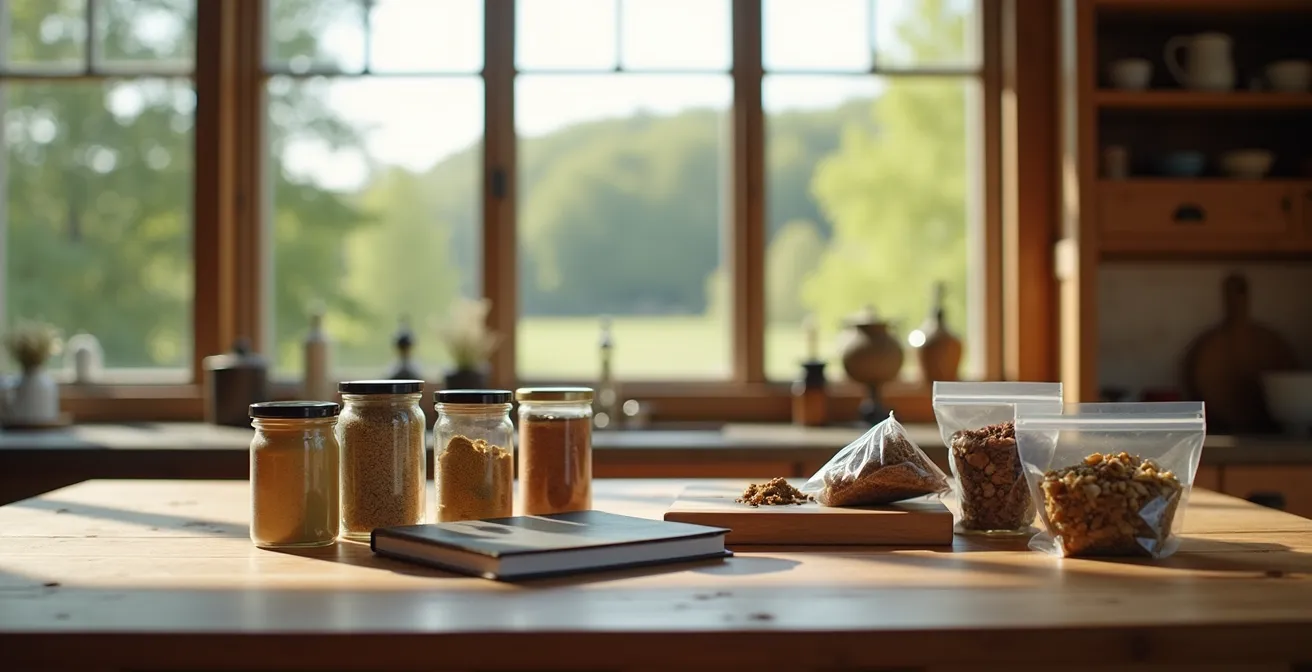
When deciding on souvenirs, a quick comparison of their longevity and customs implications can help guide your choices toward items with lasting value. While a perishable treat offers immediate gratification, a well-chosen craft provides a more enduring connection to your travels.
| Souvenir Type | Shelf Life | Customs Friendly | Memory Value |
|---|---|---|---|
| Montreal Steak Spice | 2+ years | Yes | High – usable |
| Joe Beef Cookbook | Permanent | Yes | Very High |
| Artisan Cheese | 2-4 weeks | With declaration | Medium |
| Maple Wood Board | Lifetime | Yes | Very High |
How to Bring Moose Meat Back Across the US Border Legally?
For hunters returning from a successful trip in Quebec, bringing back harvested game meat like moose (orignal) is a primary goal. While it may seem daunting, importing hunter-harvested meat into the U.S. is permissible, provided you have a meticulously prepared “compliance packet” of documentation. This is not a situation where you can be casual; every piece of paper matters. The common myth of a 50-pound limit for personal meat imports does not apply here. For game meat taken by a hunter, according to USDA regulations, there is no 50-pound limit, as long as it’s for personal consumption.
The entire process hinges on your ability to prove the meat’s legal origin and chain of custody. You must be able to demonstrate to the U.S. Customs and Border Protection (CBP) officer that the meat was legally hunted, registered, and processed. This requires a specific set of documents that should be organized and ready for inspection. Leaving even one of these items behind can result in the seizure of your entire harvest. The meat should be professionally butchered, commercially packaged, or vacuum-sealed, and clearly labeled with the contents.
Before you even approach the border, you must assemble a complete file. The following checklist outlines the non-negotiable items that form your compliance packet for importing game meat.
Your Action Plan: Required Documentation for Game Meat
- Possess a valid Quebec provincial hunting license with the hunter’s name clearly visible.
- Include the official game registration tag (coupon de transport) issued by the Quebec wildlife department.
- Complete and present the U.S. Fish and Wildlife Service Declaration Form 3-177.
- Ensure a professional butcher’s label is on the packaging, stating ‘Orignal/Moose’ along with the hunter’s name and license number.
- Package the meat in commercial or vacuum-sealed bags with clear, unambiguous labeling.
SAQ vs. Dépanneur: Where to Buy the Right Alcohol at the Right Price?
When shopping for alcoholic beverages in Quebec, travelers quickly discover that not all stores are created equal. The province has a government-run system, and understanding where to shop can save you money and give you access to a better selection. Your primary destination for most premium products will be the SAQ (Société des alcools du Québec), the provincial liquor board. However, even within the SAQ, there are different store formats. An ‘SAQ Sélection’ will have the best range of fine wines, premium spirits, and a comprehensive collection of ice ciders, while an ‘SAQ Dépôt’ focuses on selling full cases at a slight discount.
For craft beer lovers, the local dépanneur (convenience store) is often the best bet. Many dépanneurs, especially in neighborhoods like Montreal’s Plateau, have curated impressive selections of local microbrews that you won’t find in the SAQ. Finally, for the most unique products and experiences, consider going directly to the source. Many Quebec cideries and vineyards, particularly in the Eastern Townships, offer direct sales. This not only gives you access to exclusive items but also the story behind them. In fact, a recent trend shows direct-to-consumer sales at production sites have increased by 40%, as tourists value this authentic connection.
Your choice of retailer depends entirely on what you’re looking for, from bulk deals to rare local finds.
| Store Type | Best For | Price Range | Quebec Product Selection |
|---|---|---|---|
| SAQ Sélection | Premium spirits, ice cider | High | Extensive |
| SAQ Dépôt | Bulk purchases | Low-Medium | Limited |
| Dépanneur (Plateau) | Craft beer | Medium | Good local selection |
| Direct from Producer | Unique products, stories | Medium-High | Exclusive items |
| IGA/Metro | Wine, cider convenience | Medium | Growing selection |
Key Takeaways
- The legality of raw milk cheese hinges on a 60-day minimum aging period; always verify and keep your receipt.
- For high-stakes items like hunted game meat, a complete “compliance packet” of licenses, tags, and forms is non-negotiable.
- Choose souvenir containers strategically: metal cans for maple syrup eliminate breakage risk, and vacuum-packing for cheese manages odor and presentation.
How to Choose the Right Grade of Maple Syrup for Your Needs?
Now that you know how to get your souvenirs home safely, let’s ensure you buy the right one in the first place. Standing in front of a wall of maple syrup in a Quebec shop can be overwhelming. The bottles are labeled with grades like ‘Golden,’ ‘Amber,’ ‘Dark,’ and ‘Very Dark.’ Many visitors mistakenly assume that ‘Dark’ is better or ‘Golden’ is purer, but this isn’t the case. The grade simply indicates the flavor profile, which is determined by when the sap was harvested during the sugaring season.
The grade is determined by when the sap is harvested during the season, which affects its sugar content and flavour, making ‘best’ a matter of personal preference
– Quebec Maple Syrup Producers Federation, CFIA Food Import Guidelines 2024
Early season sap produces a lighter, more delicate syrup (Golden), while late-season sap creates a darker, more robust, and mineral-rich syrup (Very Dark). The “best” grade is entirely dependent on how you plan to use it. A delicate Golden syrup is perfect for drizzling over yogurt or fresh fruit where you don’t want to overwhelm other flavors. The classic Amber syrup is the quintessential choice for pancakes and waffles. For cooking, a Dark or Very Dark syrup is ideal, as its strong, caramel-like flavor will stand up in marinades, glazes, and baked goods.
Understanding this system allows you to select syrup like a local, choosing based on application rather than a perceived hierarchy of quality.
| New Grade | Old System | Best Use | Flavor Profile |
|---|---|---|---|
| Doré/Golden | Extra Light | Yogurt, fresh fruit | Delicate vanilla notes |
| Ambré/Amber | Light | Pancakes, waffles | Classic maple flavor |
| Foncé/Dark | Medium | Marinades, glazes | Robust, caramel notes |
| Très Foncé/Very Dark | Dark | Baking, coffee | Molasses-like finish |
By treating the grading system as a flavor guide, you can confidently select the perfect bottle of Quebec maple syrup that matches your specific culinary needs, ensuring your souvenir is not only delicious but perfectly suited for its intended use back home.
To ensure a smooth and confident border crossing with your Quebec culinary treasures, the next logical step is to begin preparing your “compliance packet” before you even pack your bags. Gather your receipts, verify product labels, and have your documentation ready for a stress-free journey home.