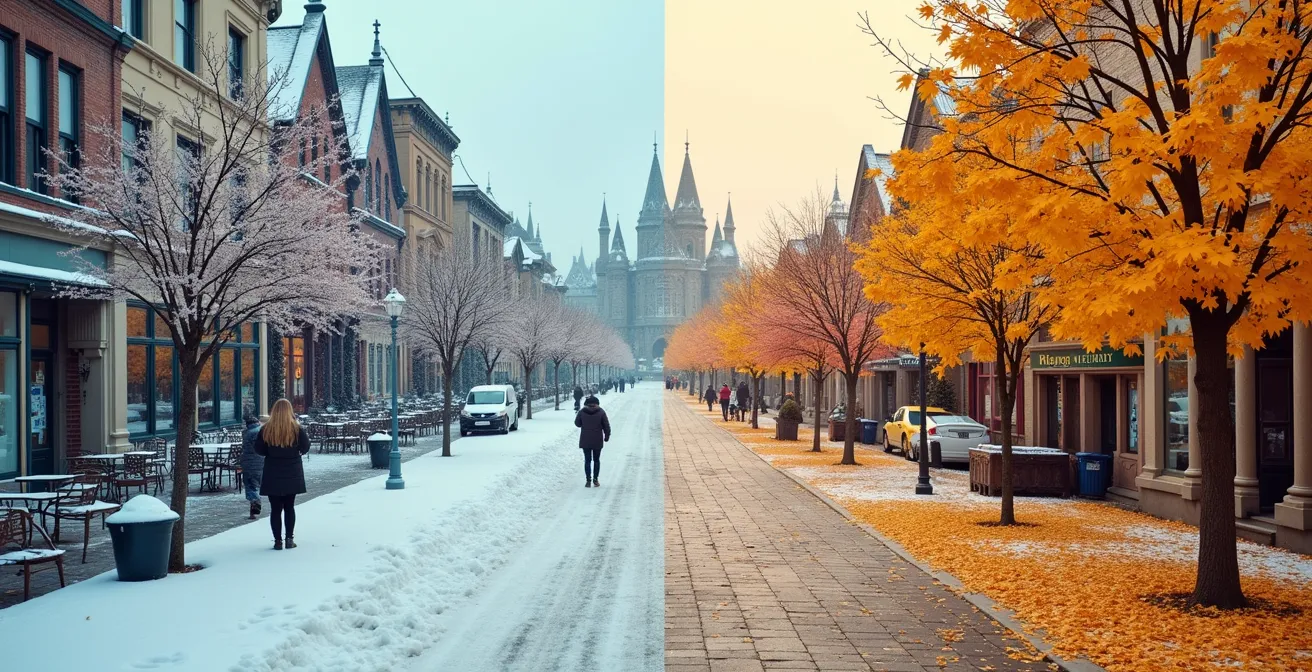
Contrary to popular belief, Quebec’s distinct lifestyle isn’t just a reaction to cold weather. It’s a complex psychological adaptation. This article reveals the concept of ‘compressive living’—the urgent need to maximize good weather—and the social rituals that act as collective coping mechanisms, explaining everything from the July 1st moving chaos to the profound joy of a sun-drenched terrace in May.
If you’ve spent any time in Quebec, you’ve likely felt it: a profound shift in the collective mood that seems to turn on a dime. One month, the cities pulse with a frenetic, almost desperate energy; a few months later, a quiet, introspective blanket seems to cover everything. For expats and long-term visitors, this psychological seasonality can be bewildering. It’s easy to chalk it up to simple weather changes—people are happy when it’s sunny and subdued when it’s cold. But this explanation barely scratches the surface.
As a social psychologist studying environmental influence, I argue that this phenomenon is far more structured than it appears. The reality is that Quebec’s extreme climate has forged a unique societal rhythm, a set of deeply ingrained cultural behaviors that are, in essence, sophisticated coping mechanisms. The key to understanding the Quebec lifestyle isn’t just knowing about the weather, but decoding the collective psychological response to it. It’s a culture defined by what I call “compressive living”: the subconscious drive to squeeze a year’s worth of social interaction, celebration, and life into the fleeting months of good weather.
This is not a story about temperature; it’s a story about human adaptation. We will explore how this pressure valve system works by examining specific, often puzzling, Quebec rituals. From the organized chaos of Moving Day to the defiant joy of winter festivals, each tradition is a piece of the puzzle, revealing how a population collectively manages the psychological weight of its environment.
To fully grasp this unique cultural dynamic, this article breaks down the key seasonal rituals and behaviors that define life in Quebec. The following sections will guide you through the why behind these seemingly strange traditions, offering a new lens through which to view your experience here.
Summary: Understanding the Rhythms of Quebec Life
- Why Does Everyone Move on July 1st and How to Survive It?
- The “Terrace” Rush: Why Do Quebecers Eat Outside at 10°C in May?
- Hygge vs. Hibernation: How Locals Stay Sane in February?
- Why Is Everything Closed for Two Weeks in July?
- Strawberries in June, Apples in September: Why Timing Matters?
- Why the “Onion Strategy” Is Crucial for Quebec Weather?
- When to Visit Rural Quebec to Avoid the Tourist Crowds?
- How to Connect with Locals in Rural Quebec Despite the Language Barrier?
Why Does Everyone Move on July 1st and How to Survive It?
To an outsider, July 1st in any major Quebec city looks like orchestrated chaos. Streets are gridlocked with moving trucks, sidewalks are impassable mountains of furniture, and a palpable sense of frantic energy hangs in the air. This is not a coincidence; it’s a phenomenon of immense social synchronicity. According to city planning estimates, over 60,000 households move on July 1st in Montreal alone. But why? The practical reason is historical, as the Quebec Housing Authority explains it’s a tradition “deeply rooted in the legal framework of leases historically ending June 30th.”
However, from a psychological perspective, it’s much more than a legal artifact. It functions as a province-wide “reset button.” Occurring just after the Saint-Jean-Baptiste holiday and on Canada Day, it marks the definitive start of the summer season—the “good time.” This collective upheaval, while stressful, synchronizes the entire population. Everyone is undergoing the same trial at the same time, creating a shared experience that reinforces community bonds. It’s a symbolic shedding of the old (the long winter, the old apartment) and an embrace of the new, all happening in unison. Surviving it means accepting the collective madness: book your truck months in advance, offer a cold drink to your new neighbors, and understand you’re part of a massive, unspoken social ritual.
The “Terrace” Rush: Why Do Quebecers Eat Outside at 10°C in May?
The first truly sunny day in May, even if the temperature barely scrapes 10°C, triggers a powerful, instinctual reaction across Quebec: the rush to a “terrasse.” Patios and outdoor seating areas fill instantly with people in spring jackets, happily sipping drinks as if it were mid-July. This isn’t just about enjoying a meal; it’s a psychological act of defiance and a clear symptom of “compressive living.” From an environmental psychology standpoint, this behaviour is a direct response to a prolonged period of sensory deprivation. After enduring average winter temperatures of -15°C for 4-5 months, the need for direct sunlight and fresh air becomes a primal urge.
This rush is a collective reclamation of public space. It’s a statement that the harshness of winter is over and that every single moment of tolerable weather must be seized. The slight discomfort of the cold is a small price to pay for the immense psychological reward of feeling the sun on your face and participating in a social activity that was impossible just weeks before. It’s a celebration of survival and a testament to the human capacity to find joy in the margins of a challenging climate. For the uninitiated, it looks odd; for a Quebecer, it feels essential.

As this image captures, the joy is palpable. It is not about the temperature, but about the shared victory over winter. The steam from a hot coffee mixing with the cool spring air is the very essence of this transitional moment—a cherished ritual that kicks off the season of compressive living, where every outdoor opportunity will be maximized until the snow returns.
Hygge vs. Hibernation: How Locals Stay Sane in February?
February is often the psychological low point of the Quebec year. The novelty of winter has worn off, the holidays are a distant memory, and spring feels impossibly far away. This is the period when the risk of passive “hibernation”—social withdrawal, lethargy, and succumbing to Seasonal Affective Disorder (SAD)—is at its peak. While the Danish concept of “hygge” (coziness, contentment) is practiced individually, Quebec’s primary coping strategy is notably more active and collective. The society fights back against the isolating darkness with light, crowds, and noise.
This is the season of ritualized decompression. Rather than retreating, Quebecers are culturally programmed to go out. Winter carnivals, outdoor music festivals, and neighbourhood parties are not just for fun; they are a public health strategy. These events force people out of their homes and into shared, celebratory spaces. For example, nearly 1 million people attend the Quebec Winter Carnival annually, bundling up in extreme cold to watch parades, play in the snow, and socialize. Events like Montreal’s Igloofest, where thousands dance outdoors to electronic music, are a powerful antidote to the silence and stillness of winter. It’s a conscious choice to generate collective energy and warmth to combat the psychological chill of the season.
Why Is Everything Closed for Two Weeks in July?
A visitor arriving in Quebec during the last two weeks of July might be puzzled to find certain services slower, roads surprisingly empty in Montreal, and many businesses operating with a skeleton crew. This is the “construction holiday,” a unique Quebec institution. As a matter of law, it’s a period when a significant portion of the workforce takes a mandatory vacation. The rule explicitly states that the last two weeks of July represent mandatory vacation for Quebec’s construction sector, and many other industries have informally adopted the same calendar.
Psychologically, this is another powerful example of “social synchronicity” and “ritualized decompression.” It’s a collective, province-wide exhale. At the absolute peak of the summer, a huge segment of the population stops working at the same time. This shared pause minimizes the social pressure and “fear of missing out” that can accompany individual vacation time. Everyone is away, so no one is getting ahead. It reinforces the cultural value placed on rest and family during the precious summer months. For those in the province, it’s a time to either escape to a cottage or enjoy the cities with less traffic, but the rhythm is undeniably different. It’s a planned societal slowdown, a crucial pressure-release valve in the middle of the “compressive living” season.
Your Action Plan: Navigating the Construction Holiday
- Plan Accommodations: Book hotels, cottages, and campsites well in advance as demand skyrockets.
- Anticipate Crowds & Costs: Expect tourist destinations like Gaspésie or the Charlevoix region to be at maximum capacity and prices to be higher.
- Explore the Cities: Take advantage of reduced urban traffic, especially in Montreal, for easier city exploration.
- Stock Up Essentials: Plan grocery shopping and other errands ahead, as some local services or smaller shops may have limited hours.
- Embrace the Pace: Adjust your expectations; this is a time when the province collectively slows down, so patience is key.
Strawberries in June, Apples in September: Why Timing Matters?
The Quebec calendar is not just marked by holidays, but also by the land itself. The arrival of “les fraises du Québec” in June, the corn in August, and the “autocueillette” (U-pick) for apples in September are more than just agricultural events; they are powerful, time-sensitive social rituals. These short, intense harvest periods are another manifestation of “compressive living.” The window to enjoy these local products at their peak is incredibly brief, creating a sense of urgency and shared purpose. Missing strawberry season feels like a genuine social and sensory loss.
This rhythm is perhaps most famously embodied by the “temps des sucres” (sugaring off season). As the Quebec Cultural Heritage Council notes, “‘Le temps des sucres’ is a period during springtime when many Quebecers go to the sugar shack (cabane à sucre) for a traditional meal.” This isn’t just a meal; it’s a pilgrimage. It can only happen when the sap flows, typically for a few weeks between March and April. This strict natural deadline forces a social activity, bringing families and friends together to mark the end of winter’s grip. These seasonal harvests anchor the year, providing a tangible and delicious way to connect with the fleeting nature of the seasons and with each other.
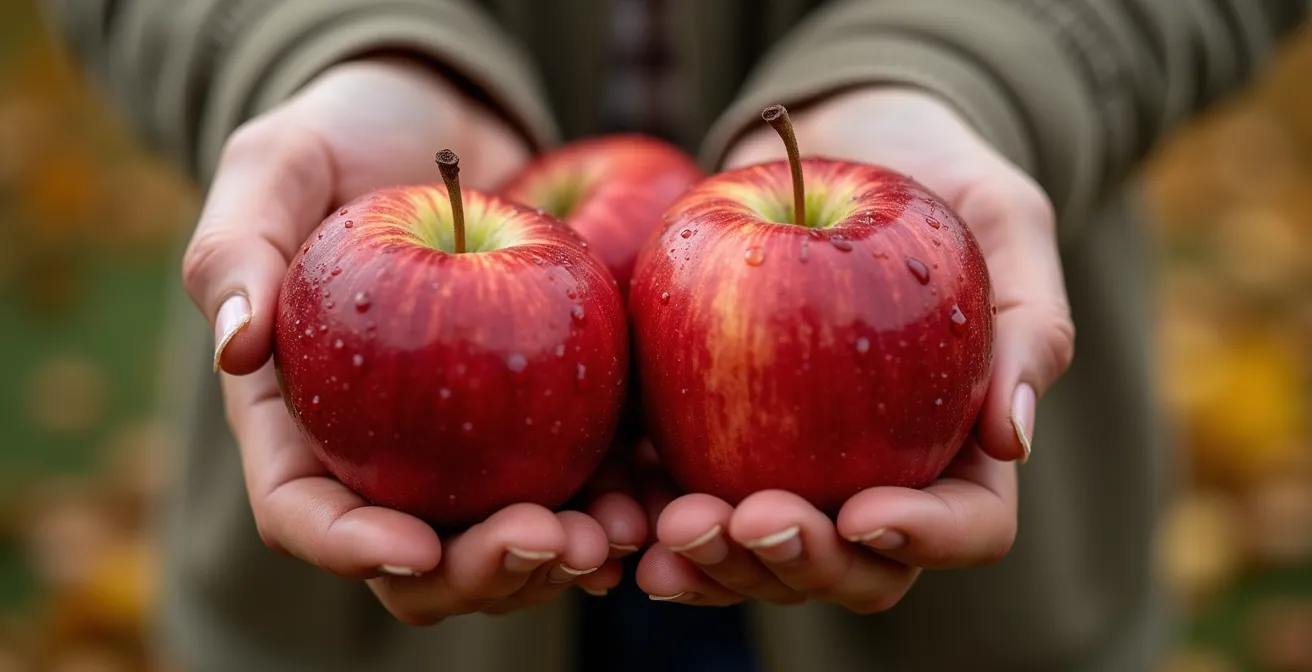
Participating in these harvests, like apple picking, is to participate in the rhythm of the land. It grounds individuals in the present moment and reinforces a collective identity tied directly to the Quebec soil. It’s a delicious, tangible way of marking time.
Why the “Onion Strategy” Is Crucial for Quebec Weather?
The common advice to “dress in layers” in Quebec is a classic platitude that masks a deeper psychological reality. The “pelure d’oignon” or onion strategy is not just about staying warm; it’s about maintaining a sense of personal control and comfort in a wildly fluctuating environment. The need for this strategy is born from the constant experience of thermal shock adaptation. It’s not uncommon for the temperature to swing 15 degrees in a single day, but the most jarring change is the one between indoors and outdoors. Indoor spaces are often heated to a cozy 22°C, while just on the other side of the door, it can be a frigid -20°C. That 40-degree difference requires a rapid, almost instantaneous physiological and psychological adjustment.
Mastering the onion strategy—a moisture-wicking base layer, an insulating mid-layer (like fleece), and a protective outer shell—is a rite of passage. It transforms a potentially miserable experience into a manageable one. Being able to add or remove a layer allows a person to regulate their own micro-climate, giving them a sense of agency against the overwhelming power of the weather. It’s a practical skill that doubles as a mental coping mechanism. It’s the reason you see locals carrying an extra sweater on a sunny but cool day; they are not just prepared, they are asserting control over their own comfort in an environment that offers very little predictability.
When to Visit Rural Quebec to Avoid the Tourist Crowds?
The “compressive living” phenomenon has a direct impact on tourism patterns. The intense drive to maximize the good weather means that the summer months, particularly July and August, are when tourist destinations, especially in rural areas, are at their most crowded. The pressure is on for everyone—locals and visitors alike—to experience the best of Quebec’s natural beauty in a very short window. This creates a vibrant but often hectic atmosphere. If your goal is to connect with the landscape and local culture on a deeper level, timing is everything.
To experience a more relaxed and authentic version of rural Quebec, consider the “shoulder seasons.” As tourism data suggests, if you want to avoid the peak crowds, it is best to come in April, May, and June, or after the summer rush in late September and October. During these periods, the frantic energy of the high season has not yet begun or has already subsided. In May, you witness the collective joy of the landscape “waking up.” In October, the stunning autumn colours provide a backdrop for a more contemplative experience. In these quieter times, locals are often more relaxed and accessible, and you have a better chance of feeling the true pulse of a place, rather than just the rhythm of the tourist rush.
Key Takeaways
- Quebec’s lifestyle is a psychological adaptation to extreme weather, not just a reaction to it.
- The concept of “compressive living” explains the urgency to maximize the short, good-weather seasons.
- Cultural rituals like Moving Day and winter carnivals function as collective coping mechanisms to manage environmental stress.
How to Connect with Locals in Rural Quebec Despite the Language Barrier?
For many anglophone expats, the language barrier in rural Quebec can feel like a significant obstacle to forming genuine connections. While learning French is undeniably the most important step, the key to breaking the ice often lies not in perfect grammar, but in acknowledging a shared reality. And in Quebec, the most potent shared reality is the weather. It is the one topic that universally binds everyone, transcending language and background. It is the great equalizer.
A simple attempt at French, combined with a comment about the climate, can open more doors than a well-rehearsed phrase about another topic. As one local tourism guide puts it, the right approach is both simple and profound.
A simple ‘Bonjour’ and a universally understood comment on the weather (‘Fait frette, hein?’ — ‘It’s darn cold, eh?’) acknowledges a shared reality and opens doors.
– Local Tourism Guide, Quebec Rural Tourism Board
This small gesture demonstrates empathy. It shows that you are not just a tourist passing through, but someone who is present and experiencing the same environmental conditions they are. Participating in the seasonal rhythms—visiting the local “dépanneur” (corner store), going to the sugar shack, or picking apples—also places you within the cultural context, creating natural opportunities for interaction. The language barrier is real, but the bridge of shared experience is stronger.
By observing these seasonal rituals not as oddities but as intelligent adaptations, you can shift from feeling like an outsider to becoming an appreciative participant in the unique and resilient culture of Quebec. The next step is to embrace this rhythm yourself.
Frequently Asked Questions about Quebec Weather Adaptation
How many layers should I wear in Quebec winter?
Typically 3-4 layers are recommended for optimal comfort and adaptability. This includes a base layer designed for moisture-wicking to keep your skin dry, an insulating middle layer such as fleece or down to trap heat, and a waterproof, windproof outer shell to protect you from the elements, in addition to essential accessories like a hat, gloves, and a scarf.
What’s the temperature difference between indoor and outdoor?
The thermal shock can be significant. Indoor spaces in Quebec are consistently heated to around 22°C (72°F) for comfort, while the outdoor temperature can easily drop to -20°C (-4°F) or lower. This creates a 40-degree or more difference, which is why a layering system you can quickly adjust upon entering or exiting a building is crucial.
Why do locals always carry extra layers?
Locals carry extra layers because Quebec weather is notoriously unpredictable and can change dramatically within a few hours. A sunny morning can turn into a windy, snowy afternoon. The ‘pelure d’oignon’ (onion peel) strategy is a deeply ingrained habit that ensures you remain comfortable and safe regardless of what the day brings, providing control in an otherwise unpredictable environment.